
Disclosure: As an Amazon Associate, Bookish Wisdom earns from qualifying purchases. This doesn’t change our picks or your price.
TL;DR: Emotional Intelligence: Why It Can Matter More Than IQ by Daniel Goleman argues that skills such as self-awareness, self-control, motivation, empathy and social skill are as important as intellect for success and well-being. Goleman draws on brain science and psychology to show how emotions drive decisions, how they can hijack reason and how emotional skills can be learned.
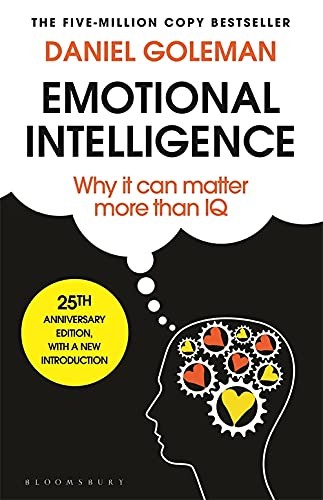
Why do some people with high intelligence struggle in their careers and relationships, while others with average test scores flourish? Journalist and psychologist Daniel Goleman tackled that question in Emotional Intelligence, published in 1995. The book popularized the term emotional intelligence, first used by researchers Peter Salovey and John Mayer in 1990. Goleman combines neuroscience, education and business, making a case that emotional skills deserve attention in schools and workplaces. Here’s a summary of its main ideas.
Table of Contents
Emotional Intelligence at a Glance
| Detail | Info |
|---|---|
| Author | Daniel Goleman |
| Published | 1995 |
| Genre | Psychology, self-help, business |
| Core idea | Emotional skills matter as much as IQ for success and happiness |
| Structure | Parts on the emotional brain, the nature of emotional intelligence, applications and emotional literacy |
| Best for | Leaders, parents, teachers and readers who want to understand emotions |
What Is Emotional Intelligence About?
Goleman argues that traditional views of intelligence, based on IQ, miss important abilities. He points out that IQ explains only part of life success, and that emotional skills help people manage stress, work with others and persist in the face of setbacks. He suggests that a large share of success depends on factors other than IQ, a claim that has been debated.
He defines emotional intelligence as a set of abilities that can be developed, including knowing your emotions, managing them, motivating yourself, recognizing emotions in others and handling relationships.
Key Ideas, Part by Part
The Emotional Brain
Goleman describes how the brain processes emotions. The amygdala, a small almond-shaped structure, acts as an alarm system, reacting to threats quickly. Drawing on neuroscientist Joseph LeDoux’s work, he explains that the amygdala can trigger a response before the rational neocortex has time to evaluate, an event he calls an amygdala hijack. This explains why people sometimes act impulsively, then regret it.
Understanding this process helps us see that emotions are not simply obstacles but part of how we think and decide. The goal is not to suppress them, but to manage them wisely.
The Five Domains of Emotional Intelligence
Goleman outlines five domains. Self-awareness is recognizing your feelings as they happen. Self-regulation is managing your emotions so that they do not overwhelm you. Motivation is using emotions to pursue goals, with optimism and persistence. Empathy is sensing what others feel. Social skills are managing relationships and influencing others.
He gives examples of how each plays out, such as the importance of self-awareness in making good decisions, and of empathy for doctors, parents and managers.
Delay of Gratification and Motivation
Goleman refers to the marshmallow test conducted by psychologist Walter Mischel, in which children were offered one marshmallow now or two if they waited. Those who could wait were later found to have better outcomes, such as higher test scores in some follow-ups. Later replications have found the effect smaller and influenced by family background, but the study remains a popular illustration of self-control.
He links this to hope and optimism, which help people persist. People who believe they can find a way tend to cope better with setbacks.
Emotions in Relationships, Work and Schools
The later chapters apply the ideas. In marriage, couples who manage conflict well can avoid emotional flooding, where physiological arousal blocks listening. In the workplace, emotional skills matter for leadership and teamwork. In schools, Goleman discusses programs that teach emotional literacy, sometimes called social-emotional learning, such as lessons on naming feelings and solving conflicts.
He argues that teaching these skills early can improve behavior and achievement and reduce problems such as aggression and depression. The book ends with a call for schools and society to treat emotional learning as essential.
6 Key Takeaways From Emotional Intelligence
- EQ complements IQ. Emotional skills affect success and well-being.
- The amygdala can hijack us. Quick emotional reactions can override reason.
- Know your feelings. Self-awareness is the foundation.
- Manage your impulses. Self-regulation supports good decisions.
- Empathy builds connection. Reading others improves relationships.
- Emotional skills can be taught. They develop with practice.
Ideas Worth Remembering
- Emotions are information, not enemies. (paraphrased)
- Pause before reacting when upset. (paraphrased)
- Optimism and persistence are learnable. (paraphrased)
- Emotional literacy belongs in education. (paraphrased)
How to Apply Emotional Intelligence in Real Life
- Name your emotions. Label what you feel, in specific words.
- Pause for six seconds. Delay a reaction when upset.
- Practice listening. Reflect back what someone says before responding.
- Set small goals. Use progress to build motivation.
- Teach children feelings words. Talk about emotions at home.
Criticisms and Limits
Critics say that Goleman overstated the claims about EQ, such as the idea that it accounts for a large share of success, which lacked solid evidence. Some measures of EQ overlap with personality traits, and the popular books on the topic can read like a collection of anecdotes. The marshmallow test findings have also been tempered by later studies.
Despite this, the book draws attention to important skills and has influenced education and management. Read it as an accessible introduction, and check later research for nuance.
Emotional Intelligence in One Minute
Emotional skills, including self-awareness, self-regulation, motivation, empathy and social skill, matter as much as IQ. The amygdala can hijack reason, so learn to pause and name feelings. Practice empathy and teach emotional literacy in schools and homes.
The Six-Second Pause
A popular tip is to delay your reaction by a few seconds when you feel intense emotion. Take a slow breath, label the feeling and ask what you want from the situation. Even a brief pause can allow your thinking brain to catch up with the alarm. Practice in low-stress situations so it becomes a habit when stakes are high.
Ability Versus Mixed Models
Researchers Salovey and Mayer define emotional intelligence as a set of mental abilities, such as perceiving and understanding emotions, which can be tested. Goleman’s version is broader, including traits like optimism and motivation. Critics say that the broader model blurs the concept with personality. The difference matters if you want to measure EQ scientifically, but for everyday use, the skills are similar.
Emotional Intelligence at Work
Many organizations include EQ in leadership training. Managers with strong emotional skills tend to listen well, give constructive feedback and keep teams calm under stress. You can build these skills through coaching, feedback and reflection. Ask colleagues how you come across, and notice your reactions in meetings. Small adjustments can improve trust and results.
Exercises to Build Emotional Awareness
Try a daily check-in: three times a day, pause and name what you feel in one or two words. Rate the intensity from one to ten and note what triggered it. At the end of the week, look for patterns. Expand your emotional vocabulary by using words such as disappointed, anxious, irritated or relieved instead of just good or bad. Naming feelings precisely can reduce their intensity and help you choose a response.
Teaching Emotional Skills to Children
Parents can model emotional intelligence by naming their own feelings, listening to their children and helping them solve problems. Simple practices include reading stories and asking how characters feel, playing games that involve taking turns and practicing calming techniques like deep breaths. Schools use social-emotional learning programs for similar purposes. Goleman argues that such skills are as important as reading and math for long-term well-being.
Who Should Read Emotional Intelligence?
Read it if you are a manager, teacher or parent, or if you want to understand your emotional reactions better. It suits readers who like a blend of science and stories. For a related read on attachment and relationships, try Attached.
What to Read Next
- Working with Emotional Intelligence by Daniel Goleman applying EQ at work
- Emotional Intelligence 2.0 by Travis Bradberry and Jean Greaves a practical program with a self-assessment
- Never Split the Difference by Chris Voss with Tahl Raz using empathy in negotiation
Related: Never Split the Difference summary and key takeaways and Hold Me Tight summary and key takeaways.
Frequently Asked Questions
What is the main idea of Emotional Intelligence?
That emotional skills such as self-awareness and empathy matter as much as IQ for success and well-being.
What are the five components of EQ?
Self-awareness, self-regulation, motivation, empathy and social skills.
What is an amygdala hijack?
An immediate, intense emotional reaction that overrides rational thought.
Can emotional intelligence be learned?
Yes, Goleman argues that it can be developed at any age.
Is the claim that EQ matters more than IQ proven?
It’s debated; research shows EQ helps, but it does not replace other abilities.