

Disclosure: As an Amazon Associate, Bookish Wisdom earns from qualifying purchases. This doesn’t change our picks or your price.
TL;DR: Extreme Ownership: How U.S. Navy SEALs Lead and Win by Jocko Willink and Leif Babin turns lessons from combat in Ramadi, Iraq, into leadership principles for business and life. Its core idea is that leaders must own everything in their world, there are no bad teams, only bad leaders, and success depends on humility, clear communication and disciplined execution.
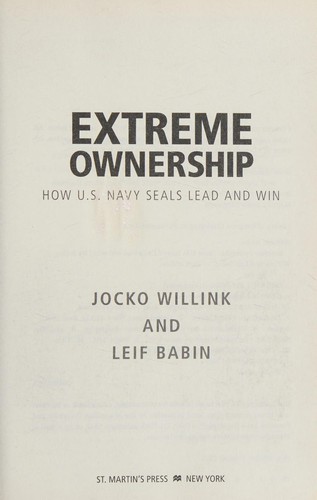
Jocko Willink and Leif Babin were SEAL officers who led Task Unit Bruiser during the 2006 Battle of Ramadi, one of the toughest campaigns of the Iraq War. After leaving the Navy, they co-founded a leadership consultancy, Echelon Front, and wrote Extreme Ownership in 2015. Each chapter pairs a combat story with a business example and a short lesson. The book became a leadership bestseller. It’s direct and military in tone. Here’s a summary of its main ideas.
Table of Contents
Extreme Ownership at a Glance
| Detail | Info |
|---|---|
| Authors | Jocko Willink and Leif Babin |
| Published | 2015 |
| Genre | Leadership, business, military memoir |
| Core idea | Leaders take total responsibility for outcomes |
| Structure | Twelve chapters in three parts: Winning the War Within, The Laws of Combat and Sustaining Victory |
| Best for | Managers, team leaders, coaches and anyone who wants to lead with accountability |
What Is Extreme Ownership About?
The authors open with a story from Ramadi, where a friendly-fire incident left a SEAL wounded and an Iraqi soldier dead. In the debrief, Willink, then task unit commander, decided to take the blame, saying that as the leader he was responsible for everything. The experience crystallized the concept of Extreme Ownership: leaders own everything in their world, including mistakes, and don’t blame others.
From that foundation, the book lays out principles for building strong teams: believe in the mission, check your ego, keep plans simple and prioritize under pressure.
Key Ideas, Part by Part
Winning the War Within
The first part focuses on mindset. Extreme Ownership means that if a team fails, the leader is responsible, whether through unclear instructions, a lack of training or poor buy-in. Instead of blaming subordinates, leaders ask what they could have done differently. The authors say this attitude builds trust and fosters accountability.
They also argue that there are no bad teams, only bad leaders. They illustrate with a SEAL training exercise in which the worst-performing boat crew swapped leaders with the best, and the performance flipped. Leaders must also believe in the mission so that they can explain why it matters. The last lesson in this part is to check the ego, because ego clouds judgment and prevents learning.
The Laws of Combat
The second part gives four laws. Cover and Move means that teams support each other, with one element providing cover while another moves, and that departments should help rather than compete. Simple means that plans must be easy to understand, so that every team member knows their role. Prioritize and Execute says that when many problems arise, leaders should identify the most important one, deal with it and then move to the next. Decentralized Command teaches that leaders can’t micromanage everything, so they should train others to make decisions that align with the commander’s intent.
The authors give the example of a complex operation in Ramadi in which clear, simple communication and strong cooperation with Army tanks and Iraqi forces made the difference.
Sustaining Victory
The third part addresses ongoing leadership. Planning is vital: the authors describe a process of analyzing the mission, identifying resources, deciding on a course of action, empowering leaders, checking the plan and debriefing afterward. They stress the need to plan for contingencies and to give clear commander’s intent.
They also discuss Leading Up and Down the Chain of Command. Leaders must lead their subordinates, but also their own bosses, by providing information and requesting support, and not blaming them for lack of direction. The last chapter highlights the importance of making decisions even with incomplete information, balancing aggression with caution.
Discipline and Humility
Throughout, the authors emphasize humility. Good leaders are confident but open to learning, and they take responsibility for their team’s growth. Willink later expanded on this in Discipline Equals Freedom. Both books stress that a strong sense of discipline in daily routines can lead to freedom in other areas of life.
The book closes with a reminder that leadership is the most important factor in the success or failure of any team, and that it is a skill that can be learned.
6 Key Takeaways From Extreme Ownership
- Own everything. Leaders are responsible for outcomes.
- There are no bad teams. There are bad leaders.
- Check your ego. Humility enables learning.
- Keep it simple. Clear plans lead to better execution.
- Prioritize and execute. Handle the biggest problem first.
- Lead up and down. Support your boss as well as your team.
Ideas Worth Remembering
- Blame is the enemy of improvement. (paraphrased)
- Leaders must believe in the mission to inspire others. (paraphrased)
- Teams win by helping each other. (paraphrased)
- Debrief every operation to learn. (paraphrased)
How to Apply Extreme Ownership in Real Life
- Take ownership after a failure. Ask what you could have done differently.
- Explain the why. Share the purpose behind a task.
- Simplify instructions. Check that everyone can restate the plan.
- List and rank problems. Tackle the top priority first.
- Run a debrief. Review what worked and what to fix.
Criticisms and Limits
Critics note that the military setting is very different from most businesses, and that comparing combat to commerce can feel strained or glib. The book’s emphasis on leaders taking all blame may overlook systemic problems and the responsibilities of individuals. Some readers also find the macho tone off-putting, and the case studies from the authors’ consulting clients lack detailed evidence.
Still, many leaders find the principles of ownership, clarity and humility useful. Take the lessons that fit your situation and combine them with care for your people.
Extreme Ownership in One Minute
Leaders own everything in their world, including failure. There are no bad teams, only bad leaders. Check your ego, believe in the mission, keep plans simple, prioritize and execute, delegate through decentralized command and lead both up and down the chain. Debrief to keep improving.
Ownership Without Taking Blame for Everything
Extreme ownership isn’t about accepting guilt for what you couldn’t control. It is about focusing on what you can change. If a project fails because of unclear instructions, the leader can fix the communication. If market conditions shift, the leader can adapt the plan. The idea is to avoid excuses and look for the next action. A healthy culture encourages team members to own their own parts too.
The Role of Commander’s Intent
Commander’s intent is a short statement of the goal and purpose of a mission, so that team members can make decisions on their own if conditions change. In business, a manager might say, our goal is to launch by June to meet a client deadline, so we may cut features but not quality. This clarity lets people act without waiting for orders, and reduces confusion.
Limits of Military Metaphors
Not every workplace can run like a military unit. Civilian teams have different rules, and employees may have less authority or training. The authors acknowledge this and emphasize the principles, not the tactics. Use the stories as inspiration for accountability and communication, and adapt them to your culture and the safety, legal and ethical context of your work.
A Debrief Template After a Project
SEAL teams hold a debrief after every operation, and the authors recommend the habit. Ask four questions: What was the goal? What happened? What worked? What should change next time? Keep the tone factual, focus on process instead of blame and let the leader speak last so others feel free to be honest. Write the lessons in a short note and review them before the next project. Over time, this routine turns mistakes into a library of practical lessons.
Two Sides of Leadership: The Dichotomy
A theme that appears in the book is balance. Leaders must be confident but not cocky, aggressive but not reckless, disciplined but not rigid and close with the team without losing authority. The authors suggest that most leadership problems come from tipping too far in one direction. Check which way you lean under stress, and ask a trusted colleague whether they see the same pattern. Adjusting a little can prevent big mistakes.
Who Should Read Extreme Ownership?
Read it if you lead people, coach a team or want to take more responsibility in your work. It’s a quick, gripping read with clear takeaways. For a quieter take on leadership and trust, pair it with Leaders Eat Last.
What to Read Next
- Discipline Equals Freedom: Field Manual by Jocko Willink a field manual for discipline
- Leaders Eat Last by Simon Sinek how trust and safety build strong teams
- Make Your Bed by William H. McRaven lessons from SEAL training
Related: Leaders Eat Last summary and key takeaways and Make Your Bed summary and key takeaways.
Frequently Asked Questions
What is the main idea of Extreme Ownership?
That leaders must take complete responsibility for their team’s results and avoid blaming others.
Who wrote Extreme Ownership?
Former Navy SEAL officers Jocko Willink and Leif Babin.
What does there are no bad teams mean?
That team performance depends largely on the quality of leadership.
What is decentralized command?
Training team members to make decisions in line with the leader’s intent.
Can civilians use the lessons?
Yes, though they need to adapt them to their own context.