
Disclosure: As an Amazon Associate, Bookish Wisdom earns from qualifying purchases. This doesn't change our picks or your price.
TL;DR: Sixteen years ago, the painter Amyas Crale was poisoned, and his wife Caroline was convicted of murder and died in prison. Now their grown daughter Carla asks Hercule Poirot to prove that her mother was innocent. With no new evidence, Poirot interviews the five people who were there that day and asks each to write an account of what happened.
Table of Contents
Five Little Pigs at a Glance
| Author | Agatha Christie |
| First published | 1942 |
| Type | Mystery novel |
| Best for | readers who want a thoughtful, character-driven mystery with an emotional solution |
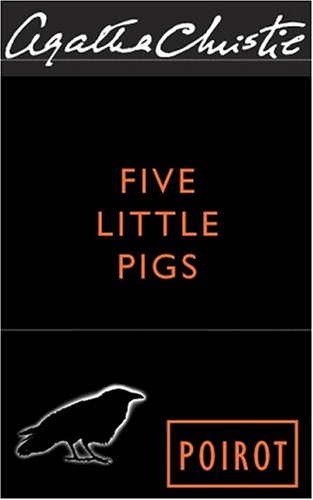
Five Little Pigs is a mystery novel by Agatha Christie, published in 1942. Many critics and readers rank it among her very best, thanks to its clever structure and moving ending. Below you will find a part-by-part summary, five key takeaways, ideas worth remembering and a note on who will enjoy it.
Content note: Includes poisoning, death in prison, infidelity and a childhood injury.
Main Characters
- Hercule Poirot: The detective, asked to solve a very old crime.
- Carla Lemarchant: The daughter who wants the truth about her mother.
- Caroline Crale: The wife convicted of the murder.
- Amyas Crale: A brilliant, selfish painter.
- Elsa Greer: The young woman Amyas was painting and planned to marry.
What Happens, Part by Part (Contains Spoilers)
An old case
Carla Lemarchant is about to marry, but she fears that her mother's guilt will haunt her. Before her death, Caroline wrote Carla a letter saying she was innocent. Poirot agrees to look at the case. He knows that the facts were never in doubt: Amyas died from coniine, a poison made from hemlock, in a glass of beer, and Caroline had taken the poison.
Five people
Poirot finds the five people present at the time, like the five little pigs of the nursery rhyme. They are Philip Blake, Amyas's oldest friend; Philip's brother Meredith, who brewed herbal medicines; Elsa Greer, now a wealthy lady and Amyas's former lover; Miss Williams, the family governess; and Angela Warren, Caroline's younger half-sister, who was scarred by Caroline in a fit of temper when she was a baby.
Five accounts
Poirot interviews each one and then asks them to write down their memories. Their accounts disagree in small but telling ways. Philip hated Caroline; Elsa was confident Amyas would leave his wife; Miss Williams saw Caroline wipe fingerprints from the beer bottle; Angela had once put a bitter herb into Amyas's beer as a prank.
Putting it together
Poirot studies what each witness saw and why they saw it that way. He notes that Caroline never really defended herself at the trial, as if she were protecting someone. He also looks at the painting Amyas was finishing of Elsa, which shows her expression on the final day. Slowly, a new picture of that afternoon appears.
The truth
Poirot reveals that Elsa killed Amyas. She overheard him say he would send her away once the painting was done, so she poisoned his beer. Caroline found Amyas dead and believed that Angela had done it, perhaps as another prank gone wrong. To protect her sister, she wiped the bottle and accepted the blame. Elsa, who won nothing, is left empty, and Carla finally knows her mother's innocence.
5 Key Takeaways
- Old crimes can still be solved with careful questions.
- Each witness sees events through their own feelings.
- Silence can be a form of protection.
- Love and guilt can lead people to sacrifice themselves.
- Psychology can be as revealing as physical clues.
Ideas Worth Remembering
These are paraphrased, not direct quotes:
- Memory is shaped by what we want to believe.
- The truth can heal, even years later.
- Winning at someone else's cost can leave you with nothing.
Who Should Read Five Little Pigs?
Read Five Little Pigs if you enjoy psychological mysteries, cold cases and stories built around memory. It suits teens and adults.
About Agatha Christie
Agatha Christie (1890–1976) was an English mystery author whose books include And Then There Were None, Murder on the Orient Express and The Murder of Roger Ackroyd. She wrote 33 novels featuring Hercule Poirot. Five Little Pigs shows her growing interest in character and memory, and it was later adapted as a respected episode of the David Suchet Poirot series.
Questions to Think About After Reading
These prompts work for solo reading, a book club or a classroom discussion of Five Little Pigs:
- Why did Caroline accept the blame?
- How do the five accounts differ from one another?
- Is Elsa a villain or a victim?
How to Use This Summary
Use this page as a quick reference before a book club meeting, an exam, or a decision about whether Five Little Pigs is worth your time. The takeaways are written to stand on their own. If a point interests you, go back to the book for the author's full story, characters and style, which no short summary can replace.
A Note on Accuracy and Spoilers
This summary is based on the published text of Five Little Pigs, not on any film, series or stage adaptation, which often change the story. Details are kept at the level of the main events so that nothing is invented. Editions differ slightly in length and wording, so page numbers and small details may vary between copies.
Should You Read the Book?
Yes. It is one of Christie's finest novels, with a sad and satisfying ending.
Check price of Five Little Pigs on Amazon
What to Read Next
- The Murder of Roger Ackroyd by Agatha Christie: Poirot's most famous twist
- Sleeping Murder by Agatha Christie: Miss Marple solves an old crime
- The Daughter of Time by Josephine Tey: a detective investigates a centuries-old mystery
Related: Evil Under the Sun by Agatha Christie: Summary and Key Takeaways · The ABC Murders by Agatha Christie: Summary and Key Takeaways
Frequently Asked Questions
What is Five Little Pigs about?
Poirot reopens a 16-year-old murder case to prove a convicted woman innocent.
Who wrote it?
Agatha Christie, in 1942.
Who was murdered?
Amyas Crale, a painter.
Who was convicted?
His wife, Caroline Crale.
Who really killed Amyas?
Elsa Greer.
Why is it called Five Little Pigs?
It refers to the nursery rhyme “This little piggy,” which Poirot links to the five suspects.
Is it also called Murder in Retrospect?
Yes, that was its title in the United States.
What poison was used?
Coniine, taken from hemlock.
What age is it for?
Teens and adults.
How long is it?
About 250 pages.
Is there an adaptation?
Yes. A 2003 episode of Agatha Christie's Poirot starring David Suchet.
Is it sad?
Yes. Its ending is one of Christie's most emotional.
Do I need to read other Poirot books first?
No. It stands alone, although readers who know Poirot will enjoy seeing a quieter side of him.
Is Five Little Pigs worth reading?
It depends on what you want. The book is best for readers who want a thoughtful, character-driven mystery with an emotional solution. If that describes you, it is likely a good fit. If not, the titles under What to Read Next may suit you better.