
Disclosure: As an Amazon Associate, Bookish Wisdom earns from qualifying purchases. This doesn't change our picks or your price.
TL;DR: Victor Frankenstein, a young scientist, builds a living creature from dead body parts and then abandons it in horror. Rejected by everyone, the creature becomes bitter and violent, and it takes revenge on Victor's family. The two pursue each other to the Arctic in a tragedy about ambition and responsibility.
Table of Contents
Frankenstein at a Glance
| Author | Mary Shelley |
| First published | 1818 |
| Type | Gothic novel |
| Best for | readers who want the classic that started science fiction and asks what makes us human |
Frankenstein; or, The Modern Prometheus is a novel by Mary Shelley, first published in 1818 when she was just twenty. Told through letters and nested narratives, it is often called the first science fiction novel. Below you will find a part-by-part summary, five key takeaways, ideas worth remembering and a note on who will enjoy it.
Content note: Includes murder and death.
Main Characters
- Victor Frankenstein: An ambitious young scientist who creates life and then rejects it.
- The Creature: Victor's creation, intelligent and sensitive, turned bitter by rejection.
- Robert Walton: An Arctic explorer who rescues Victor and records his story.
- Elizabeth Lavenza: Victor's adopted sister and fiancée.
- Henry Clerval: Victor's loyal best friend.
What Happens, Part by Part (Contains Spoilers)
Walton's letters
The story opens with letters from Robert Walton, an explorer whose ship is trapped in Arctic ice. His crew rescues a half-frozen man, Victor Frankenstein, who has been chasing a giant figure across the ice. Victor tells Walton his story as a warning against dangerous ambition.
Creating life
As a student in Ingolstadt, Victor becomes obsessed with the secret of life. After years of work, he brings a creature assembled from body parts to life. Horrified by its ugliness, he runs away and falls ill. The creature disappears, and Victor's young brother William is later murdered. An innocent servant, Justine, is executed for the crime.
The creature's story
The creature finds Victor in the mountains and tells his story. Abandoned, he learned to speak and read by secretly watching a family, the De Laceys, but when he revealed himself, they fled in fear. Rejected everywhere, he became angry and killed William. He asks Victor to create a female companion.
The broken promise
Victor agrees and begins building a female creature in Scotland, but he destroys it, fearing the creatures might breed. The furious creature vows, “I will be with you on your wedding night.” He kills Victor's friend Clerval and, on Victor's wedding night, murders Elizabeth.
The ending
Victor's father dies of grief, and Victor pursues the creature to the Arctic. Exhausted, Victor dies on Walton's ship. The creature appears, grieving over his creator, and tells Walton he will end his own life. He disappears into the darkness on an ice raft.
5 Key Takeaways
- Scientific ambition without responsibility can have terrible consequences.
- Rejection and loneliness can turn the innocent into the monstrous.
- Creators are responsible for what they create.
- Revenge consumes both pursuer and pursued.
- The novel asks what makes someone human.
Ideas Worth Remembering
These are paraphrased, not direct quotes:
- Responsibility does not end when the experiment succeeds.
- Kindness might have prevented the tragedy.
- The real monster may be the one who abandons.
Who Should Read Frankenstein?
Read Frankenstein if you enjoy gothic stories, science fiction or big moral questions. Its old-fashioned style takes patience, but it rewards older teens and adults.
Questions to Think About After Reading
These prompts work for solo reading, a book club or a classroom discussion of Frankenstein:
- Who is the real monster: Victor or the creature?
- Should Victor have made the female companion?
- What does Frankenstein say about modern science?
How to Use This Summary
Use this page as a quick reference before a book club meeting, an exam, or a decision about whether Frankenstein is worth your time. The takeaways are written to stand on their own. If a point interests you, go back to the book for the author's full story, characters and style, which no short summary can replace.
A Note on Accuracy and Spoilers
This summary is based on the published text of Frankenstein, not on any film, series or stage adaptation, which often change the story. Details are kept at the level of the main events so that nothing is invented. Editions differ slightly in length and wording, so page numbers and small details may vary between copies.
Should You Read the Book?
If the summary caught your interest, read the opening chapters before you decide. A summary tells you what happens, but the voice and pacing are what make a book work or not.
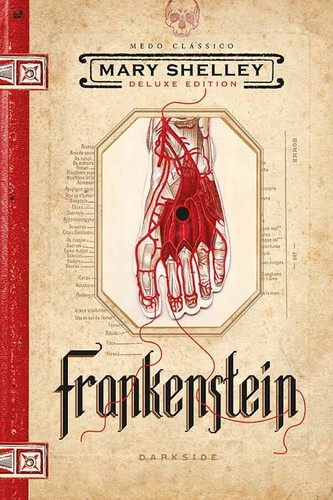
Check price of Frankenstein on Amazon
What to Read Next
- Dracula by Bram Stoker: the other great gothic monster novel
- Never Let Me Go by Kazuo Ishiguro: a modern novel about created life
- The Strange Case of Dr Jekyll and Mr Hyde by Robert Louis Stevenson: a scientist unleashes his dark side
Related: 15 Books Like Frankenstein You’ll Love
Frequently Asked Questions
What is Frankenstein about?
A scientist creates a living creature, abandons it and suffers its revenge.
Is Frankenstein the monster's name?
No. Frankenstein is the scientist; the creature has no name.
How old was Mary Shelley?
She began writing it at eighteen and published it at twenty.
What does “The Modern Prometheus” mean?
It compares Victor to the Greek Titan who stole fire and was punished.
Is Frankenstein science fiction?
Many consider it the first science fiction novel.
How does it end?
Victor dies, and the creature leaves to end his own life.
Is the book like the films?
No. In the book, the creature is articulate and intelligent.
How long is it?
Around 200 to 300 pages.
Is Frankenstein worth reading?
It depends on what you want. The book is best for readers who want the classic that started science fiction and asks what makes us human. If that describes you, it is likely a good fit. If not, the titles under What to Read Next may suit you better.