

Disclosure: As an Amazon Associate, Bookish Wisdom earns from qualifying purchases. This doesn't change our picks or your price.
TL;DR: Three young adults in their late twenties, Andy, Dag and Claire, have quit their jobs and moved to Palm Springs, California, to escape consumer culture. They work low-paying “McJobs” and tell each other strange, invented stories about the end of the world, love and meaning, trying to find a life that feels real.
Table of Contents
Generation X at a Glance
| Author | Douglas Coupland |
| First published | 1991 |
| Type | Novel |
| Best for | readers who want a witty, era-defining novel about young adults |
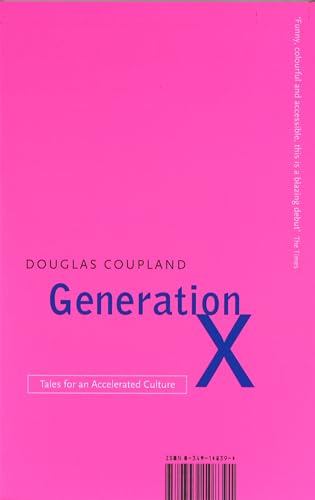
Generation X: Tales for an Accelerated Culture is a novel by Douglas Coupland, published in 1991. It popularized the term “Generation X” and coined phrases like “McJob.” Below you will find a part-by-part summary, five key takeaways, ideas worth remembering and a note on who will enjoy it.
Content note: Includes drinking, drug references and mild language.
Main Characters
- Andy Palmer: The narrator, who has left his job.
- Dag Bellinghausen: A sardonic former advertising worker.
- Claire Baxter: A thoughtful woman from a wealthy family.
- Tobias: A handsome, shallow yuppie Claire falls for.
- Elvissa: A mysterious friend of Claire.
What Happens, Part by Part (Contains Spoilers)
Escaping the system
Andy, Dag and Claire have all dropped out of conventional careers. In Palm Springs they live in cheap bungalows and work low-wage jobs as bartenders and clerks. They feel alienated from the consumerism and career pressure of the 1980s.
Bedtime stories
The friends tell each other stories, fables about astronauts, nuclear disaster, frozen souls and strange towns. These stories help them make sense of anxieties about the future, nuclear war and environmental destruction.
Margins and slogans
The book's margins are full of definitions, cartoons and slogans, coining terms such as “McJob” and “historical underdosing.” They capture the frustrations of a generation facing fewer opportunities than their parents.
Relationships
Claire falls for Tobias, who represents the materialist world the friends rejected. She follows him to New York and is disappointed. Andy visits his family in Portland for Christmas, reflecting on family and the distance between generations.
A new direction
Dag and Claire plan to start a hotel in Mexico, and Andy decides to join them. Driving south, Andy has a strange, hopeful experience with a flock of egrets and a group of disabled children, a moment of connection that suggests new beginnings.
5 Key Takeaways
- Rejecting consumerism is a search for meaning.
- Stories help people cope with anxiety.
- Each generation faces its own economic pressures.
- Friendship can be a refuge.
- Meaning often comes from small, unexpected moments.
Ideas Worth Remembering
These are paraphrased, not direct quotes:
- A job does not have to define your identity.
- Fear of the future can be shared through stories.
- Simple living can feel more honest than success.
Who Should Read Generation X?
Read Generation X if you are curious about 1990s culture or feel uneasy about modern career pressure. It suits adults and older teens.
Questions to Think About After Reading
These prompts work for solo reading, a book club or a classroom discussion of Generation X:
- Why do the friends leave their careers?
- What do the bedtime stories reveal?
- Does the book still describe young people today?
How to Use This Summary
Use this page as a quick reference before a book club meeting, an exam, or a decision about whether Generation X is worth your time. The takeaways are written to stand on their own. If a point interests you, go back to the book for the author's full story, characters and style, which no short summary can replace.
A Note on Accuracy and Spoilers
This summary is based on the published text of Generation X, not on any film, series or stage adaptation, which often change the story. Details are kept at the level of the main events so that nothing is invented. Editions differ slightly in length and wording, so page numbers and small details may vary between copies.
Should You Read the Book?
Yes. It is short, funny and full of ideas, and many of its observations feel surprisingly current.
Check price of Generation X on Amazon
What to Read Next
- Microserfs by Douglas Coupland: young tech workers in the 1990s
- Fight Club by Chuck Palahniuk: rebellion against consumerism
- White Noise by Don DeLillo: anxiety and consumer culture
Frequently Asked Questions
What is Generation X about?
Three young adults drop out of careers and live in Palm Springs, telling stories about modern life.
Who wrote it?
Douglas Coupland, in 1991.
Did it coin the term Generation X?
It popularized the term for people born roughly in the 1960s and 1970s.
What is a McJob?
A low-paying, low-prestige job with no future, a term coined in the book.
Where is it set?
In Palm Springs, California.
What age is it for?
Adults and older teens.
How long is it?
About 180 pages.
Why are there notes in the margins?
They define new words and ideas about the generation.
Is it a traditional novel?
No. It is a loose collection of stories and observations.
What is the full title?
Generation X: Tales for an Accelerated Culture.
Why do they move to Palm Springs?
They want a quiet, cheap place far from the pressures of city careers.
What happens at the end?
Andy drives toward Mexico to join Dag and Claire's plan for a small hotel, after a moving encounter with egrets.
Who are the main characters in Generation X?
The main characters are Andy Palmer, Dag Bellinghausen, Claire Baxter, Tobias and Elvissa. Andy Palmer: The narrator, who has left his job. Dag Bellinghausen: A sardonic former advertising worker. Claire Baxter: A thoughtful woman from a wealthy family.
Is Generation X worth reading?
It depends on what you want. The book is best for readers who want a witty, era-defining novel about young adults. If that describes you, it is likely a good fit. If not, the titles under What to Read Next may suit you better.