

Disclosure: As an Amazon Associate, Bookish Wisdom earns from qualifying purchases. This doesn't change our picks or your price.
TL;DR: Wayside School was accidentally built thirty stories high, with one classroom on each floor, instead of thirty classrooms side by side. This book tells thirty short, silly stories about the students and teachers on the thirtieth floor, from the mean Mrs. Gorf, who turns kids into apples, to the kind Louis the yard teacher.
Table of Contents
Sideways Stories from Wayside School at a Glance
| Author | Louis Sachar |
| First published | 1978 |
| Type | Children's book |
| Best for | young readers who love absurd, laugh-out-loud humor |
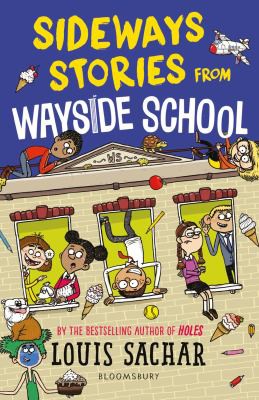
Sideways Stories from Wayside School is a children's book by Louis Sachar, published in 1978. It was his first book and began the Wayside School series. Below you will find a story-by-story summary, five key takeaways, ideas worth remembering and a note on who will enjoy it.
Content note: Very gentle; includes silly, fairy-tale-style peril.
Main Characters
- Mrs. Jewls: The kind, sometimes confused teacher of the thirtieth floor.
- Mrs. Gorf: A mean teacher who turns students into apples.
- Louis: The friendly yard teacher.
- Todd: A boy who always gets sent home early on the kindergarten bus.
- Sharie: A sleepy girl in a big red-and-blue coat.
What Happens, Part by Part (Contains Spoilers)
A sideways school
The builder of Wayside School stacked the classrooms on top of each other instead of side by side. Each chapter is about a different student on the thirtieth floor, with a funny twist, and there is no nineteenth story.
Mrs. Gorf
The class's first teacher, Mrs. Gorf, wiggles her ears and sticks out her tongue to turn misbehaving students into apples. The children trick her by holding up a mirror, and she turns into an apple herself. Louis eats it, unaware.
Mrs. Jewls
The new teacher, Mrs. Jewls, is sweet but strange. She thinks the children are monkeys at first. She teaches them in odd ways, such as dropping a computer out of the window to show gravity.
The students
Stories include Joe, who cannot count but always gets the right answer; Sharie, who sleeps through class and falls out of the window; Todd, who is always sent home on the kindergarten bus; and Calvin, who is asked to deliver a note to Miss Zarves on the nineteenth floor, which does not exist.
The last story
The final story is about Louis, the yard teacher, who tells the reader he made up the stories. When he visits the real Wayside School, the children think his stories about ordinary kids are the strange ones.
5 Key Takeaways
- Humor can make school feel lighter.
- Everyone is a little odd in their own way.
- Kindness beats meanness.
- Rules do not always make sense.
- Imagination makes ordinary places magical.
Ideas Worth Remembering
These are paraphrased, not direct quotes:
- Silly stories can still say something true.
- Every student has a story.
- Sometimes the weirdest place feels normal to the people in it.
Who Should Read Sideways Stories from Wayside School?
Read Sideways Stories from Wayside School if you love silly, surprising stories. It suits readers about 7 to 11 and works well read aloud.
Questions to Think About After Reading
These prompts work for solo reading, a book club or a classroom discussion of Sideways Stories from Wayside School:
- Which student would you like to be friends with?
- What would your own sideways classroom be like?
- Why is there no nineteenth story?
How to Use This Summary
Use this page as a quick reference before a book club meeting, an exam, or a decision about whether Sideways Stories from Wayside School is worth your time. The takeaways are written to stand on their own. If a point interests you, go back to the book for the author's full story, characters and style, which no short summary can replace.
A Note on Accuracy and Spoilers
This summary is based on the published text of Sideways Stories from Wayside School, not on any film, series or stage adaptation, which often change the story. Details are kept at the level of the main events so that nothing is invented. Editions differ slightly in length and wording, so page numbers and small details may vary between copies.
Should You Read the Book?
Yes. Each chapter is short and funny, making it a great choice for reluctant readers and for reading aloud.
Check price of Sideways Stories from Wayside School on Amazon
What to Read Next
- Wayside School Is Falling Down by Louis Sachar: the sequel
- Holes by Louis Sachar: Sachar's award-winning novel
- Diary of a Wimpy Kid by Jeff Kinney: funny school misadventures
Related: 15 Books Like Holes by Louis Sachar You’ll Love: Funny, Clever and Full of Heart · Holes by Louis Sachar: Summary and Key Takeaways
Frequently Asked Questions
What is Sideways Stories from Wayside School about?
Thirty silly stories about students in a school built thirty stories high.
Who wrote it?
Louis Sachar, in 1978.
Why is the school sideways?
It was built with classrooms stacked up instead of side by side.
What happens to Mrs. Gorf?
She is turned into an apple by her own trick.
Is there a nineteenth story?
No. There is no nineteenth floor and no Miss Zarves.
Is there a sequel?
Yes, Wayside School Is Falling Down and more.
What age is it for?
About 7 to 11.
How long is it?
About 120 pages.
Is there a TV show?
Yes, an animated Wayside series.
Who is Louis?
The yard teacher and, in the book, its storyteller.
Is it good for reluctant readers?
Yes. The chapters are short, funny and easy to read one at a time.
Who are the main characters in Sideways Stories from Wayside School?
The main characters are Mrs. Jewls, Mrs. Gorf, Louis, Todd and Sharie. Mrs. Jewls: The kind, sometimes confused teacher of the thirtieth floor. Mrs. Gorf: A mean teacher who turns students into apples. Louis: The friendly yard teacher.
Is Sideways Stories from Wayside School worth reading?
It depends on what you want. The book is best for young readers who love absurd, laugh-out-loud humor. If that describes you, it is likely a good fit. If not, the titles under What to Read Next may suit you better.