
Disclosure: As an Amazon Associate, Bookish Wisdom earns from qualifying purchases. This doesn't change our picks or your price.
Quick answer: Isaac Asimov wrote seven Foundation books: the original trilogy, Foundation (1951), Foundation and Empire (1952) and Second Foundation (1953), two sequels, Foundation's Edge (1982) and Foundation and Earth (1986), and two prequels, Prelude to Foundation (1988) and Forward the Foundation (1993). Other authors later added a Second Foundation trilogy, and the series inspired an Apple TV+ show.
Table of Contents
Key Facts
| Item | Detail |
|---|---|
| Author | Isaac Asimov |
| Books by Asimov | 7 |
| Original trilogy | 1951-1953 |
| Prequels | Prelude to Foundation and Forward the Foundation |
| Adaptation | Apple TV+ series Foundation |
The Foundation Books in Order
1. The original trilogy
Mathematician Hari Seldon uses psychohistory, a science that predicts the behavior of huge populations, to foresee the Galactic Empire's fall. He creates the Foundation to shorten the coming dark age, and the trilogy follows its leaders through generations of crises.
2. Foundation's Edge (1982)
Written three decades later, this Hugo-winning sequel follows the search for the hidden Second Foundation and expands the universe.
3. Foundation and Earth (1986)
Golan Trevize searches for humanity's legendary home planet, connecting Foundation to Asimov's robot stories.
4. Prelude to Foundation (1988)
A young Hari Seldon arrives on the capital planet Trantor and begins developing psychohistory.
5. Forward the Foundation (1993)
Asimov's final novel follows Seldon through later life as he builds his plan.
6. Connected universe
Asimov linked Foundation with his Robot and Empire novels, so some fans read all of them in story order.
Things That Confuse New Readers
- Starting with the prequels. They spoil reveals and lack the original trilogy's sense of mystery.
- Expecting action-heavy space battles. The books focus on ideas, politics and clever solutions.
- Assuming the TV show matches. The Apple series changes characters and plots significantly.
- Reading the other authors' books first. Begin with Asimov's originals.
- Skipping the later books. They tie many threads together.
How to Keep Track of a Long Series
Series grow over time, and publishers sometimes add novellas, companion books, graphic novel versions and special editions. The simplest way to stay up to date is to check the author's or publisher's official website, which lists the current order and any announced releases. Library catalogs and apps like Libby also group books by series number, which makes it easy to borrow them in order. If you are buying a boxed set, compare the titles on the box with the full list so you know whether newer books are missing. When reading with a child, let them tick off each book as they finish it, because a visible list turns a long series into an adventure rather than a chore.
When a series has several reading orders, such as publication order and story order, there is no single right answer. Publication order shows how the author's world grew, while story order follows events from start to finish. For a first read, publication order usually works best.
Finally, remember that the best series to read is the one that keeps you turning pages. If the first book does not grab you, it is fine to stop and try another series instead.
If you are deciding whether to commit to a long series, read the first book's opening chapters for free through a library app or an online preview. Many readers also check a spoiler-free series guide before buying, so they know how many books, novellas and extras to expect.
Bookshops and libraries can also order missing titles for you, and secondhand shops are a good place to fill gaps in an older series at a low price.
If you are buying a series as a gift, start with the first book or a boxed set of the opening titles. That lets the reader discover whether they love the world before you invest in the whole collection, and later books make easy follow-up presents.
Many readers also enjoy rereading a favorite series. Knowing how the story ends lets you notice foreshadowing, small details and character moments that are easy to miss the first time through.
Helpful Books and Resources
-
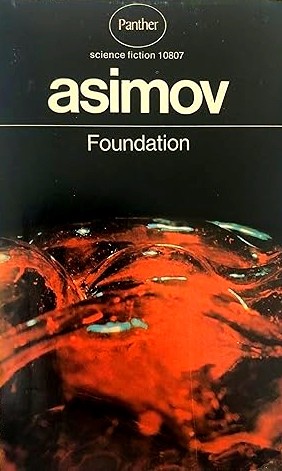
Foundation by Isaac Asimov
-
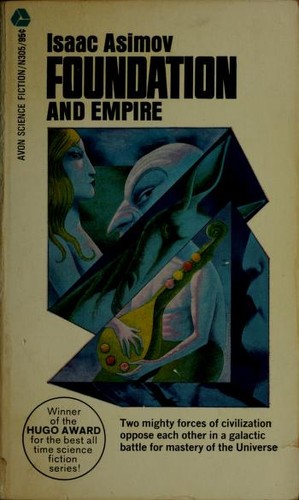
Foundation and Empire by Isaac Asimov
-
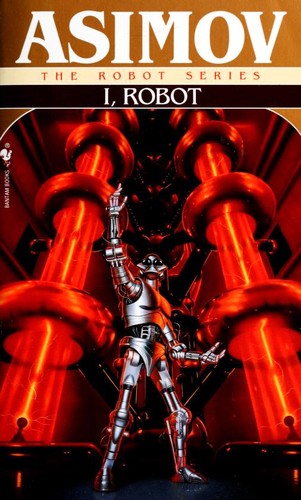
I, Robot by Isaac Asimov
Related: Foundation by Isaac Asimov: Summary and Key Takeaways · I, Robot by Isaac Asimov: Summary and Key Takeaways
Frequently Asked Questions
How many Foundation books are there?
Seven by Asimov.
What order should I read Foundation in?
Publication order, starting with Foundation.
What is psychohistory?
A fictional science that predicts the future of large populations.
Is there a Foundation TV show?
Yes, on Apple TV+.
Do I need to read Asimov's robot books?
Not required, but they add connections.
Who is Hari Seldon?
The mathematician who creates the Foundation plan.
Did Foundation win awards?
The trilogy won a special Hugo Award for best all-time series in 1966.
Is Foundation hard to read?
It is dialogue-heavy but accessible.
What age suits Foundation?
Teens and adults.
What is the Second Foundation?
A hidden group guiding the plan.
Who wrote later Foundation books?
Gregory Benford, Greg Bear and David Brin.
What should I read next?
Try The Left Hand of Darkness by Ursula K. Le Guin or Leviathan Wakes by James S. A. Corey.
Is Foundation based on history?
Asimov was inspired partly by Edward Gibbon's history of the decline and fall of the Roman Empire.
How long is the original trilogy?
Each book is fairly short, around 250 pages.