

Disclosure: As an Amazon Associate, Bookish Wisdom earns from qualifying purchases. This doesn’t change our picks or your price.
TL;DR: I Will Teach You to Be Rich by Ramit Sethi offers a six-week program for taking control of your money: optimize credit cards and bank accounts, set up automatic transfers, invest in simple low-cost funds and plan a conscious spending budget that lets you spend lavishly on what you love while cutting back on what you do not.
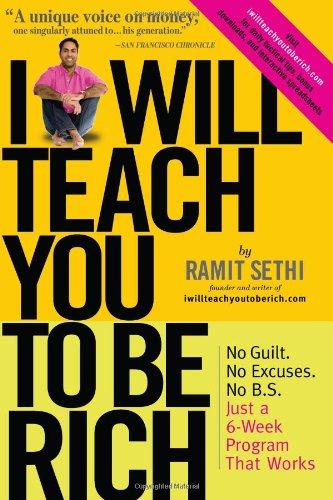
Many personal finance books focus on frugality and guilt. Ramit Sethi, an author and entrepreneur, takes a different approach. In I Will Teach You to Be Rich, first published in 2009 and updated in a second edition in 2019, he argues that getting your finances on autopilot matters more than counting every latte. The book promises a practical six-week plan with scripts, steps and examples, written in a direct, funny voice. It’s aimed at young professionals but useful for anyone. Here’s a summary of its main ideas.
Table of Contents
I Will Teach You to Be Rich at a Glance
| Detail | Info |
|---|---|
| Author | Ramit Sethi |
| Published | 2009 (second edition 2019) |
| Genre | Personal finance |
| Core idea | Automate your money and spend extravagantly on what you love |
| Structure | A six-week program in sections from accounts to investing |
| Best for | Young professionals, beginners and anyone who wants a system without constant budgeting |
What Is I Will Teach You to Be Rich About?
Sethi’s philosophy is that the biggest wins come from a few big decisions, not from tiny sacrifices. He calls this the 85 percent solution: getting the main elements of your financial life right, such as accounts, automatic saving and investing, is better than chasing perfection.
He also challenges the idea that saving means deprivation. Instead of cutting everything, he suggests deciding what is worth spending on and spending without guilt on those things, while cutting costs mercilessly on the things you do not care about.
Key Ideas, Part by Part
Fixing Your Credit Cards and Banking
The early weeks focus on getting a handle on credit cards. Sethi encourages readers to check their credit reports, understand their credit score, pay off high-interest debt and negotiate fees. He provides scripts for calling a credit card company to ask for a lower interest rate or to waive fees.
He then moves to bank accounts, recommending a checking account without fees and a high-yield savings account for emergency funds, and teaches readers how to compare options.
Investing the Simple Way
The central investing advice is to keep it simple. Sethi explains how a 401(k) with an employer match is a high priority, since the match is essentially free money. He explains Roth IRAs and the case for low-cost index funds and target-date funds, which spread money across many assets for a small fee.
He stresses the cost of high fees and the benefit of starting early, using compound interest to show how small amounts grow. He also warns against trying to pick winning stocks or time the market and says that most people are better off with a boring portfolio.
Conscious Spending
The book’s best-known idea is the conscious spending plan. Sethi suggests dividing money into four categories: fixed costs such as rent and bills, which should be about 50 to 60 percent of take-home pay, investments of about 10 percent, savings goals of 5 to 10 percent and guilt-free spending of 20 to 35 percent.
The point is to make spending intentional. If you love travel or concerts, plan for it and enjoy it, but trim costs elsewhere. Sethi encourages readers to calculate their own numbers instead of following rules blindly.
Automation and Mindset
Sethi advises setting up automatic transfers so that money moves into savings and investments every payday, before you can spend it. An automatic system, he says, beats willpower, because it removes the need for daily decisions.
He also encourages readers to confront their money beliefs, to avoid excuses and to focus on actions. The book finishes with advice on negotiating salary, earning more and building habits that last, along with a reminder that the goal is a rich life, defined by what matters to you.
6 Key Takeaways From I Will Teach You to Be Rich
- Automate everything. Let your system save and invest for you.
- Focus on big wins. Getting the main decisions right beats small savings.
- Spend on what you love. Cut costs mercilessly on things you don’t care about.
- Keep investing simple. Low-cost index funds suit most people.
- Know your credit. Use credit cards wisely and pay them off.
- Define your own rich life. Money should support your values.
Ideas Worth Remembering
- Willpower fades; automation doesn’t. (paraphrased)
- A guilt-free spending plan makes saving sustainable. (paraphrased)
- Fees matter a lot over decades. (paraphrased)
- Start now, even with small amounts. (paraphrased)
How to Apply I Will Teach You to Be Rich in Real Life
- Check your credit report. Review it for errors and plan how to improve your score.
- Open a high-yield savings account. Move your emergency fund there.
- Capture the match. Contribute enough to your 401(k) to get the full employer match.
- Set up automatic transfers. Schedule them for payday.
- Design a conscious spending plan. Choose your top three spending priorities.
Criticisms and Limits
Critics note that the book is aimed at people with decent incomes and may seem out of touch for those struggling with basic bills. Some of the specific recommendations, such as particular banks or products, have dated. The advice on credit cards, which encourages using rewards cards responsibly, can be risky for people prone to overspending. The tone can come across as brash.
Still, the focus on systems and the permission to spend on what you value are refreshing. Take the framework and adjust it to your own life.
I Will Teach You to Be Rich in One Minute
Get the big systems right: low-fee accounts, a paid-off or well-managed credit card and automatic transfers to savings and investing. Invest in simple low-cost funds and take the employer match. Use a conscious spending plan to spend on what you love and cut what you do not. Automate so willpower is not required.
The Latte Factor Debate
Personal finance writers often tell people to skip daily coffee. Sethi disagrees, saying that skipping small treats seldom changes your life, while negotiating a raise or reducing a large recurring cost does. If coffee makes you happy and you can afford it, keep it. This message appeals to readers who feel guilty about spending, though some argue that small leaks can also add up, so the best answer depends on your budget.
Negotiation Scripts
One of the most practical parts of the book is its scripts. For example, when calling a credit card company, you might say you have been a loyal customer, that you have received a competing offer and that you would like a lower interest rate. Sethi encourages readers to practice, stay polite and be persistent. Even a small change in rate can save hundreds of dollars over time.
Who May Need Something Different
The book assumes a steady income and access to employer accounts, which not everyone has. People with heavy debt may need a dedicated payoff plan before investing, and those with irregular income might need larger cash buffers. Residents outside the United States will find that account types and tax rules differ. Use the principles, such as automation and low fees, and adapt the details to your location.
A Six-Week Roadmap at a Glance
The program is organized as a rough weekly schedule. In the first week, you set up your credit cards and review your credit report. In the second, you open the right bank accounts. In the third, you get started with a retirement account and the employer match. In the fourth, you learn how to design your conscious spending plan. In the fifth, you learn about investing basics, and in the sixth, you automate the whole system. Treat the timeline as flexible; the goal is to finish with a working system.
Mistakes Beginners Make
Common errors include waiting for the perfect time to invest, paying high fees without noticing them and keeping all savings in a low-interest account. Others forget to claim the employer match or let cash sit while carrying high-interest debt. Sethi’s remedy is to start small, automate and review once or twice a year instead of checking daily. Done is better than perfect, and early imperfect action beats years of research without a plan.
Who Should Read I Will Teach You to Be Rich?
Read it if you are new to money management, want a modern, unfussy plan or dislike strict budgeting. It suits readers who like step-by-step instructions and scripts. For a more debt-focused approach, compare it with The Total Money Makeover.
What to Read Next
- The Total Money Makeover by Dave Ramsey a step-by-step debt payoff plan
- The Psychology of Money by Morgan Housel timeless lessons on wealth and behavior
- The Simple Path to Wealth by J. L. Collins a plain guide to index fund investing
Related: The Total Money Makeover summary and key takeaways and The Psychology of Money summary and key takeaways.
Frequently Asked Questions
What is the main idea of I Will Teach You to Be Rich?
That automating your finances and focusing on big decisions beats obsessing over small expenses.
What is a conscious spending plan?
A budget that sets aside money for fixed costs, investing and savings, and leaves a guilt-free portion for what you enjoy.
Is the book only for young people?
It targets young adults, but the ideas on automation and low-cost investing apply at any age.
Does it recommend index funds?
Yes, low-cost index and target-date funds are the core investment advice.
What should I read after this book?
Try The Psychology of Money or The Simple Path to Wealth.