
Disclosure: As an Amazon Associate, Bookish Wisdom earns from qualifying purchases. This doesn’t change our picks or your price.
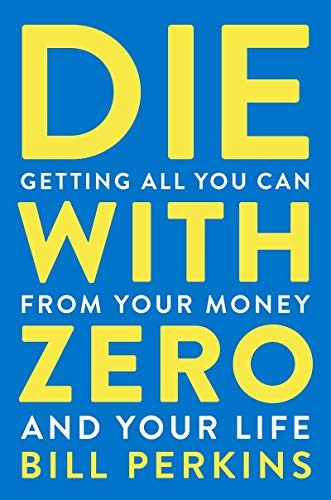
TL;DR: Die With Zero: Getting All You Can from Your Money and Your Life by Bill Perkins argues that the goal of money is to trade it for experiences, and that many people over-save and die with unused wealth. He encourages readers to plan for peak experiences, invest in memories, give to family earlier and aim to spend down their wealth while still enjoying life.
Most financial advice tells you to save more. In Die With Zero, published in 2020, Bill Perkins asks a different question: what is all that saving for? Perkins, a businessman and former hedge fund manager, says that many people work for decades, build large balances and then die without having used them, which means they traded away life energy for nothing. The book is a lively argument for balancing saving with living. It’s also a reminder that his approach assumes a certain level of financial security. Here’s a summary of its main ideas.
Table of Contents
Die With Zero at a Glance
| Detail | Info |
|---|---|
| Author | Bill Perkins |
| Published | 2020 |
| Genre | Personal finance, life planning |
| Core idea | Use your money to maximize life experiences, not to maximize your final balance |
| Structure | Nine rules covering experiences, timing, giving and risk |
| Best for | Savers, mid-career professionals and anyone planning retirement or considering life priorities |
What Is Die With Zero About?
Perkins starts with a story about an ant that works all summer and a grasshopper that plays, and notes that the ant never gets to enjoy its savings. He argues that the usual moral, save and prepare, is incomplete. The aim should be to balance both, so that you do not wait until you are too old or too ill to enjoy your money.
The book is built around nine rules that cover maximizing experiences, investing in memories, understanding peak times of life and giving earlier. Perkins uses the term life energy to remind readers that money is earned by trading time and effort.
Key Ideas, Part by Part
Maximize Your Life Experiences
Perkins says that the aim is to maximize positive experiences, not wealth. He suggests asking what experiences you want and when. Because the capacity to enjoy certain things declines with age, delaying them can mean missing them altogether, and he describes this as the cost of waiting.
He introduces memory dividends. An experience gives you enjoyment in the moment and then keeps paying returns in the form of memories you can revisit and share. A trip with friends at thirty can provide dividends for decades, which is a reason to prioritize meaningful experiences early.
Time Buckets and Peak Timing
To plan, Perkins proposes time buckets: divide your life into five-year or ten-year periods and decide what experiences you want in each. Some activities, such as hiking, skiing or having young children at home, fit certain ages. Others, like reading, may be enjoyed at any age.
He also urges readers to consider the right time to take risks and make memories, noting that physical energy declines, while money typically grows until later in life. The ideal point to spend more is therefore earlier than many people think.
Giving at the Right Time
Perkins argues that waiting to leave an inheritance at death is often a poor use of money. Heirs typically receive it in their sixties, when they are less likely to need it, whereas gifts in their twenties or thirties can fund a home, education or business at a time when they matter more. He suggests giving to family and charity while you are alive, so that you can see the effect.
The point is to decide intentionally how much to leave, instead of letting the amount be the result of caution.
Planning to Spend Down
The title does not mean literally dying with no money. Perkins acknowledges uncertainty, such as how long you will live and what healthcare will cost. He suggests running scenarios, considering annuities that pay income for life to cover longevity risk and keeping a buffer. He also says that you should be ready to adjust your plan.
He gives examples of people who regretted working too long or skipping adventures, and encourages readers to start now with small steps, such as scheduling a trip, taking a class or spending time with friends and family.
6 Key Takeaways From Die With Zero
- Money is a tool for experiences. Wealth has value when it becomes memories and relationships.
- Time matters. Some experiences are best enjoyed at a particular age.
- Memories pay dividends. Meaningful moments give returns for decades.
- Give earlier. Gifts to heirs can matter more when they need them.
- Plan to spend down. Use a plan that balances risk and enjoyment.
- Start now. Waiting has a cost.
Ideas Worth Remembering
- Your life energy is finite, and money is a way to convert it. (paraphrased)
- Regret often comes from what we did not do. (paraphrased)
- Planning time buckets makes choices concrete. (paraphrased)
- Leaving too much behind can mean you under-lived. (paraphrased)
How to Apply Die With Zero in Real Life
- Make a time-bucket list. Write experiences you want in each decade.
- Schedule one big experience. Book a trip or event this year.
- Review your savings target. Check whether your goal is higher than you need.
- Plan gifts. Consider helping loved ones while you are alive.
- Add a safety buffer. Keep emergency funds and longevity insurance in your plan.
Criticisms and Limits
Critics say the book is aimed at people who already have significant assets, and that its advice can feel unrealistic for those who struggle to save. The risk of outliving savings is real, and some financial planners warn that encouraging people to spend more could lead to hardship if they live longer than expected. Others note that the book’s examples, such as lavish trips, may not fit every budget.
As a counterweight to pure frugality, though, it is thought-provoking. Use it to question your priorities, not as a license to ignore planning.
Die With Zero in One Minute
Money is a way to convert life energy into experiences. Plan the things you want at each stage of life, because some are best enjoyed early. Memories pay dividends, so invest in them. Give to family and causes while you are alive, when it helps most, and plan to spend down your wealth while protecting against uncertainty. Waiting too long has a cost.
Risks and Realities to Keep in Mind
Spending down requires care. Healthcare, long-term care and living longer than expected can be costly, so the book’s advice to use annuities and run scenarios is important. People with limited savings may need to focus on security first. A balanced reading is to ask how much is enough, then use the rest on experiences. A financial planner can help test your numbers and avoid running out of money.
Die With Zero Compared With Traditional Advice
Traditional retirement advice emphasizes building the largest possible nest egg and withdrawing cautiously. Perkins reframes the question around life satisfaction. Both can be reasonable, depending on your priorities. If you are worried about running out of money, you may want a larger cushion, while someone with ample assets may benefit from permission to spend. Reading this book alongside The Psychology of Money can give you both the emotional and the practical sides.
Questions to Ask Yourself
Try writing answers to a few questions. What are the three experiences I would regret skipping? Which of them become harder with age? What would I do if I had one year of good health left? How much do I want to leave to others, and when would it help them most? Writing short, honest answers can turn a general idea into a concrete plan.
A Sample Decade-by-Decade Plan
To make the idea concrete, imagine planning by decade. In your twenties, prioritize travel, risk-taking and friendships. In your thirties, invest in family experiences and career growth. In your forties, focus on health, time with children and meaningful projects. In your fifties and sixties, plan trips that need good health and begin giving to family. In later years, favor low-effort pleasures. The exact list will differ, but writing it down turns vague wishes into a calendar.
Balancing Saving and Living
A practical way to apply the book is to pick a number for how much is enough and a rule for what to do beyond it. For example, you might decide that once your retirement plan is on track, a fixed share of extra income goes to experiences each year. That way you do not need to debate every purchase. Revisit the rule yearly, because life changes, and talk with a planner if you need help running the numbers.
Who Should Read Die With Zero?
Read it if you are a diligent saver who struggles to spend, if you are approaching retirement or if you feel you are postponing life. It’s also useful for couples discussing priorities. If you are still building basic financial security, begin with a foundational book such as The Total Money Makeover.
What to Read Next
- The Psychology of Money by Morgan Housel how emotions shape financial choices
- Four Thousand Weeks by Oliver Burkeman a realistic view of time and limits
- Man’s Search for Meaning by Viktor E. Frankl finding meaning in a finite life
Related: The Psychology of Money summary and key takeaways and I Will Teach You to Be Rich summary and key takeaways.
Frequently Asked Questions
What is the main idea of Die With Zero?
That you should spend your money to maximize life experiences, and not simply to maximize your final balance.
Does Die With Zero mean spending all your money?
No, it means planning to use your wealth deliberately, with a buffer for uncertainty.
What are memory dividends?
The ongoing enjoyment you get from remembering and sharing past experiences.
What are time buckets?
Periods of life, such as decades, used to plan experiences best suited to each stage.
Is the book good for people with little savings?
It is most relevant for people with enough assets to choose between saving and spending.