

Disclosure: As an Amazon Associate, Bookish Wisdom earns from qualifying purchases. This doesn’t change our picks or your price.
TL;DR: The Intelligent Investor by Benjamin Graham teaches value investing: treat stocks as ownership in businesses, use the market’s mood swings to your advantage, insist on a margin of safety and control your emotions. Warren Buffett has called it the best book on investing ever written, and its central lesson is that investor behavior matters more than clever predictions.
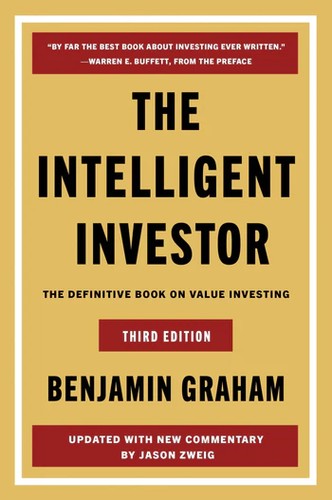
Benjamin Graham was an economist, teacher at Columbia Business School and fund manager who lived through the 1929 crash and the Great Depression. The Intelligent Investor, first published in 1949 and revised several times, distills his lessons for ordinary investors. Warren Buffett read it as a young man and became Graham’s student and employee. Later editions include commentary by journalist Jason Zweig, who updates the examples. The book is dense, but its core ideas are surprisingly clear. Here’s a summary of those ideas. This is educational, not investment advice.
Table of Contents
The Intelligent Investor at a Glance
| Detail | Info |
|---|---|
| Author | Benjamin Graham (commentary by Jason Zweig in the revised edition) |
| First published | 1949; revised edition 2003 |
| Genre | Investing, finance |
| Core idea | Invest with discipline, a margin of safety and emotional control |
| Structure | Twenty chapters on investing, speculation, portfolio policy, stock selection and risk |
| Best for | Long-term investors who want a framework for thinking about markets |
What Is The Intelligent Investor About?
Graham begins by separating investment from speculation. An investment, in his words, upon thorough analysis promises safety of principal and an adequate return. Anything else is speculation. He does not condemn speculation, but warns that you should not confuse it with investing and should limit the amount of money you risk on it.
He also says that the main enemy of the investor is often himself. Emotions such as greed and fear lead people to buy at high prices and sell at low ones. A sound plan and temperament matter more than intelligence or inside information.
Key Ideas, Part by Part
Defensive and Enterprising Investors
Graham describes two types of investors. The defensive investor wants safety and little effort, and should diversify across high-quality stocks and bonds. He suggests a baseline of about half in stocks and half in bonds, adjusting between 25 and 75 percent depending on market conditions. The enterprising investor is willing to spend time and effort researching companies in search of bargains.
He offers criteria for selecting stocks, such as adequate company size, strong financial condition, a record of earnings and dividends, and a reasonable price relative to earnings and assets. These screens were designed for his time and should be adapted, but the underlying emphasis on fundamentals remains.
Mr. Market
One of the book’s most famous ideas is the allegory of Mr. Market. Imagine you own a share of a business with a partner who offers to buy or sell his share every day at a different price. Some days he is euphoric and names a high price. Other days he is gloomy and offers to sell cheaply. You are free to ignore him or take advantage of his moods.
The lesson is that market prices reflect temporary emotions, and the investor should not let them dictate value. Use Mr. Market to serve you, not to guide you: buy when he is pessimistic and be cautious when he is giddy.
Margin of Safety
Graham’s central concept is the margin of safety, buying a security at a price well below your estimate of its value so that errors, bad luck or a downturn will not lead to permanent loss. Buffett has called margin of safety the three most important words in investing.
The idea applies to bonds, stocks and even personal decisions. A margin of safety means leaving room for mistakes. It is a concrete way to manage uncertainty without needing to predict the future.
Behavior, Diversification and Realism
Graham advises investors to diversify, to avoid hot tips and to be wary of forecasts. He recommends a policy of regular investing, which later became known as dollar-cost averaging, to reduce the risk of buying at the wrong time. He also warns about new issues, glamorous growth stocks and the temptation to chase performance.
In the commentary chapters, Zweig updates the examples with episodes from the dot-com bubble, showing that human behavior hasn’t changed much. The lesson is to treat investing as a long-term discipline, focusing on what you can control: costs, diversification, time horizon and temperament.
6 Key Takeaways From The Intelligent Investor
- Know the difference between investing and speculating. Be honest about which one you are doing.
- Use Mr. Market, don’t follow him. Prices swing with emotion, not only with value.
- Demand a margin of safety. Buy with room for error.
- Control your emotions. Behavior is the investor’s biggest risk.
- Diversify. Spread your money to reduce the damage from mistakes.
- Think long term. Own businesses, not tickers.
Ideas Worth Remembering
- The investor’s chief problem, and even his worst enemy, is likely to be himself. (paraphrased)
- Price is what you pay; value is what you get. (paraphrased)
- A plan you can stick to beats a clever plan you abandon. (paraphrased)
- The more you pay, the less margin of safety you have. (paraphrased)
How to Apply The Intelligent Investor in Real Life
- Write an investment policy. Decide your asset mix and rules before markets move.
- Look at value, not price. Compare what you pay with earnings and assets.
- Keep costs low. Choose low-fee funds if you don’t want to research stocks.
- Rebalance regularly. Return to your target mix to avoid emotional decisions.
- Wait for the right price. Be willing to do nothing when bargains are scarce.
Criticisms and Limits
Critics say that Graham’s quantitative screens are outdated, since modern markets are more efficient and information is widely available. Many cheap stocks are cheap for good reasons, and the focus on tangible assets can undervalue technology and service companies. The book is also long and technical in places, with dense chapters on bonds and convertibles.
Even so, its principles about margin of safety, diversification and emotional discipline remain widely taught. Treat the book as a framework for thinking, and not as a set of formulas to be applied mechanically. This summary does not constitute financial advice.
The Intelligent Investor in One Minute
Separate investing from speculating. Treat shares as ownership in businesses. Use Mr. Market’s moods to your advantage without being ruled by them. Demand a margin of safety by paying less than value. Diversify, keep costs low, rebalance and control your emotions. A sound temperament and a long horizon matter more than predictions.
Reading the Book Today
The 1949 text uses examples that are dated, and the stock screens may not suit modern markets, where many strong companies trade at higher valuations. The revised edition with Zweig’s commentary is generally easier to follow because each chapter is paired with a modern example. Chapter 8 on Mr. Market and chapter 20 on margin of safety are the ones Buffett singled out as most important, so start there if the full book feels heavy.
Index Funds and Graham’s Defensive Investor
Graham wrote before index funds existed, but many readers see his defensive investor as a natural fit for them. A diversified, low-cost fund spreads risk across many businesses and removes the need to pick winners. Graham’s emphasis on costs, diversification and discipline fits that approach, although he also encouraged careful analysis for those with time and skill. Decide which type of investor you are, then pick the method that matches.
Value Investing and Its Debates
Value investing has had strong periods and weak ones. In the years after 2010, growth stocks outperformed value stocks for long stretches, leading some to question the approach. Supporters reply that valuation matters over long horizons and that Graham’s main lessons, humility, patience and safety, apply to any strategy. Whether you buy individual stocks or funds, the book’s reminders about emotions are hard to argue with.
Practical Steps for a Modern Beginner
A beginner can apply Graham’s ideas in a few steps. First, write down your goals, time horizon and tolerance for losses. Second, choose a simple asset mix, such as a broad stock fund and a bond fund. Third, invest a fixed amount regularly. Fourth, rebalance once a year. Finally, avoid checking prices constantly and avoid reacting to headlines. This approach captures the book’s spirit of discipline and humility without requiring stock analysis.
Speculation and the Fun Money Rule
Graham accepted that some people enjoy speculating, and suggested keeping it small and separate. A modern version is a fun money account of a small percentage of your portfolio, say five percent, that you can use for individual stocks or new ideas. If you lose it, your long-term plan is not at risk, and if you win, you can enjoy it. The rule keeps curiosity from turning into recklessness.
Who Should Read The Intelligent Investor?
Read it if you plan to invest for the long term, want to understand value investing or are curious about the ideas behind Warren Buffett’s approach. Be ready for a dense read. If you want a gentler start, begin with The Psychology of Money or I Will Teach You to Be Rich.
What to Read Next
- The Psychology of Money by Morgan Housel how behavior shapes investing results
- A Random Walk Down Wall Street by Burton G. Malkiel the case for index investing
- The Little Book of Common Sense Investing by John C. Bogle a short guide to low-cost index funds
Related: The Psychology of Money summary and key takeaways and I Will Teach You to Be Rich summary and key takeaways.
Frequently Asked Questions
What is the main idea of The Intelligent Investor?
That investors should buy with a margin of safety, ignore market moods and focus on long-term value.
What is Mr. Market?
An allegory for the stock market’s emotional swings, whose prices you can use or ignore.
What is a margin of safety?
Buying at a price well below your estimate of value, so mistakes do not cause permanent loss.
Which edition should I read?
The revised edition with Jason Zweig’s commentary is easier to follow.
Is The Intelligent Investor still relevant?
Yes for its principles on temperament and value, though its stock screens are dated.