
Disclosure: As an Amazon Associate, Bookish Wisdom earns from qualifying purchases. This doesn't change our picks or your price.
TL;DR: Jhumpa Lahiri's nine stories follow Indians and Indian Americans facing love, loss and displacement. A couple whose baby was stillborn confess secrets during power cuts. A tour guide in India is drawn to an unhappy American tourist. A young girl watches a family friend fear for his family during war. Each story captures quiet moments of connection and isolation.
Table of Contents
Interpreter of Maladies at a Glance
| Author | Jhumpa Lahiri |
| First published | 1999 |
| Type | Short story collection |
| Best for | readers who want beautifully crafted short stories about immigrants and relationships |
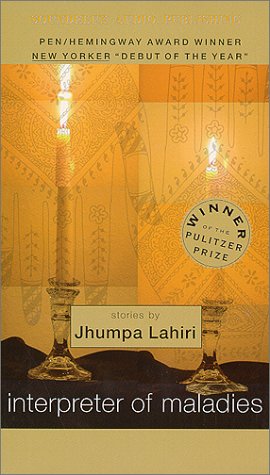
Interpreter of Maladies is Jhumpa Lahiri's debut short story collection, published in 1999. It won the 2000 Pulitzer Prize for Fiction, a rare honor for a first book. Below you will find a summary of key stories, five key takeaways, ideas worth remembering and a note on who will enjoy it.
Content note: Includes stillbirth, infidelity and loneliness.
Main Characters
- Shoba and Shukumar: A grieving couple in “A Temporary Matter.”
- Mr. Kapasi: A tour guide and interpreter in the title story.
- Mrs. Das: An unhappy American tourist in India.
- Lilia: A girl in “When Mr. Pirzada Came to Dine.”
- Mrs. Sen: A homesick woman in “Mrs. Sen's.”
What Happens, Part by Part (Contains Spoilers)
A Temporary Matter
Shoba and Shukumar, grieving a stillborn baby, are told their power will be cut for an hour each night. In the dark, they begin to share secrets. The last confession reveals that their marriage is ending.
When Mr. Pirzada Came to Dine
In 1971, ten-year-old Lilia watches Mr. Pirzada, a scholar from Dhaka, eat dinner with her family while anxiously following news of the war in what becomes Bangladesh. Lilia learns about history and quiet fear.
Interpreter of Maladies
Mr. Kapasi, a tour guide who also interprets for a doctor, drives an Indian American family. Mrs. Das tells him that one of her children was fathered by another man. He is disappointed that she wants to be relieved of guilt, not understood.
Mrs. Sen's
Mrs. Sen, a lonely woman who misses India, babysits an American boy named Eliot. She is afraid to drive and longs for fresh fish. A car accident ends their time together.
The Third and Final Continent
The final story follows a young Indian man who moves to Cambridge, Massachusetts, and rents a room from Mrs. Croft, a 103-year-old woman. Over time, he and his arranged wife grow close, and he reflects on the ordinary miracle of his journey.
5 Key Takeaways
- Small moments reveal deep feelings.
- Communication can heal or wound.
- Displacement shapes identity.
- Loneliness is universal.
- Ordinary lives can be extraordinary.
Ideas Worth Remembering
These are paraphrased, not direct quotes:
- It was only a temporary matter.
- Understanding someone is not the same as interpreting them.
- Every immigrant journey contains quiet heroism.
Who Should Read Interpreter of Maladies?
Read Interpreter of Maladies if you want short, elegant stories. It suits adults and older teens.
Questions to Think About After Reading
These prompts work for solo reading, a book club or a classroom discussion of Interpreter of Maladies:
- What does it mean to interpret maladies?
- Which story moved you most?
- How does Lahiri show the immigrant experience?
How to Use This Summary
Use this page as a quick reference before a book club meeting, an exam, or a decision about whether Interpreter of Maladies is worth your time. The takeaways are written to stand on their own. If a point interests you, go back to the book for the author's full story, characters and style, which no short summary can replace.
A Note on Accuracy and Spoilers
This summary is based on the published text of Interpreter of Maladies, not on any film, series or stage adaptation, which often change the story. Details are kept at the level of the main events so that nothing is invented. Editions differ slightly in length and wording, so page numbers and small details may vary between copies.
Should You Read the Book?
Yes. The stories are short, polished and emotionally rich, making the book easy to read in small sessions. Some stories are quieter than others, but “A Temporary Matter,” the title story and “The Third and Final Continent” are widely considered modern classics.
Check price of Interpreter of Maladies on Amazon
What to Read Next
- The Namesake by Jhumpa Lahiri: Lahiri's first novel
- Unaccustomed Earth by Jhumpa Lahiri: Lahiri's second collection
- Dubliners by James Joyce: a classic story collection
Related: 15 Books Like Interpreter of Maladies You’ll Love · The Namesake by Jhumpa Lahiri: Summary and Key Takeaways
Frequently Asked Questions
What is Interpreter of Maladies about?
Nine stories about Indians and Indian Americans facing love and loss.
Did it win a Pulitzer?
Yes, in 2000.
How many stories are there?
Nine.
Who is Mr. Kapasi?
A tour guide who interprets for a doctor.
What is “A Temporary Matter” about?
A couple sharing secrets during nightly power outages.
How long is it?
About 200 pages.
Is it good for students?
Yes, it is often taught in schools and colleges.
Who wrote it?
Jhumpa Lahiri.
What is “Sexy” about?
Miranda, a young American woman, has an affair with a married Bengali man and slowly sees the hurt it causes.
What is “A Real Durwan” about?
Boori Ma, an elderly woman who sweeps the stairs of a Calcutta building, is blamed and cast out after a theft.
Why is the title story called Interpreter of Maladies?
Mr. Kapasi translates patients' symptoms for a doctor, and Mrs. Das hopes he can interpret her emotional pain too.
Who are the main characters in Interpreter of Maladies?
The main characters are Shoba and Shukumar, Mr. Kapasi, Mrs. Das, Lilia and Mrs. Sen. Shoba and Shukumar: A grieving couple in “A Temporary Matter.” Mr. Kapasi: A tour guide and interpreter in the title story. Mrs. Das: An unhappy American tourist in India.
Is Interpreter of Maladies worth reading?
It depends on what you want. The book is best for readers who want beautifully crafted short stories about immigrants and relationships. If that describes you, it is likely a good fit. If not, the titles under What to Read Next may suit you better.