

Disclosure: As an Amazon Associate, Bookish Wisdom earns from qualifying purchases. This doesn't change our picks or your price.
TL;DR: Ashoke and Ashima Ganguli move from Calcutta to Massachusetts, where their son is born. A mix-up leaves him named Gogol, after the Russian writer whose book saved his father's life. Growing up, Gogol hates his name and his parents' traditions, until loss teaches him what his name and family mean.
Table of Contents
The Namesake at a Glance
| Author | Jhumpa Lahiri |
| First published | 2003 |
| Type | Novel |
| Best for | readers who want a quiet, moving novel about identity and immigrant families |
The Namesake is the first novel by Jhumpa Lahiri, published in 2003, after her Pulitzer-winning story collection. It became a 2006 film directed by Mira Nair. Below you will find a part-by-part summary, five key takeaways, ideas worth remembering and a note on who will enjoy it.
Content note: Includes the death of a parent.
Main Characters
- Gogol Ganguli: A son of Bengali immigrants who struggles with his name.
- Ashoke Ganguli: Gogol's quiet father, an engineering professor.
- Ashima Ganguli: Gogol's mother, who feels homesick in America.
- Maxine Ratliff: Gogol's wealthy American girlfriend.
- Moushumi Mazoomdar: A Bengali American woman Gogol marries.
What Happens, Part by Part (Contains Spoilers)
A new life
In 1968, Ashima, newly married, gives birth in Cambridge, Massachusetts. Bengali custom has a grandmother choose the “good name,” but her letter never arrives. Ashoke names the boy Gogol after Nikolai Gogol, whose book he was reading when he survived a deadly train crash.
Growing up
Gogol grows up between cultures. He dislikes his name, which belongs to neither world. At eighteen, he legally changes it to Nikhil. He studies at Yale and becomes an architect in New York.
Maxine
Gogol dates Maxine, whose wealthy, relaxed family seems more appealing than his own. He spends time with her family and pulls away from his parents.
Loss
Ashoke dies suddenly of a heart attack. Grief draws Gogol back to his family. He finally learns the story behind his name. He breaks up with Maxine and later marries Moushumi, a Bengali American, but she has an affair, and they divorce.
The ending
Ashima sells the family home and plans to divide her time between India and America. At a final family party, Gogol finds the book his father gave him, The Overcoat by Nikolai Gogol, and begins to read it.
5 Key Takeaways
- Names carry identity and history.
- Children of immigrants live between cultures.
- Understanding parents often comes too late.
- Belonging is complex.
- Grief can bring people home.
Ideas Worth Remembering
These are paraphrased, not direct quotes:
- We all came out of Gogol's overcoat.
- Every name has a story.
- Home can be more than one place.
Who Should Read The Namesake?
Read The Namesake if you want a gentle, moving story about family and identity. It suits adults and older teens.
Questions to Think About After Reading
These prompts work for solo reading, a book club or a classroom discussion of The Namesake:
- Why does Gogol hate his name?
- How does Ashoke's death change Gogol?
- What does home mean to Ashima?
How to Use This Summary
Use this page as a quick reference before a book club meeting, an exam, or a decision about whether The Namesake is worth your time. The takeaways are written to stand on their own. If a point interests you, go back to the book for the author's full story, characters and style, which no short summary can replace.
A Note on Accuracy and Spoilers
This summary is based on the published text of The Namesake, not on any film, series or stage adaptation, which often change the story. Details are kept at the level of the main events so that nothing is invented. Editions differ slightly in length and wording, so page numbers and small details may vary between copies.
Should You Read the Book?
Yes, if you enjoy quiet, character-driven fiction. Lahiri's prose is precise and understated, and many children of immigrants see themselves in Gogol. The story moves slowly and some readers find Gogol passive, but its emotional truth lingers.
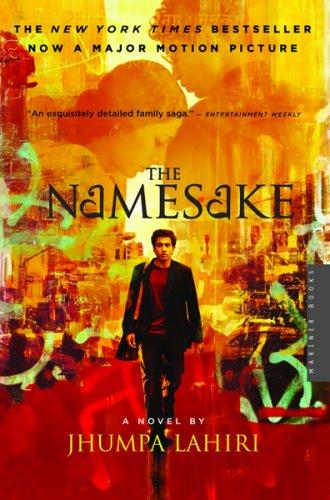
Check price of The Namesake on Amazon
What to Read Next
- Interpreter of Maladies by Jhumpa Lahiri: Lahiri's Pulitzer-winning stories
- Unaccustomed Earth by Jhumpa Lahiri: stories of Bengali American families
- Americanah by Chimamanda Ngozi Adichie: identity and immigration
Related: 15 Books Like The Namesake You’ll Love
Frequently Asked Questions
What is The Namesake about?
A son of Indian immigrants struggles with his name and identity.
Why is Gogol named Gogol?
His father survived a train crash while reading Nikolai Gogol.
What name does Gogol choose?
Nikhil.
Who does Gogol marry?
Moushumi, though they later divorce.
Is there a film?
Yes, a 2006 film directed by Mira Nair.
How long is it?
About 290 pages.
What is The Overcoat?
A short story by Nikolai Gogol.
Where is it set?
Massachusetts, New York and Calcutta.
What is a pet name and a good name?
In Bengali culture, a pet name is used at home and a good name is used in public. Gogol was meant to be only his pet name.
Why does Moushumi have an affair?
She feels trapped by a marriage that pleases both families and longs for the independent life she built in Paris.
Is the film faithful?
Mostly. Mira Nair's 2006 film follows the main story closely, starring Kal Penn as Gogol.
Who are the main characters in The Namesake?
The main characters are Gogol Ganguli, Ashoke Ganguli, Ashima Ganguli, Maxine Ratliff and Moushumi Mazoomdar. Gogol Ganguli: A son of Bengali immigrants who struggles with his name. Ashoke Ganguli: Gogol's quiet father, an engineering professor. Ashima Ganguli: Gogol's mother, who feels homesick in America.
Is The Namesake worth reading?
It depends on what you want. The book is best for readers who want a quiet, moving novel about identity and immigrant families. If that describes you, it is likely a good fit. If not, the titles under What to Read Next may suit you better.