

Disclosure: As an Amazon Associate, Bookish Wisdom earns from qualifying purchases. This doesn't change our picks or your price.
TL;DR: In May 1996, journalist Jon Krakauer joined a guided expedition to the summit of Mount Everest. On the descent, a sudden storm struck, and eight climbers died, including two expert guides. Krakauer's account explores what went wrong, from delays and commercial pressures to the limits of the human body at extreme altitude.
Table of Contents
Into Thin Air at a Glance
| Author | Jon Krakauer |
| First published | 1997 |
| Type | Nonfiction |
| Best for | readers who want a gripping true story of adventure, survival and tragedy |
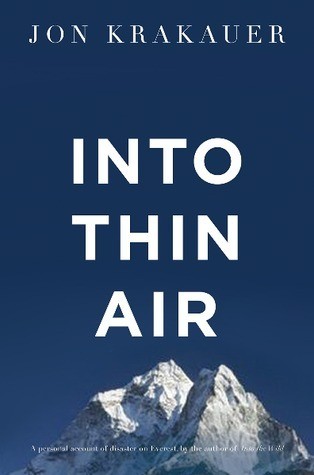
Into Thin Air: A Personal Account of the Mt. Everest Disaster is a nonfiction book by Jon Krakauer, published in 1997. It grew from an article he wrote for Outside magazine and became a bestseller. Below you will find a part-by-part summary, five key takeaways, ideas worth remembering and a note on who will enjoy it.
Content note: Includes death, injury and survivor's guilt.
Key Concepts
- Jon Krakauer: The journalist and climber who narrates.
- Rob Hall: The respected leader of Adventure Consultants.
- Scott Fischer: The leader of the rival Mountain Madness team.
- Anatoli Boukreev: A Kazakh guide whose actions Krakauer questions.
- Beck Weathers: A client who survived after being left for dead.
The Main Ideas, Part by Part
The assignment
Krakauer, an experienced climber, is hired by Outside magazine to write about the growing business of guided Everest climbs. He joins Rob Hall's Adventure Consultants team. Clients have paid about $65,000 each.
Base camp
The teams spend weeks acclimatizing, climbing up and down to adjust to the thin air. Krakauer describes the Khumbu Icefall, Sherpa climbers, illness and the crowded mountain, where several teams plan to summit on the same day.
Summit day
On May 10, delays at fixed ropes slow the climbers. Many reach the summit long after the safe turnaround time. Krakauer reaches the top early and descends, exhausted and short of oxygen.
The storm
A fierce storm hits as many climbers are still high on the mountain. Rob Hall stays with a struggling client, Doug Hansen, and both die. Scott Fischer, guide Andy Harris and climber Yasuko Namba also die. Beck Weathers, thought dead, stumbles into camp the next day, badly frostbitten.
Aftermath
Krakauer struggles with guilt, especially for mistakenly believing he saw Andy Harris safe at camp. He questions guiding decisions, including Boukreev's choice to descend early, though Boukreev also rescued several climbers. The book ends with grief and reflection on the risks people take.
5 Key Takeaways
- Ambition can override judgment.
- Commercial pressure can create danger.
- Small delays can lead to disaster in extreme places.
- Memory is unreliable under stress.
- Survivors carry heavy guilt.
Ideas Worth Remembering
These are paraphrased, not direct quotes:
- Reaching the summit is only halfway; the descent is where many climbers die.
- Nature does not care about our plans.
- In extreme situations, small choices matter.
Who Should Read Into Thin Air?
Read Into Thin Air if you want a gripping, emotional adventure story. It suits teens and adults who enjoy true survival stories.
Questions to Think About After Reading
These prompts work for solo reading, a book club or a classroom discussion of Into Thin Air:
- Who, if anyone, was to blame?
- Should Everest be commercially guided?
- Is Krakauer fair to Boukreev?
How to Use This Summary
Use this page as a quick reference before a book club meeting, an exam, or a decision about whether Into Thin Air is worth your time. The takeaways are written to stand on their own. If a point interests you, go back to the book for the author's full argument, examples and evidence, which no short summary can replace.
A Note on Accuracy and Spoilers
This summary is based on the published text of Into Thin Air, not on any film, series or stage adaptation, which often change the story. Details are kept at the level of the main arguments so that nothing is invented. Editions differ slightly in length and wording, so page numbers and small details may vary between copies.
Should You Read the Book?
Yes, if you want a page-turner that is also a careful piece of journalism. Krakauer is honest about his own mistakes, which makes the book powerful. Keep in mind that his view of Anatoli Boukreev is disputed, and Boukreev's book The Climb offers another side of the story.
Check price of Into Thin Air on Amazon
What to Read Next
- The Climb by Anatoli Boukreev: Boukreev's response
- Into the Wild by Jon Krakauer: Krakauer's story of Chris McCandless
- Touching the Void by Joe Simpson: a mountaineering survival story
Related: 15 Books Like Into Thin Air You’ll Love · Into the Wild by Jon Krakauer: Summary and Key Takeaways
Frequently Asked Questions
What is Into Thin Air about?
Jon Krakauer's account of the 1996 Everest disaster in which eight climbers died.
How many people died?
Eight people died on Everest during the storm of May 10–11, 1996.
Who was Rob Hall?
The leader of Adventure Consultants, who died near the summit.
Did Beck Weathers survive?
Yes, though he lost his right hand and his nose to frostbite.
What is the controversy with Boukreev?
Krakauer criticized his choices, while Boukreev defended them in The Climb.
Is there a film?
Yes, the 2015 film Everest is based on the same events.
How long is it?
About 330 pages.
Is it suitable for teens?
Yes, for teens who can handle the tragedy.
Who are the main ideas in Into Thin Air?
The key concepts are Jon Krakauer, Rob Hall, Scott Fischer, Anatoli Boukreev and Beck Weathers. Jon Krakauer: The journalist and climber who narrates. Rob Hall: The respected leader of Adventure Consultants. Scott Fischer: The leader of the rival Mountain Madness team.
Is Into Thin Air worth reading?
It depends on what you want. The book is best for readers who want a gripping true story of adventure, survival and tragedy. If that describes you, it is likely a good fit. If not, the titles under What to Read Next may suit you better.