
Disclosure: As an Amazon Associate, Bookish Wisdom earns from qualifying purchases. This doesn't change our picks or your price.
TL;DR: A group of British schoolboys is stranded on a deserted island after a plane crash. They try to govern themselves with rules and a conch shell, but fear and the lust for power split them apart, and their society descends into violence and murder.
Table of Contents
Lord of the Flies at a Glance
| Author | William Golding |
| First published | 1954 |
| Type | Novel |
| Best for | readers who want a gripping classic about human nature and the fragility of civilization |
Lord of the Flies is a novel by William Golding, first published in 1954. It turns the adventure story of children stranded on an island into a dark study of what happens when the rules of society fall away. Below you will find a part-by-part summary, five key takeaways, ideas worth remembering and a note on who will enjoy it.
Content note: Includes violence and the deaths of children.
What Happens, Part by Part (Contains Spoilers)
The island and the conch
After their plane crashes during a war, a group of boys finds themselves alone on a tropical island. Ralph and the clever, overweight Piggy find a conch shell, and Ralph uses it to call an assembly. The boys elect Ralph as leader, and whoever holds the conch may speak. They set up rules and a signal fire.
Jack and the hunters
Jack, leader of a choir, wants to lead too. Ralph lets him lead the hunters. As Jack becomes obsessed with hunting pigs, the hunters let the signal fire go out just as a ship passes. Ralph is furious, and the conflict between keeping order and hunting for fun grows.
The beast
The younger boys fear a “beast” on the island. When twins see a dead parachutist on the mountain, they think it is the beast. Jack breaks away to form his own tribe, and the hunters paint their faces and leave a pig's head on a stick as an offering to the beast: the Lord of the Flies.
Simon and Piggy
Simon, a quiet, thoughtful boy, discovers that the “beast” is just a dead man. Running to tell the others during a wild dance, he is mistaken for the beast and killed. Later, when Ralph and Piggy go to Jack's camp to get back Piggy's stolen glasses, Roger rolls a boulder that kills Piggy and shatters the conch.
The ending
Jack's tribe hunts Ralph and sets the island on fire to smoke him out. Ralph runs to the beach and finds a naval officer who has seen the smoke. The officer is disappointed that British boys behaved so badly. Ralph weeps for the end of innocence and for his friend Piggy.
5 Key Takeaways
- Without rules and accountability, fear and power can turn people violent.
- Civilization is fragile and must be actively protected.
- Fear of an imagined enemy can be used to gain power.
- Reason, like Piggy's, is often ignored when emotions run high.
- The “beast” is inside people, not outside them.
Ideas Worth Remembering
These are paraphrased, not direct quotes:
- The real danger may be within us.
- Rules matter most when no one is watching.
- Fear makes people follow those who promise safety.
Who Should Read Lord of the Flies?
Read Lord of the Flies if you want a short, gripping classic that raises big questions about human nature. It is widely taught to students about 13 and up.
Questions to Think About After Reading
These prompts work for solo reading, a book club or a classroom discussion of Lord of the Flies:
- Who do you think is the true leader on the island?
- What does the conch represent, and why does its loss matter?
- Do you agree with Golding's view of human nature?
How to Use This Summary
Use this page as a quick reference before a book club meeting, an exam, or a decision about whether Lord of the Flies is worth your time. The takeaways are written to stand on their own. If a point interests you, go back to the book for the author's full story, characters and style, which no short summary can replace.
A Note on Accuracy and Spoilers
This summary is based on the published text of Lord of the Flies, not on any film, series or stage adaptation, which often change the story. Details are kept at the level of the main events so that nothing is invented. Editions differ slightly in length and wording, so page numbers and small details may vary between copies.
Should You Read the Book?
If the summary caught your interest, read the opening chapters before you decide. A summary tells you what happens, but the voice and pacing are what make a book work or not.
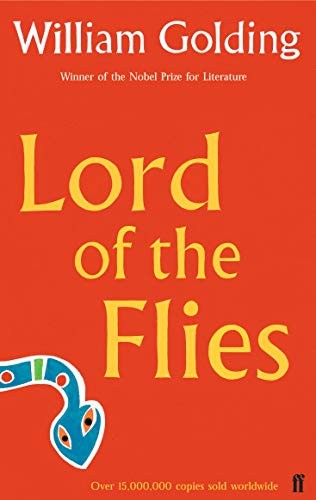
Check price of Lord of the Flies on Amazon
What to Read Next
- Animal Farm by George Orwell: a short fable about power and corruption
- The Hunger Games by Suzanne Collins: young people forced into violence
- Battle Royale by Koushun Takami: a much darker island survival story
Related: 15 Books Like Lord of the Flies You’ll Love · What Age Is Lord of the Flies Appropriate For? A Parent’s Guide
Frequently Asked Questions
What is Lord of the Flies about?
Boys stranded on an island fall into savagery as their attempt at order collapses.
What does the conch symbolize?
Order, democracy and the right to speak.
What is the Lord of the Flies?
A pig's head on a stick, symbolizing the evil inside the boys.
Who dies in Lord of the Flies?
Simon, Piggy and a small boy who disappears in a fire.
How are the boys rescued?
A naval officer arrives after seeing the smoke of the fire.
What age is it for?
It is commonly taught to students about 13 and up.
Did Golding win the Nobel Prize?
Yes, in 1983.
Is there a movie?
Yes, in 1963 and 1990.
Is Lord of the Flies worth reading?
It depends on what you want. The book is best for readers who want a gripping classic about human nature and the fragility of civilization. If that describes you, it is likely a good fit. If not, the titles under What to Read Next may suit you better.