
Disclosure: As an Amazon Associate, Bookish Wisdom earns from qualifying purchases. This doesn't change our picks or your price.
TL;DR: Howard W. Campbell Jr., an American playwright living in Germany, becomes a famous Nazi radio propagandist during the Second World War. Secretly, he is an American spy, sending coded messages in his broadcasts. After the war, no one knows he was a spy, and he lives in hiding in New York, until his past catches up with him.
Table of Contents
Mother Night at a Glance
| Author | Kurt Vonnegut |
| First published | 1961 |
| Type | Novel |
| Best for | readers who want a dark, thought-provoking novel about identity and morality |
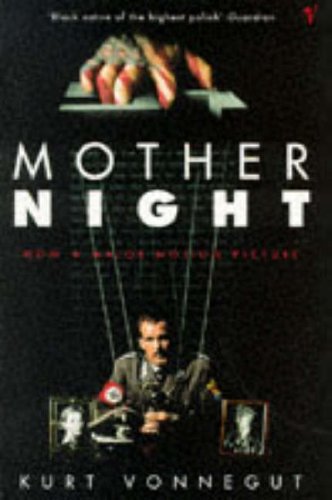
Mother Night is a novel by Kurt Vonnegut, published in 1961. Its famous moral is: “We are what we pretend to be, so we must be careful about what we pretend to be.” Below you will find a part-by-part summary, five key takeaways, ideas worth remembering and a note on who will enjoy it.
Content note: Includes Nazi propaganda, war crimes, suicide and violence.
Main Characters
- Howard W. Campbell Jr.: An American playwright and secret spy.
- Helga Noth: Campbell's beloved wife.
- Frank Wirtanen: Campbell's American spymaster.
- George Kraft: Campbell's painter friend, really a Soviet spy.
- Resi Noth: Helga's sister.
What Happens, Part by Part (Contains Spoilers)
In an Israeli prison
Campbell writes his memoir in a prison in Jerusalem, awaiting trial for war crimes. He explains how he came to be there.
The spy
Living in Germany before the war, Campbell, a successful playwright married to actress Helga Noth, is recruited by Frank Wirtanen as an American spy. He becomes a famous Nazi radio broadcaster, spreading hateful propaganda while secretly passing coded messages to the Allies.
After the war
Helga is believed killed. Campbell moves to New York and lives alone. He befriends George Kraft, a painter, who is actually a Soviet agent. American white supremacists discover Campbell and celebrate him as a hero.
Helga returns
A woman claiming to be Helga appears, but she is really Helga's sister, Resi. She loves Campbell. Kraft plans to use Campbell for Soviet purposes. Resi takes her own life when Campbell rejects the plan.
Judgment
Campbell turns himself in to Israel to face trial. Wirtanen sends a letter proving he was an American spy, which could free him. But Campbell decides he is guilty for the evil he spread, whatever his secret purpose, and hangs himself.
5 Key Takeaways
- We are what we pretend to be.
- Propaganda causes real harm, regardless of intent.
- Identity can be lost in performance.
- Moral responsibility cannot be escaped.
- Loyalty to a country can conflict with conscience.
Ideas Worth Remembering
These are paraphrased, not direct quotes:
- Pretending to be evil can make you complicit in evil.
- Words can be weapons.
- Being secretly good does not cancel public harm.
Who Should Read Mother Night?
Read Mother Night if you enjoy Vonnegut and stories that raise moral questions. It suits adults.
About Kurt Vonnegut
Kurt Vonnegut (1922–2007) was an American writer whose experiences as a prisoner of war in Dresden shaped his outlook. Known for dark comedy and moral seriousness, he wrote Slaughterhouse-Five, Cat's Cradle and Breakfast of Champions. Mother Night is often seen as one of his most direct novels about responsibility and identity.
Questions to Think About After Reading
These prompts work for solo reading, a book club or a classroom discussion of Mother Night:
- Is Campbell guilty?
- What does “we are what we pretend to be” mean?
- Why does Campbell choose to die?
How to Use This Summary
Use this page as a quick reference before a book club meeting, an exam, or a decision about whether Mother Night is worth your time. The takeaways are written to stand on their own. If a point interests you, go back to the book for the author's full story, characters and style, which no short summary can replace.
A Note on Accuracy and Spoilers
This summary is based on the published text of Mother Night, not on any film, series or stage adaptation, which often change the story. Details are kept at the level of the main events so that nothing is invented. Editions differ slightly in length and wording, so page numbers and small details may vary between copies.
Should You Read the Book?
Yes. It is one of Vonnegut's most powerful and focused novels, darkly funny and deeply serious.
Check price of Mother Night on Amazon
What to Read Next
- Slaughterhouse-Five by Kurt Vonnegut: Vonnegut's classic about war
- The Spy Who Came in from the Cold by John le Carré: moral ambiguity in espionage
- Breakfast of Champions by Kurt Vonnegut: Vonnegut's satire of America
Related: Breakfast of Champions by Kurt Vonnegut: Summary and Key Takeaways · Slaughterhouse-Five by Kurt Vonnegut: Summary and Key Takeaways
Frequently Asked Questions
What is Mother Night about?
An American spy poses as a Nazi propagandist and must face what he became.
Who wrote Mother Night?
Kurt Vonnegut, in 1961.
What is the moral of the book?
We are what we pretend to be, so we must be careful what we pretend to be.
Who is Frank Wirtanen?
Campbell's American spymaster.
How does Campbell die?
He hangs himself in prison.
Is there a film?
Yes, a 1996 film with Nick Nolte.
What age is it for?
Adults.
How long is it?
About 270 pages.
Is Campbell a real person?
No. He is fictional.
Where is Campbell when he writes his memoir?
In a prison in Jerusalem.
Who are the main characters in Mother Night?
The main characters are Howard W. Campbell Jr., Helga Noth, Frank Wirtanen, George Kraft and Resi Noth. Howard W. Campbell Jr.: An American playwright and secret spy. Helga Noth: Campbell's beloved wife. Frank Wirtanen: Campbell's American spymaster.
Is Mother Night worth reading?
It depends on what you want. The book is best for readers who want a dark, thought-provoking novel about identity and morality. If that describes you, it is likely a good fit. If not, the titles under What to Read Next may suit you better.