

Disclosure: As an Amazon Associate, Bookish Wisdom earns from qualifying purchases. This doesn't change our picks or your price.
TL;DR: In a future America run by machines, a small group of engineers and managers hold all the good jobs, while most people live comfortable but empty lives. Dr. Paul Proteus, a rising manager in Ilium, New York, begins to doubt the system. He is drawn into a secret rebel group that wants to give people back their sense of purpose.
Table of Contents
Player Piano at a Glance
| Author | Kurt Vonnegut |
| First published | 1952 |
| Type | Dystopian novel |
| Best for | readers who want a sharp, funny look at automation and the meaning of work |
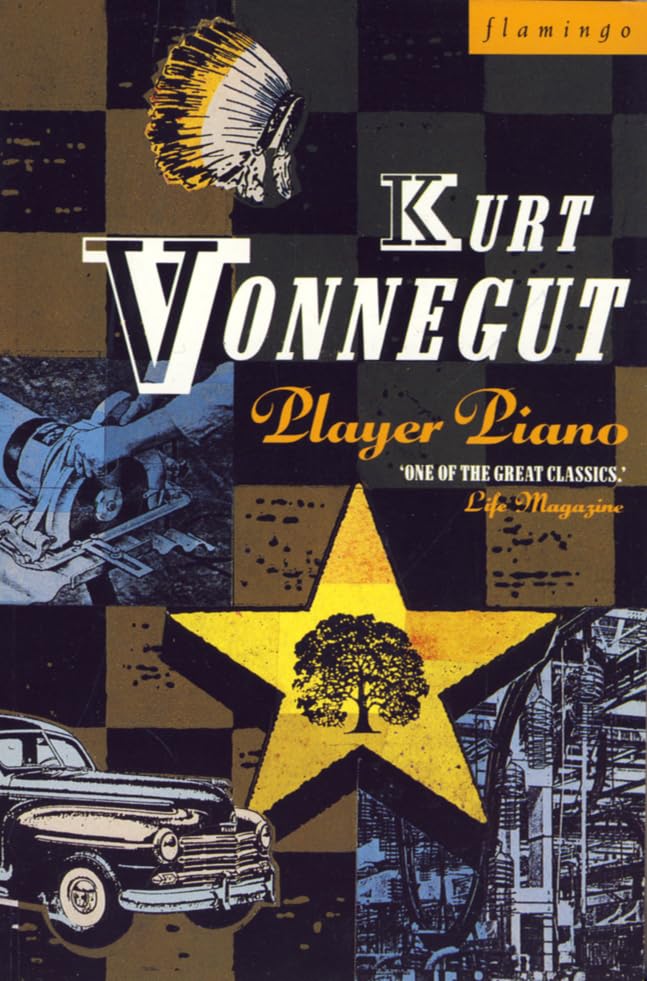
Player Piano is the first novel by Kurt Vonnegut, published in 1952. It imagines a world where machines have replaced most human workers, a theme that feels very current today. Below you will find a part-by-part summary, five key takeaways, ideas worth remembering and a note on who will enjoy it.
Content note: Includes riots, property destruction and heavy drinking.
Main Characters
- Dr. Paul Proteus: A talented manager who begins to question his world.
- Anita Proteus: Paul's ambitious, image-conscious wife.
- Ed Finnerty: Paul's old friend, a brilliant engineer who quits.
- Kroner: Paul's powerful boss.
- The Shah of Bratpuhr: A foreign visitor who asks awkward questions.
What Happens, Part by Part (Contains Spoilers)
A machine world
After a third industrial revolution, America is run by automated factories and a giant computer called EPICAC. Engineers and managers live in a comfortable part of Ilium, while most people, called the “Reeks and Wrecks,” have been pushed into the army or public work crews. Paul manages the Ilium Works and seems set for promotion.
Doubts
Paul's friend Ed Finnerty, who has left a high post, visits and shocks him by questioning everything. Paul begins to visit the poor side of the river, where people resent the system. He is uncomfortable in his marriage and in the endless corporate rituals. He dreams of buying an old farm and living simply.
An outsider's view
In a parallel story, the Shah of Bratpuhr tours America with a government guide. He keeps calling the citizens “slaves,” and his guide keeps correcting him. His questions show that people have security but no purpose, and that the system values efficiency more than dignity.
The Meadows and the Ghost Shirts
Paul's boss Kroner wants him to spy on a secret rebel group called the Ghost Shirt Society, led partly by Finnerty and an idealist named James Lasher. Paul is sent to the Meadows, a company retreat full of team games and songs, but he begins to side with the rebels. He is arrested and put on trial, and the Ghost Shirts start an uprising.
Revolution
The Ghost Shirts take over Ilium and smash machines. But soon, people start happily repairing the machines they just destroyed, because they love tinkering. The government surrounds the city, and Paul and the leaders surrender. They toast to “a better world,” but they know that the cycle of human nature and machines will go on.
5 Key Takeaways
- Machines can take away purpose as well as labor.
- Comfort is not the same as dignity.
- Systems can be efficient and still inhuman.
- Rebellion often repeats the problems it fights.
- People need meaningful work.
Ideas Worth Remembering
These are paraphrased, not direct quotes:
- Progress should be measured by human well-being.
- An outsider can see what insiders miss.
- People are drawn to make and fix things.
Who Should Read Player Piano?
Read Player Piano if you enjoy dystopian fiction, satire and stories about technology and work. It suits adults and older teens.
About Kurt Vonnegut
Kurt Vonnegut (1922–2007) was an American writer known for dark humor and satire. He worked in public relations at General Electric, which inspired Player Piano. As a prisoner of war, he survived the bombing of Dresden, the basis for Slaughterhouse-Five. His other novels include Cat's Cradle, The Sirens of Titan and Breakfast of Champions.
Questions to Think About After Reading
These prompts work for solo reading, a book club or a classroom discussion of Player Piano:
- Is the society in Player Piano a utopia or a dystopia?
- Why do people start repairing the machines at the end?
- How does the novel relate to modern AI and automation?
How to Use This Summary
Use this page as a quick reference before a book club meeting, an exam, or a decision about whether Player Piano is worth your time. The takeaways are written to stand on their own. If a point interests you, go back to the book for the author's full story, characters and style, which no short summary can replace.
A Note on Accuracy and Spoilers
This summary is based on the published text of Player Piano, not on any film, series or stage adaptation, which often change the story. Details are kept at the level of the main events so that nothing is invented. Editions differ slightly in length and wording, so page numbers and small details may vary between copies.
Should You Read the Book?
Yes. It is less famous than Vonnegut's later books, but it feels very relevant in an age of automation and AI.
Check price of Player Piano on Amazon
What to Read Next
- Slaughterhouse-Five by Kurt Vonnegut: Vonnegut's most famous antiwar novel
- Brave New World by Aldous Huxley: a comfortable but empty future society
- Cat's Cradle by Kurt Vonnegut: science and satire at the end of the world
Related: Mother Night by Kurt Vonnegut: Summary and Key Takeaways · Breakfast of Champions by Kurt Vonnegut: Summary and Key Takeaways
Frequently Asked Questions
What is Player Piano about?
A manager in an automated America joins a rebellion against the machines.
Who wrote it?
Kurt Vonnegut, in 1952.
Was it his first novel?
Yes.
What is a player piano?
A piano that plays itself mechanically, a symbol of machines replacing people.
Where is it set?
Ilium, a fictional city in New York State.
Who leads the rebellion?
The Ghost Shirt Society, including Finnerty and Lasher.
How does it end?
The rebellion fails, and people start fixing the machines again.
Is it like Brave New World?
It shares the idea of a controlled, comfortable society, but it focuses on work and automation.
What age is it for?
Adults and older teens.
How long is it?
About 340 pages.
Is it funny?
Yes, it has sharp satire and dark humor.
Is it still relevant?
Yes, especially with modern debates about automation and AI.
Is Player Piano a good place to start with Vonnegut?
It is a fine start for readers interested in technology, but most people begin with Slaughterhouse-Five or Cat's Cradle.
Is Player Piano worth reading?
It depends on what you want. The book is best for readers who want a sharp, funny look at automation and the meaning of work. If that describes you, it is likely a good fit. If not, the titles under What to Read Next may suit you better.