
Disclosure: As an Amazon Associate, Bookish Wisdom earns from qualifying purchases. This doesn't change our picks or your price.
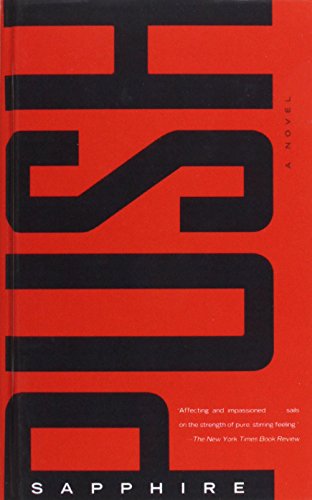
TL;DR: Sixteen-year-old Claireece “Precious” Jones lives in Harlem with her abusive mother. She is pregnant with her second child by her father, who has raped her since childhood, and she cannot read. When she enters an alternative school, a dedicated teacher named Ms. Rain begins to help her learn to read and write, and Precious slowly finds her voice.
Table of Contents
Push at a Glance
| Author | Sapphire |
| First published | 1996 |
| Type | Literary fiction |
| Best for | readers who want a raw, powerful story of survival, literacy and hope |
Push is the first novel by Sapphire, published in 1996. It was adapted into the 2009 film Precious, which won two Academy Awards. Below you will find a part-by-part summary, five key takeaways, ideas worth remembering and a note on who will enjoy it.
Content note: Includes incest, rape, child abuse, HIV and graphic language.
Main Characters
- Precious Jones: A sixteen-year-old girl in Harlem.
- Mary Johnston: Precious's abusive mother.
- Ms. Blue Rain: Precious's teacher at an alternative school.
- Mrs. Lichenstein: The principal who sends Precious to the alternative school.
- Abdul: Precious's son.
What Happens, Part by Part (Contains Spoilers)
A hard life
Precious is pregnant with her second child by her father. Her first child, Mongo, has Down syndrome and lives with Precious's grandmother. Her mother beats her and forces her to do chores. Precious is suspended from school when her pregnancy is discovered. She feels invisible and dreams of a better life.
Each One Teach One
Precious enrolls in an alternative school called Each One Teach One. Her teacher, Ms. Rain, encourages her to keep a journal. Precious is ashamed at first, but she begins to write. Her classmates, girls with their own struggles, become a kind of family. Her writing shows her thoughts and feelings for the first time.
Abdul
Precious gives birth to her son, Abdul, in the hospital. When she returns home, her mother attacks her and tries to hurt the baby. Precious flees and lives in a halfway house. Ms. Rain helps her find shelter and keep going to school. Precious is proud of Abdul and wants a better life for him.
News
Precious learns that her father has died of AIDS. She takes a test and finds that she is HIV positive. She is devastated but keeps going. She reads books and writes poetry. She meets her mother at a social worker's office and learns the full horror of her childhood. She decides to cut ties with her mother.
Pushing on
Precious keeps learning. She joins a support group for survivors of incest and shares her story. She dreams of finishing school and going to college. The book ends with excerpts from the class's writing, showing Precious's voice growing stronger. Her story is not happy, but it is full of courage.
5 Key Takeaways
- Education can change a life.
- Writing can help people heal.
- Abuse can be survived.
- A good teacher can make a difference.
- Hope can grow from very dark places.
Ideas Worth Remembering
These are paraphrased, not direct quotes:
- Everyone deserves to be heard.
- Community can be a source of strength.
- Courage means keeping going.
Who Should Read Push?
Read Push if you can handle very difficult content and want a powerful story about survival. It suits adults.
About Sapphire
Sapphire is the pen name of Ramona Lofton (born 1950), an American author and poet. She worked as a teacher of reading in Harlem and the Bronx, which inspired Push. Her poetry collections include American Dreams. She wrote a sequel, The Kid, published in 2011, about Precious's son Abdul.
Questions to Think About After Reading
These prompts work for solo reading, a book club or a classroom discussion of Push:
- How does writing change Precious?
- What role does Ms. Rain play in her life?
- How does the book show the effects of abuse?
How to Use This Summary
Use this page as a quick reference before a book club meeting, an exam, or a decision about whether Push is worth your time. The takeaways are written to stand on their own. If a point interests you, go back to the book for the author's full story, characters and style, which no short summary can replace.
A Note on Accuracy and Spoilers
This summary is based on the published text of Push, not on any film, series or stage adaptation, which often change the story. Details are kept at the level of the main events so that nothing is invented. Editions differ slightly in length and wording, so page numbers and small details may vary between copies.
Should You Read the Book?
Yes, with caution. It is painful but deeply moving.
What to Read Next
- The Color Purple by Alice Walker: a girl survives abuse and finds her voice
- I Know Why the Caged Bird Sings by Maya Angelou: a powerful memoir of survival
- Speak by Laurie Halse Anderson: a girl finds her voice after trauma
Related: 15 Books Like Push You’ll Love
Frequently Asked Questions
What is Push about?
A teenage girl survives abuse and learns to read and write.
Who wrote it?
Sapphire, in 1996.
Who is Precious?
A sixteen-year-old girl in Harlem.
Who is Ms. Rain?
Precious's teacher at an alternative school.
Is there a film?
Yes, Precious (2009).
Did the film win awards?
Yes, two Oscars, including Best Supporting Actress for Mo'Nique.
What age is it for?
Adults.
How long is it?
About 180 pages.
Is it very graphic?
Yes, it contains graphic abuse.
Is there a sequel?
Yes, The Kid.
Is it written in dialect?
Yes, in Precious's voice.
Is it hopeful?
Yes, despite its darkness.
Should I read the book or watch the film first?
Either works, but the book shows Precious's voice and growth more directly.
Is Push worth reading?
It depends on what you want. The book is best for readers who want a raw, powerful story of survival, literacy and hope. If that describes you, it is likely a good fit. If not, the titles under What to Read Next may suit you better.