
Disclosure: As an Amazon Associate, Bookish Wisdom earns from qualifying purchases. This doesn't change our picks or your price.
Quick answer: The best quotes from All Quiet on the Western Front by Erich Maria Remarque include “This book is to be neither an accusation nor a confession, and least of all an adventure, for death is not an adventure to those who stand face to face with it.” and “I am young, I am twenty years old; yet I know nothing of life but despair, death, fear, and fatuous superficiality cast over an abyss of sorrow.” Below are 5 of the most memorable lines, with who says them, where they come from and what they mean.
Quick facts
- Book: All Quiet on the Western Front by Erich Maria Remarque
- First published: 1929
- Quotes covered: 5
- Best for: essays, captions, book club talks and rereads
Table of Contents
What All Quiet on the Western Front Is About
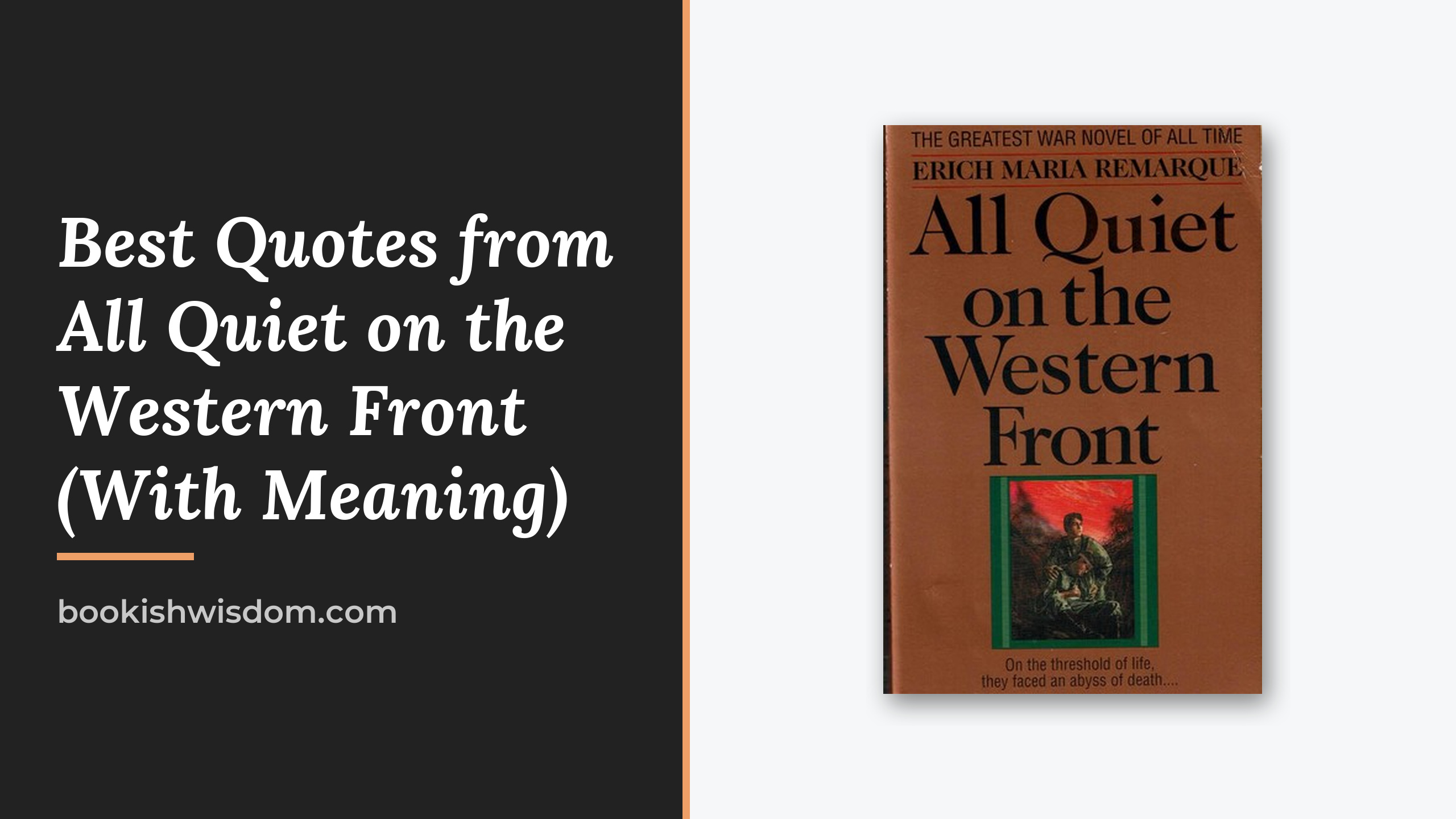
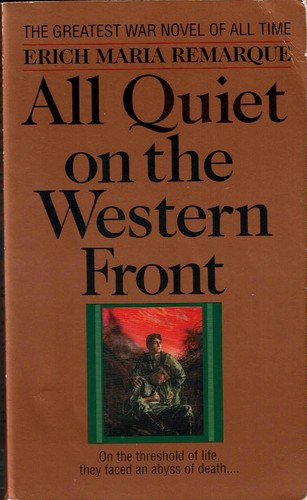
Paul Bäumer and his classmates enlist in the German army during the First World War, encouraged by their patriotic schoolmaster. At the front they experience trench warfare, gas attacks, hunger and the death of friends one by one. Paul's friendship with the older, resourceful Stanislaus Katczinsky, known as Kat, keeps him going. On leave at home he feels he no longer belongs. The novel, based on Remarque's own service, was banned and burned by the Nazis. Quotes follow A. W. Wheen's 1929 translation.
Check price of All Quiet on the Western Front on Amazon
The Best Quotes from All Quiet on the Western Front, Explained
1. “This book is to be neither an accusation nor a confession, and least of all an adventure, for death is not an adventure to those who stand face to face with it.”
The epigraph. Remarque tells readers not to expect heroics. The book will simply show a generation destroyed by war. It is one of the most famous openings in war literature.
2. “I am young, I am twenty years old; yet I know nothing of life but despair, death, fear, and fatuous superficiality cast over an abyss of sorrow.”
Paul. Paul explains how the war has stolen his youth. He is twenty but feels old and empty. The line captures the lost generation.
3. “But now, for the first time, I see you are a man like me.”
Paul, to a French soldier he has killed. Trapped in a shell hole with the dying man, Paul realizes his enemy is just another person. It is the emotional center of the novel.
4. “We are forlorn like children, and experienced like old men, we are crude and sorrowful and superficial—I believe we are lost.”
Paul. This line sums up how war leaves young men both too old and too young for normal life.
5. “He fell in October 1918, on a day that was so quiet and still on the whole front, that the army report confined itself to the single sentence: All quiet on the Western Front.”
The final paragraph. Paul dies on a day so calm that the official report says nothing happened. The quiet irony gives the book its title.
Why These Lines Stay With Readers
All Quiet on the Western Front is one of the most important antiwar novels ever written. Its quotes are used to remember the cost of war for ordinary soldiers.
How to Use These Quotes
- In an essay: introduce the quote, give its context in one sentence, then explain how it supports your point.
- For a book club: read one line aloud and ask whether everyone agrees with the speaker.
- For a caption or card: pick a short line and credit Erich Maria Remarque and All Quiet on the Western Front.
- For a reread: look for the moment each line appears and notice what changes around it.
Discussion Questions
- Which quote above best sums up All Quiet on the Western Front for you, and why?
- Do any of these lines mean something different once you know how the book ends?
- Which quote would you disagree with, and what would you say back?
If You Love the Writing in All Quiet on the Western Front
- A Farewell to Arms by Ernest Hemingway
- Birdsong by Sebastian Faulks
Related: All Quiet on the Western Front by Erich Maria Remarque: Summary and Key Takeaways · Themes in All Quiet on the Western Front Explained
Frequently Asked Questions
What is the most famous quote from All Quiet on the Western Front?
One of the best-known lines is “This book is to be neither an accusation nor a confession, and least of all an adventure, for death is not an adventure to those who stand face to face with it.” (the epigraph).
Who wrote All Quiet on the Western Front?
All Quiet on the Western Front was written by Erich Maria Remarque and first published in 1929.
Can I use quotes from All Quiet on the Western Front in an essay?
Yes. Short quotations with clear credit to Erich Maria Remarque are standard in essays and reviews. Always explain the quote in your own words.
What should I read after All Quiet on the Western Front?
Try A Farewell to Arms by Ernest Hemingway or Birdsong by Sebastian Faulks.