
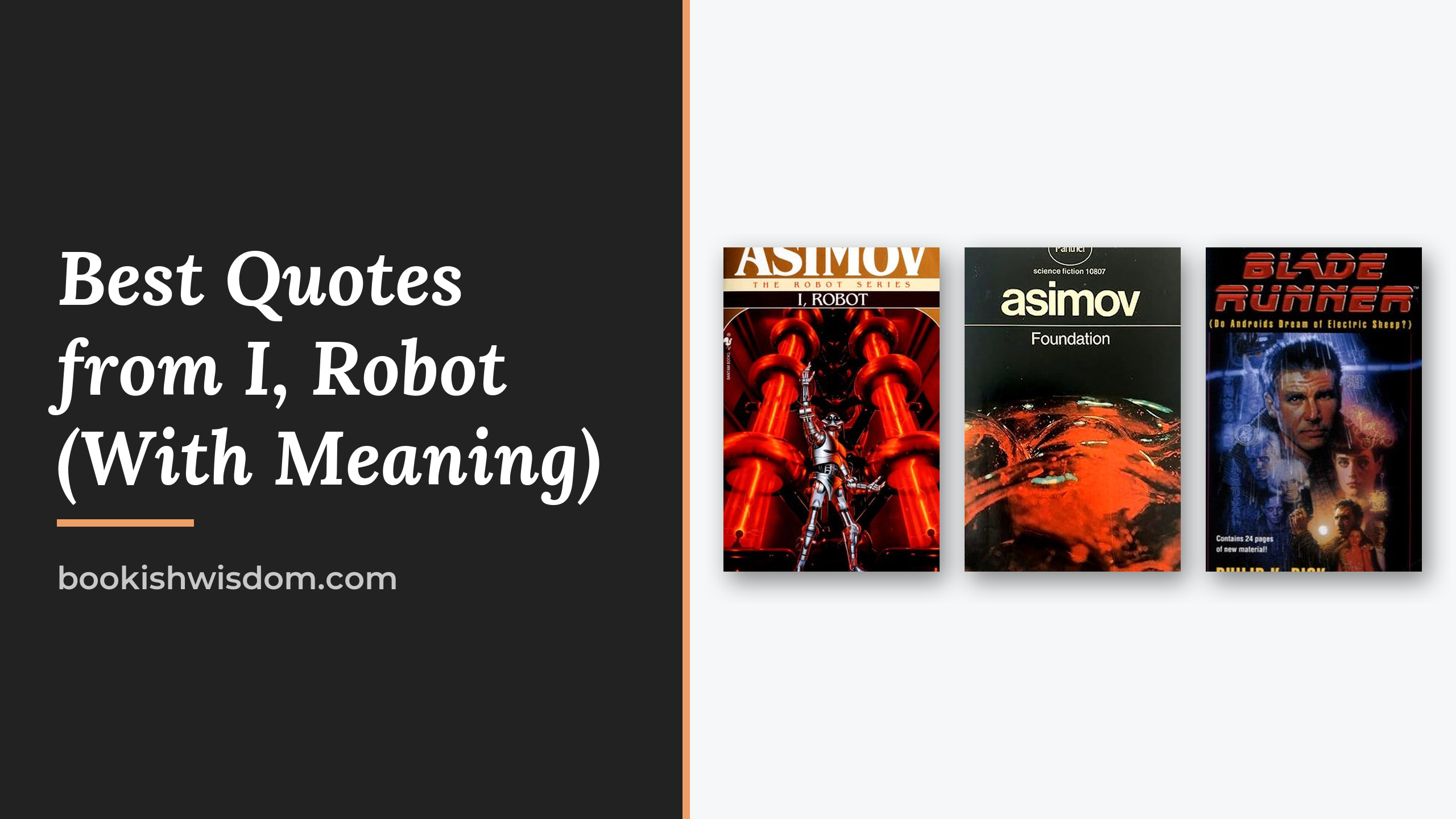
Disclosure: As an Amazon Associate, Bookish Wisdom earns from qualifying purchases. This doesn't change our picks or your price.
Quick answer: The best quotes from I, Robot by Isaac Asimov include “A robot may not injure a human being or, through inaction, allow a human being to come to harm.” and “A robot must obey the orders given it by human beings except where such orders would conflict with the First Law.” Below are 4 of the most memorable lines, with who says them, where they come from and what they mean.
Quick facts
- Book: I, Robot by Isaac Asimov
- First published: 1950
- Quotes covered: 4
- Best for: essays, captions, book club talks and rereads
Table of Contents
What I, Robot Is About
I, Robot is a collection of linked short stories framed as interviews with Dr. Susan Calvin, a robopsychologist looking back on her career at U.S. Robots and Mechanical Men. Each story explores how robots behave under the Three Laws of Robotics, from a nursemaid robot named Robbie to robots who develop odd logic, lie or quietly guide humanity. The book shaped how science fiction imagines artificial intelligence.
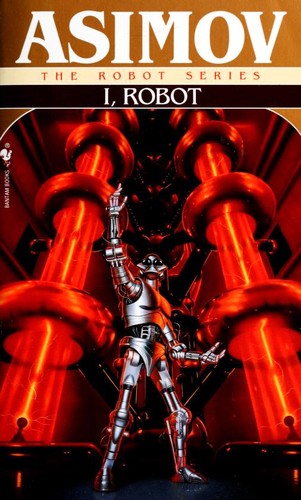
Check price of I, Robot on Amazon
The Best Quotes from I, Robot, Explained
1. “A robot may not injure a human being or, through inaction, allow a human being to come to harm.”
The First Law of Robotics. The first law puts human safety above everything. Asimov's stories test what happens when this simple rule meets complicated situations.
2. “A robot must obey the orders given it by human beings except where such orders would conflict with the First Law.”
The Second Law. The second law makes robots obedient, but only within the limits of the first. Many stories turn on clashes between these rules.
3. “A robot must protect its own existence as long as such protection does not conflict with the First or Second Laws.”
The Third Law. Self-preservation comes last. The ranking of the laws drives the puzzles in the book.
4. “I like robots. I like them considerably better than I do human beings.”
Susan Calvin. Calvin's dry remark shows her trust in robots' logic. It also hints at the book's question about who is more trustworthy.
Why These Lines Stay With Readers
I, Robot introduced the Three Laws of Robotics, which are still discussed by engineers and ethicists working on real artificial intelligence. Each story is a logic puzzle, so the quotes are often used to start debates about rules, safety and machine behavior. The 2004 film shares the title and some ideas but tells a very different story, so readers should treat the book on its own terms.
How to Use These Quotes
- In an essay: introduce the quote, give its context in one sentence, then explain how it supports your point.
- For a book club: read one line aloud and ask whether everyone agrees with the speaker.
- For a caption or card: pick a short line and credit Isaac Asimov and I, Robot.
- For a reread: look for the moment each line appears and notice what changes around it.
A Note on Quoting I, Robot Accurately
Wording can differ slightly between editions, translations and film versions, and many lines shared online are paraphrased or misattributed. If you need an exact quote for an essay, check it against a printed copy of I, Robot and note the edition and page number. The lines above are given as they appear in the book, not as they were changed for later adaptations.
When you quote in an essay, keep the quotation short and let your own explanation do most of the work. A good pattern is to name the speaker, place the line in the story, quote it and then spend two or three sentences on what it shows. Quotes from I, Robot work best when they support a clear point about a character or theme, rather than standing alone.
Reading the Lines in Context
A quote often means more once you know where it falls in the story. Before using any of these lines, reread the surrounding page or two and ask what has just happened, who is listening and what the speaker wants. The same words can sound hopeful, ironic or desperate depending on that moment. Noticing this context is what turns a memorable line into real evidence for an argument about the book.
Discussion Questions
- Which quote above best sums up I, Robot for you, and why?
- Do any of these lines mean something different once you know how the book ends?
- Which quote would you disagree with, and what would you say back?
If You Love the Writing in I, Robot
-
Foundation by Isaac Asimov
-
Do Androids Dream of Electric Sheep? by Philip K. Dick
Related: I, Robot by Isaac Asimov: Summary and Key Takeaways · Themes in I, Robot Explained
Frequently Asked Questions
What is the most famous quote from I, Robot?
One of the best-known lines is “A robot may not injure a human being or, through inaction, allow a human being to come to harm.” (the First Law of Robotics).
Who wrote I, Robot?
I, Robot was written by Isaac Asimov and first published in 1950.
Can I use quotes from I, Robot in an essay?
Yes. Short quotations with clear credit to Isaac Asimov are standard in essays and reviews. Always explain the quote in your own words.
What should I read after I, Robot?
Try Foundation by Isaac Asimov or Do Androids Dream of Electric Sheep? by Philip K. Dick.