
Disclosure: As an Amazon Associate, Bookish Wisdom earns from qualifying purchases. This doesn't change our picks or your price.
Quick answer: The best quotes from Sapiens by Yuval Noah Harari include “We did not domesticate wheat. It domesticated us.” and “The Agricultural Revolution was history's biggest fraud.” Below are 4 of the most memorable lines, with who says them, where they come from and what they mean.
Quick facts
- Book: Sapiens by Yuval Noah Harari
- First published: 2011
- Quotes covered: 4
- Best for: essays, captions, book club talks and rereads
Table of Contents
What Sapiens Is About
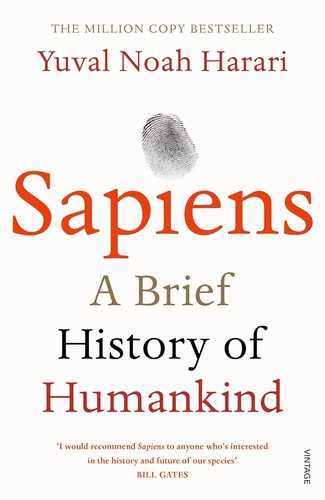
Historian Yuval Noah Harari tells the story of humankind in one sweeping book. He describes three great revolutions: the Cognitive Revolution, when Homo sapiens began to share stories and myths; the Agricultural Revolution, when humans settled down to farm; and the Scientific Revolution, which led to the modern world. Along the way he explores money, empires, capitalism and whether people today are happier than their ancestors.
Check price of Sapiens on Amazon
The Best Quotes from Sapiens, Explained
1. “We did not domesticate wheat. It domesticated us.”
On the Agricultural Revolution. Harari flips a familiar idea. Farming tied humans to fields, hard labor and new diseases, so it is not clear who benefited more.
2. “The Agricultural Revolution was history's biggest fraud.”
Harari. This bold line argues that farming led to more food overall but harder, less varied lives for most people. It is one of the book's most debated claims.
3. “Culture tends to argue that it forbids only that which is unnatural. But from a biological perspective, nothing is unnatural.”
Harari. Harari points out that many social rules are cultural, not biological. The line invites readers to question what they take for granted.
4. “Money is the most universal and most efficient system of mutual trust ever devised.”
On money. Harari explains that money works because people believe in it together. It is a striking way to see coins and bank balances as shared stories.
Why These Lines Stay With Readers
Sapiens became a global bestseller because it makes huge ideas easy to discuss. Its lines are often quoted in classrooms and business talks, though some historians dispute parts of its argument, so they work best as starting points for debate. Harari also argues that the ability to believe in shared fictions, from nations to companies to money, is what lets huge numbers of strangers cooperate. That idea runs through the whole book and explains why Sapiens is as much about stories as about bones and tools.
How to Use These Quotes
- In an essay: introduce the quote, give its context in one sentence, then explain how it supports your point.
- For a book club: read one line aloud and ask whether everyone agrees with the speaker.
- For a caption or card: pick a short line and credit Yuval Noah Harari and Sapiens.
- For a reread: look for the moment each line appears and notice what changes around it.
A Note on Quoting Sapiens Accurately
Wording can differ slightly between editions, translations and film versions, and many lines shared online are paraphrased or misattributed. If you need an exact quote for an essay, check it against a printed copy of Sapiens and note the edition and page number. The lines above are given as they appear in the book, not as they were changed for later adaptations.
When you quote in an essay, keep the quotation short and let your own explanation do most of the work. A good pattern is to name the speaker, place the line in the story, quote it and then spend two or three sentences on what it shows. Quotes from Sapiens work best when they support a clear point about a character or theme, rather than standing alone.
Discussion Questions
- Which quote above best sums up Sapiens for you, and why?
- Do any of these lines mean something different once you know how the book ends?
- Which quote would you disagree with, and what would you say back?
If You Love the Writing in Sapiens
-

Guns, Germs, and Steel by Jared Diamond
- Homo Deus by Yuval Noah Harari
Related: Sapiens by Yuval Noah Harari: Summary and Key Takeaways · Themes in Sapiens Explained
Frequently Asked Questions
What is the most famous quote from Sapiens?
One of the best-known lines is “We did not domesticate wheat. It domesticated us.” (on the Agricultural Revolution).
Who wrote Sapiens?
Sapiens was written by Yuval Noah Harari and first published in 2011.
Can I use quotes from Sapiens in an essay?
Yes. Short quotations with clear credit to Yuval Noah Harari are standard in essays and reviews. Always explain the quote in your own words.
What should I read after Sapiens?
Try Guns, Germs, and Steel by Jared Diamond or Homo Deus by Yuval Noah Harari.