
Disclosure: As an Amazon Associate, Bookish Wisdom earns from qualifying purchases. This doesn't change our picks or your price.
Quick answer: The best quotes from Silent Spring by Rachel Carson include “There was once a town in the heart of America where all life seemed to live in harmony with its surroundings.” and “No witchcraft, no enemy action had silenced the rebirth of new life in this stricken world. The people had done it themselves.” Below are 5 of the most memorable lines, with who says them, where they come from and what they mean.
Quick facts
- Book: Silent Spring by Rachel Carson
- First published: 1962
- Quotes covered: 5
- Best for: essays, captions, book club talks and rereads
Table of Contents
What Silent Spring Is About
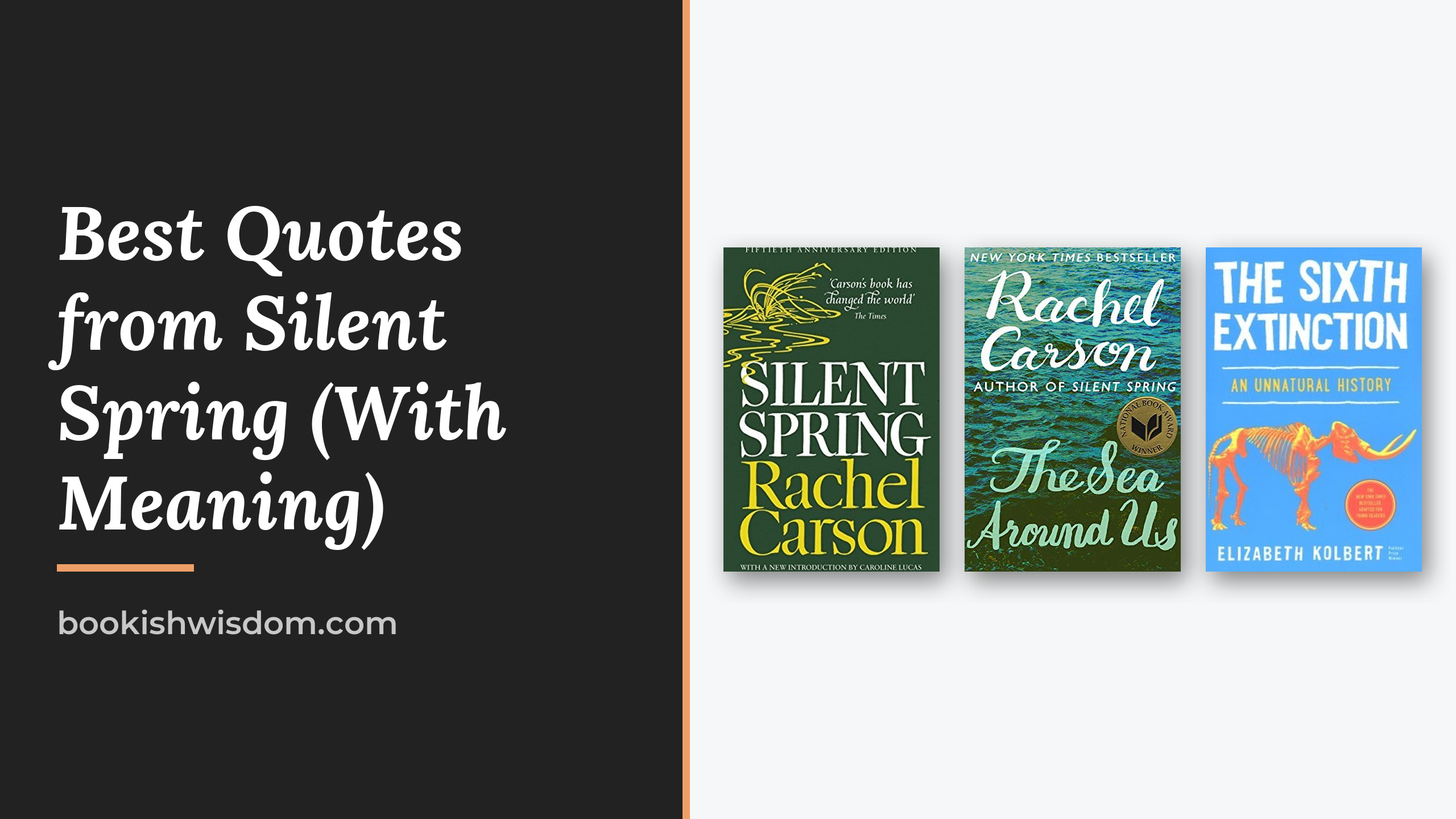
Marine biologist Rachel Carson documents how synthetic pesticides such as DDT were being sprayed across America with little thought for their effects. She shows how the chemicals poison soil, rivers, birds, fish and eventually people, building up in food chains and living tissue. Opening with a fable about a town where spring falls silent, the book calls for a more careful, humble relationship with the natural world.
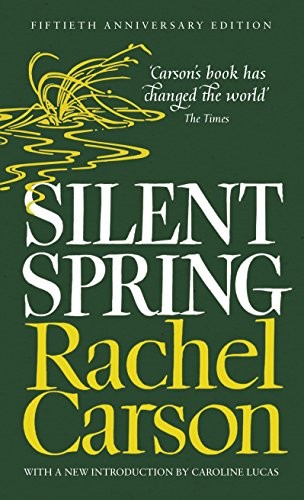
Check price of Silent Spring on Amazon
The Best Quotes from Silent Spring, Explained
1. “There was once a town in the heart of America where all life seemed to live in harmony with its surroundings.”
'A Fable for Tomorrow', opening line. Carson begins like a fairy tale. The calm picture makes the silence that follows even more shocking.
2. “No witchcraft, no enemy action had silenced the rebirth of new life in this stricken world. The people had done it themselves.”
'A Fable for Tomorrow'. The fable's twist puts responsibility on people. The disaster is not natural but human-made.
3. “Over increasingly large areas of the United States, spring now comes unheralded by the return of the birds, and the early mornings are strangely silent where once they were filled with the beauty of bird song.”
Chapter 8. This passage explains the title. A spring without birdsong is a warning that something is deeply wrong.
4. “In nature nothing exists alone.”
Chapter 5. Carson's key idea is connection. Harming one part of an ecosystem harms everything linked to it.
5. “The 'control of nature' is a phrase conceived in arrogance”
Final chapter. Carson rejects the idea that humans should dominate nature. She calls for respect instead.
Why These Lines Stay With Readers
Silent Spring is often credited with starting the modern environmental movement. Chemical companies attacked Carson fiercely, but her careful research held up, and the book led to a national ban on DDT for agricultural use in 1972 and helped inspire the creation of the Environmental Protection Agency. Carson was ill with cancer while writing it and died less than two years after publication. Her lines are quoted in discussions about climate, conservation and science communication, because she combined hard evidence with beautiful, clear writing. Students also study the book as a model of persuasive nonfiction.
How to Use These Quotes
- In an essay: introduce the quote, give its context in one sentence, then explain how it supports your point.
- For a book club: read one line aloud and ask whether everyone agrees with the speaker.
- For a caption or card: pick a short line and credit Rachel Carson and Silent Spring.
- For a reread: look for the moment each line appears and notice what changes around it.
A Note on Quoting Silent Spring Accurately
Wording can differ slightly between editions, translations and film versions, and many lines shared online are paraphrased or misattributed. If you need an exact quote for an essay, check it against a printed copy of Silent Spring and note the edition and page number. The lines above are given as they appear in the book, not as they were changed for later adaptations.
When you quote in an essay, keep the quotation short and let your own explanation do most of the work. A good pattern is to name the speaker, place the line in the story, quote it and then spend two or three sentences on what it shows. Quotes from Silent Spring work best when they support a clear point about a character or theme, rather than standing alone.
Reading the Lines in Context
A quote often means more once you know where it falls in the story. Before using any of these lines, reread the surrounding page or two and ask what has just happened, who is listening and what the speaker wants. The same words can sound hopeful, ironic or desperate depending on that moment. Noticing this context is what turns a memorable line into real evidence for an argument about the book.
Discussion Questions
- Which quote above best sums up Silent Spring for you, and why?
- Do any of these lines mean something different once you know how the book ends?
- Which quote would you disagree with, and what would you say back?
If You Love the Writing in Silent Spring
-
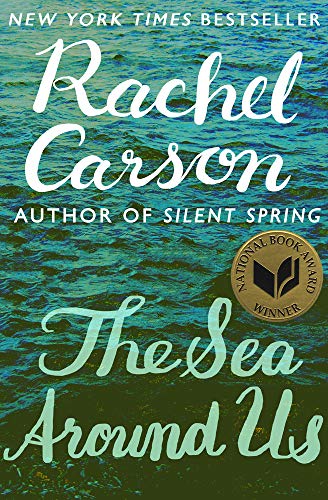
The Sea Around Us by Rachel Carson
-
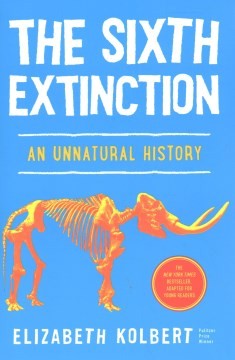
The Sixth Extinction by Elizabeth Kolbert
Related: Silent Spring by Rachel Carson: Summary and Key Takeaways · Themes in Silent Spring Explained
Frequently Asked Questions
What is the most famous quote from Silent Spring?
One of the best-known lines is “There was once a town in the heart of America where all life seemed to live in harmony with its surroundings.” ('A Fable for Tomorrow', opening line).
Who wrote Silent Spring?
Silent Spring was written by Rachel Carson and first published in 1962.
Can I use quotes from Silent Spring in an essay?
Yes. Short quotations with clear credit to Rachel Carson are standard in essays and reviews. Always explain the quote in your own words.
What should I read after Silent Spring?
Try The Sea Around Us by Rachel Carson or The Sixth Extinction by Elizabeth Kolbert.