
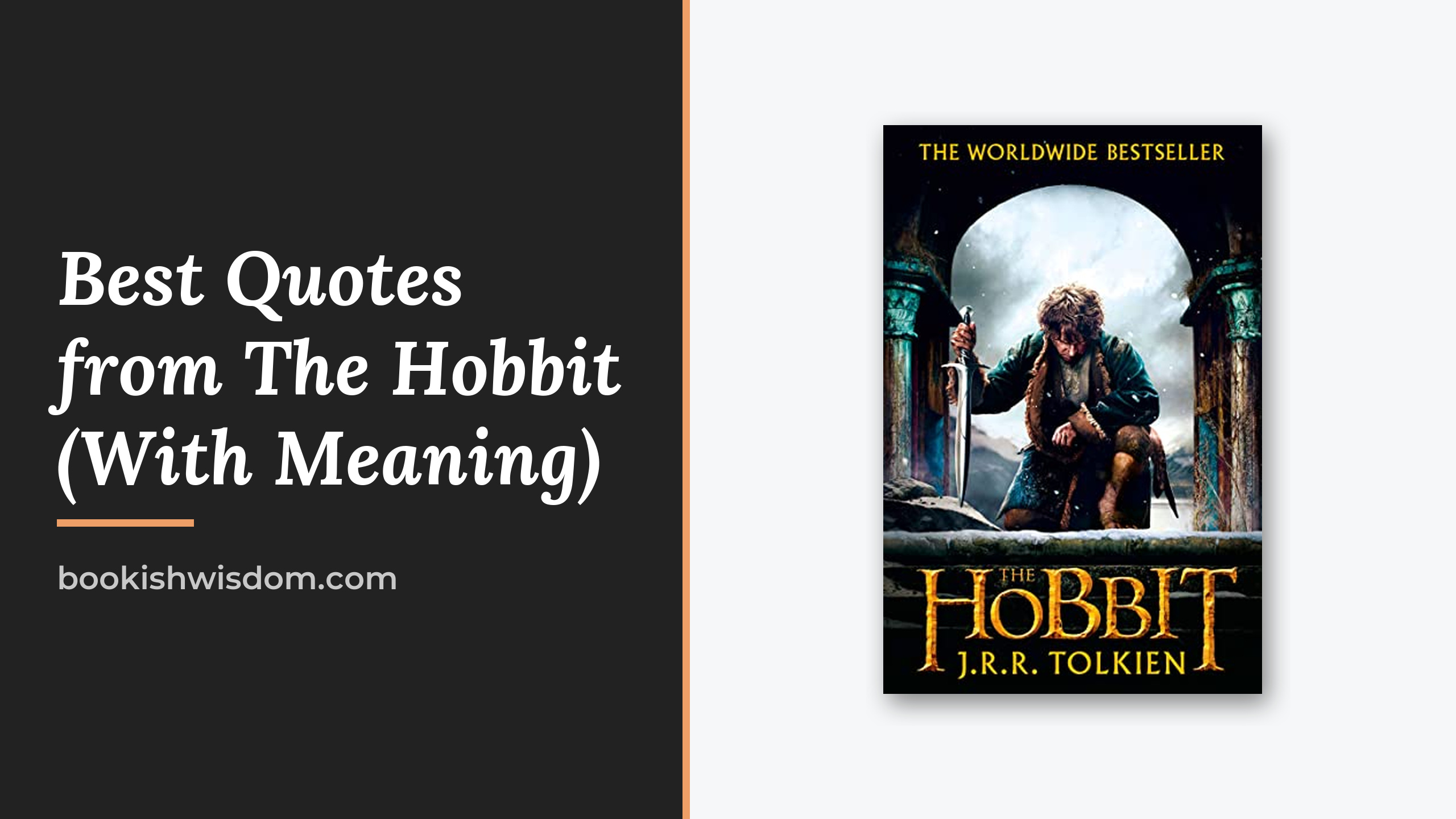
Disclosure: As an Amazon Associate, Bookish Wisdom earns from qualifying purchases. This doesn't change our picks or your price.
Quick answer: The best quotes from The Hobbit by J. R. R. Tolkien include “In a hole in the ground there lived a hobbit.” and “If more of us valued food and cheer and song above hoarded gold, it would be a merrier world.” Below are 6 of the most memorable lines, with who says them, where they come from and what they mean.
Quick facts
- Book: The Hobbit by J. R. R. Tolkien
- First published: 1937
- Quotes covered: 6
- Best for: essays, captions, book club talks and rereads
Table of Contents
What The Hobbit Is About
Bilbo Baggins is a comfortable hobbit who loves his quiet home in the Shire. One day the wizard Gandalf and thirteen dwarves led by Thorin Oakenshield arrive at his door and recruit him as a burglar on their quest to reclaim their mountain home and treasure from the dragon Smaug. On the journey Bilbo meets trolls, goblins, giant spiders and elves, finds a mysterious ring and discovers that he is braver than he ever imagined.
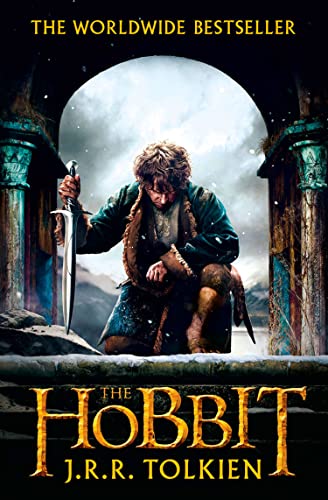
Check price of The Hobbit on Amazon
The Best Quotes from The Hobbit, Explained
1. “In a hole in the ground there lived a hobbit.”
The opening line. Tolkien said he wrote this sentence on a blank page while marking exams, without knowing what a hobbit was. It became the first line of one of the most loved fantasy stories ever written.
2. “If more of us valued food and cheer and song above hoarded gold, it would be a merrier world.”
Thorin, as he lies dying. Thorin, who has been driven by greed, finally sees what matters. His words praise Bilbo's simple hobbit values and give the book its moral.
3. “There is more in you of good than you know, child of the kindly West.”
Thorin, to Bilbo. Thorin makes peace with Bilbo before he dies. The line praises Bilbo's courage and kindness, which have quietly grown throughout the journey.
4. “It does not do to leave a live dragon out of your calculations, if you live near him.”
The narrator. This dry, funny advice is typical of the book's narrator. It also works as a warning about ignoring obvious dangers.
5. “Go back? No good at all! Go sideways? Impossible! Go forward? Only thing to do!”
Bilbo, lost in the goblin tunnels. Bilbo talks himself into moving on. The line is simple and practical, and it marks the moment he begins to rely on himself.
6. “Where there's life there's hope.”
Bilbo, remembering his father's saying. Bilbo uses this old saying to keep going in dark moments. It reflects the hopeful spirit of the whole story.
Why These Lines Stay With Readers
The Hobbit was written as a children's book, so its lines are simple and funny. Yet it also carries serious ideas about greed, courage and home, which is why readers keep coming back to it long after childhood. The book was first published in 1937 and later revised so that the scene with Gollum fit the story of The Lord of the Rings. Many readers first meet these lines as children and find new meaning in them as adults.
How to Use These Quotes
- In an essay: introduce the quote, give its context in one sentence, then explain how it supports your point.
- For a book club: read one line aloud and ask whether everyone agrees with the speaker.
- For a caption or card: pick a short line and credit J. R. R. Tolkien and The Hobbit.
- For a reread: look for the moment each line appears and notice what changes around it.
Discussion Questions
- Which quote above best sums up The Hobbit for you, and why?
- Do any of these lines mean something different once you know how the book ends?
- Which quote would you disagree with, and what would you say back?
If You Love the Writing in The Hobbit
- The Fellowship of the Ring by J. R. R. Tolkien
- The Wind in the Willows by Kenneth Grahame
Related: The Hobbit by J.R.R. Tolkien: Summary and Key Takeaways · Themes in The Hobbit Explained
Frequently Asked Questions
What is the most famous quote from The Hobbit?
One of the best-known lines is “In a hole in the ground there lived a hobbit.” (the opening line).
Who wrote The Hobbit?
The Hobbit was written by J. R. R. Tolkien and first published in 1937.
Can I use quotes from The Hobbit in an essay?
Yes. Short quotations with clear credit to J. R. R. Tolkien are standard in essays and reviews. Always explain the quote in your own words.
What should I read after The Hobbit?
Try The Fellowship of the Ring by J. R. R. Tolkien or The Wind in the Willows by Kenneth Grahame.