
Disclosure: As an Amazon Associate, Bookish Wisdom earns from qualifying purchases. This doesn't change our picks or your price.
Quick answer: The best quotes from The Two Towers by J. R. R. Tolkien include “I do not love the bright sword for its sharpness, nor the arrow for its swiftness, nor the warrior for his glory. I love only that which they defend.” and “Don't the great tales never end?” Below are 5 of the most memorable lines, with who says them, where they come from and what they mean.
Quick facts
- Book: The Two Towers by J. R. R. Tolkien
- First published: 1954
- Quotes covered: 5
- Best for: essays, captions, book club talks and rereads
Table of Contents
What The Two Towers Is About
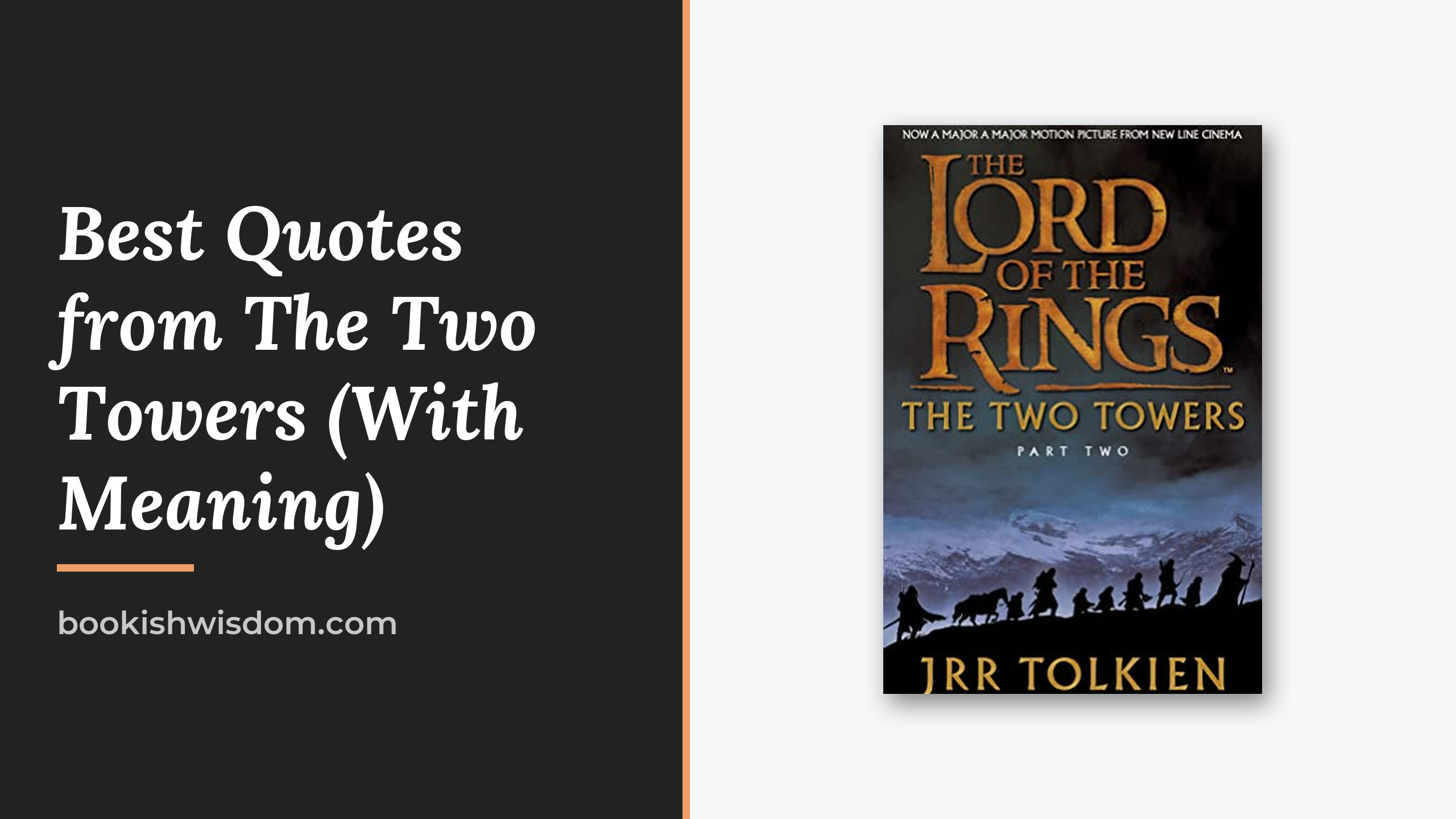
The Two Towers is the second volume of The Lord of the Rings. After the Fellowship breaks apart, the story follows two paths. Aragorn, Legolas and Gimli chase the orcs who captured Merry and Pippin, leading them to the kingdom of Rohan and the battle of Helm's Deep, while the hobbits meet the tree-like Ents. Meanwhile Frodo and Sam head toward Mordor guided by the creature Gollum and meet Faramir, the brother of the fallen Boromir.
Check price of The Two Towers on Amazon
The Best Quotes from The Two Towers, Explained
1. “I do not love the bright sword for its sharpness, nor the arrow for its swiftness, nor the warrior for his glory. I love only that which they defend.”
Faramir, explaining why he fights. Faramir is a soldier who does not love war. He fights only to protect his home and people. Many readers consider this one of the wisest passages in the whole trilogy.
2. “Don't the great tales never end?”
Sam, to Frodo on the stairs of Cirith Ungol. Sam wonders whether they are part of a story that will be told one day. Frodo replies that the tales never end, but the people in them come and go. It is a moving moment of perspective in a dark place.
3. “No, they never end as tales, but the people in them come, and go when their part's ended.”
Frodo, answering Sam. Frodo suggests that every life is part of a larger story that keeps going. The line gives comfort and sadness at once.
4. “I would not take this thing, if it lay by the highway.”
Faramir, refusing the Ring. Unlike his brother, Faramir resists the temptation of the Ring. His refusal shows true strength of character.
5. “I am not altogether on anybody's side, because nobody is altogether on my side.”
Treebeard, the ancient Ent, to Merry and Pippin. Treebeard explains that the Ents have been ignored by everyone, so they owe no one their help. The line is funny and fair, and it makes his later decision to march on Isengard all the more powerful.
Why These Lines Stay With Readers
The Two Towers mixes great battles with quiet moments of friendship. Its quotes about courage, duty and the stories we live in are among the most loved in fantasy.
How to Use These Quotes
- In an essay: introduce the quote, give its context in one sentence, then explain how it supports your point.
- For a book club: read one line aloud and ask whether everyone agrees with the speaker.
- For a caption or card: pick a short line and credit J. R. R. Tolkien and The Two Towers.
- For a reread: look for the moment each line appears and notice what changes around it.
Discussion Questions
- Which quote above best sums up The Two Towers for you, and why?
- Do any of these lines mean something different once you know how the book ends?
- Which quote would you disagree with, and what would you say back?
If You Love the Writing in The Two Towers
- The Return of the King by J. R. R. Tolkien
- A Wizard of Earthsea by Ursula K. Le Guin
Related: The Two Towers by J.R.R. Tolkien: Summary and Key Takeaways · The Return of the King by J.R.R. Tolkien: Summary and Key Takeaways
Frequently Asked Questions
What is the most famous quote from The Two Towers?
One of the best-known lines is “I do not love the bright sword for its sharpness, nor the arrow for its swiftness, nor the warrior for his glory. I love only that which they defend.” (faramir, explaining why he fights).
Who wrote The Two Towers?
The Two Towers was written by J. R. R. Tolkien and first published in 1954.
Can I use quotes from The Two Towers in an essay?
Yes. Short quotations with clear credit to J. R. R. Tolkien are standard in essays and reviews. Always explain the quote in your own words.
What should I read after The Two Towers?
Try The Return of the King by J. R. R. Tolkien or A Wizard of Earthsea by Ursula K. Le Guin.