
Disclosure: As an Amazon Associate, Bookish Wisdom earns from qualifying purchases. This doesn't change our picks or your price.
Quick answer: The best quotes from The Return of the King by J. R. R. Tolkien include “I can't carry it for you, but I can carry you!” and “But no living man am I! You look upon a woman.” Below are 6 of the most memorable lines, with who says them, where they come from and what they mean.
Quick facts
- Book: The Return of the King by J. R. R. Tolkien
- First published: 1955
- Quotes covered: 6
- Best for: essays, captions, book club talks and rereads
Table of Contents
What The Return of the King Is About
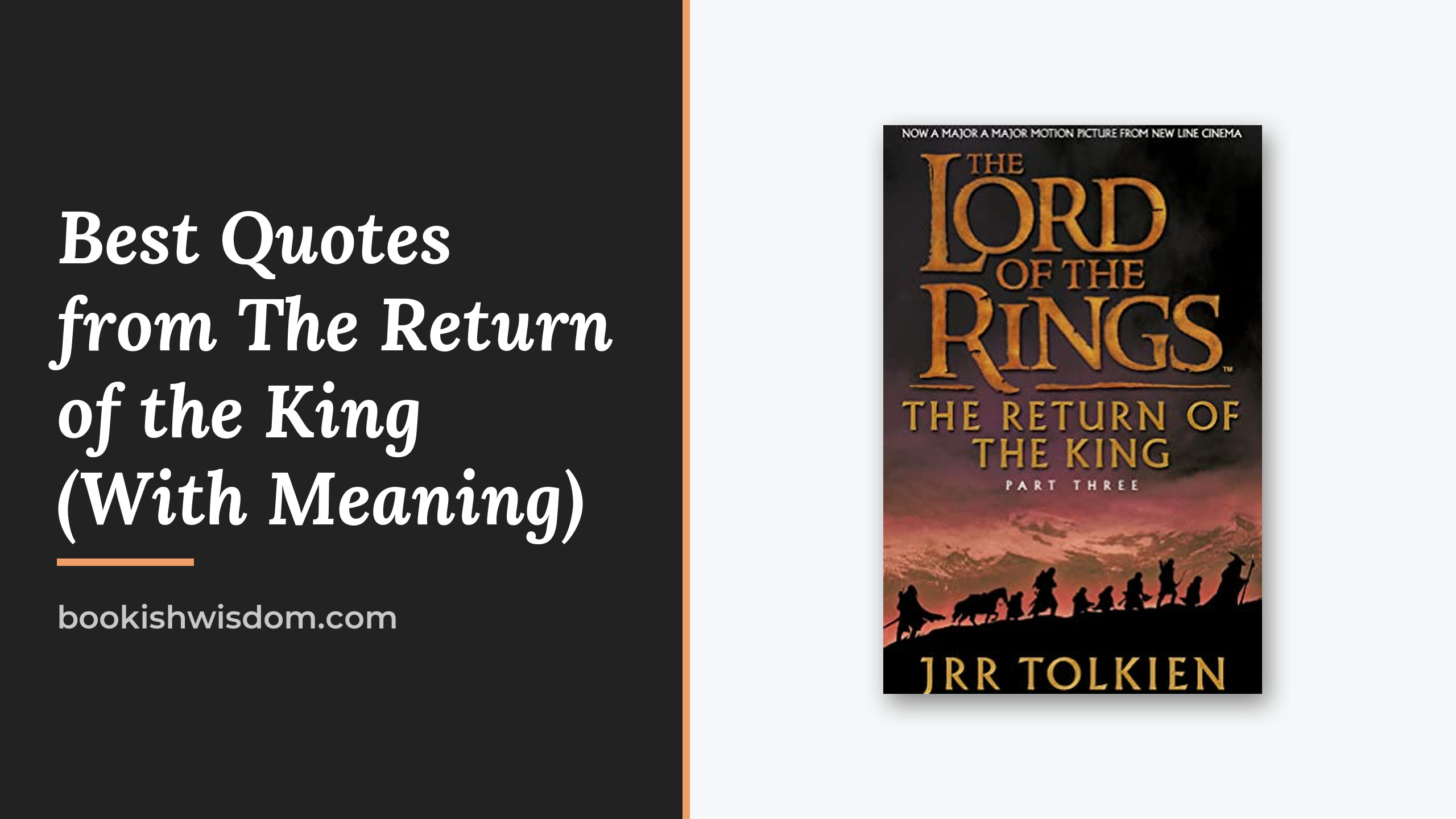
The Return of the King is the final volume of The Lord of the Rings. Gandalf and Pippin ride to Minas Tirith as the armies of Sauron gather, and Aragorn takes a dark road to bring help. Merry rides to war with the Riders of Rohan, and the great battle of the Pelennor Fields decides the fate of Gondor. Meanwhile, Frodo and Sam struggle across Mordor to Mount Doom to destroy the Ring, and the hobbits finally return to a changed Shire.
Check price of The Return of the King on Amazon
The Best Quotes from The Return of the King, Explained
1. “I can't carry it for you, but I can carry you!”
Sam, lifting Frodo on the slopes of Mount Doom. This is the most famous moment of friendship in the trilogy. Sam cannot take the Ring's burden, but he can carry his friend. Readers quote it as a picture of loyal support.
2. “But no living man am I! You look upon a woman.”
Éowyn, facing the Witch-king. Éowyn, disguised as a soldier, reveals herself and defeats an enemy that no man could kill. It is one of the most celebrated moments for female characters in fantasy.
3. “It is not our part to master all the tides of the world, but to do what is in us for the succour of those years wherein we are set.”
Gandalf, at the last debate before the final battle. Gandalf reminds the leaders that they cannot control everything. Their job is simply to do their best in their own time. It is a wise and comforting view of responsibility.
4. “The hands of the king are the hands of a healer, and so shall the rightful king be known.”
Ioreth, an old woman in the Houses of Healing. This old saying reveals Aragorn as the true king when he heals the wounded. It shows Tolkien's idea of a leader who serves and cares for others.
5. “I will not say: do not weep; for not all tears are an evil.”
Gandalf, at the Grey Havens. As Frodo leaves Middle-earth, Gandalf comforts his friends. The line accepts sadness as a natural part of love and farewell.
6. “Well, I'm back.”
Sam, the last line of the trilogy. After the great adventure, Sam returns home to his family. The simple, quiet ending shows that ordinary life is what the heroes fought to protect.
Why These Lines Stay With Readers
The Return of the King completes one of the most influential stories of the twentieth century. Its quotes about friendship, courage and loss are used in speeches, weddings and memorials around the world.
How to Use These Quotes
- In an essay: introduce the quote, give its context in one sentence, then explain how it supports your point.
- For a book club: read one line aloud and ask whether everyone agrees with the speaker.
- For a caption or card: pick a short line and credit J. R. R. Tolkien and The Return of the King.
- For a reread: look for the moment each line appears and notice what changes around it.
Discussion Questions
- Which quote above best sums up The Return of the King for you, and why?
- Do any of these lines mean something different once you know how the book ends?
- Which quote would you disagree with, and what would you say back?
If You Love the Writing in The Return of the King
- The Hobbit by J. R. R. Tolkien
- The Once and Future King by T. H. White
Related: The Return of the King by J.R.R. Tolkien: Summary and Key Takeaways · The Return of the King Ending Explained
Frequently Asked Questions
What is the most famous quote from The Return of the King?
One of the best-known lines is “I can't carry it for you, but I can carry you!” (sam, lifting Frodo on the slopes of Mount Doom).
Who wrote The Return of the King?
The Return of the King was written by J. R. R. Tolkien and first published in 1955.
Can I use quotes from The Return of the King in an essay?
Yes. Short quotations with clear credit to J. R. R. Tolkien are standard in essays and reviews. Always explain the quote in your own words.
What should I read after The Return of the King?
Try The Hobbit by J. R. R. Tolkien or The Once and Future King by T. H. White.