
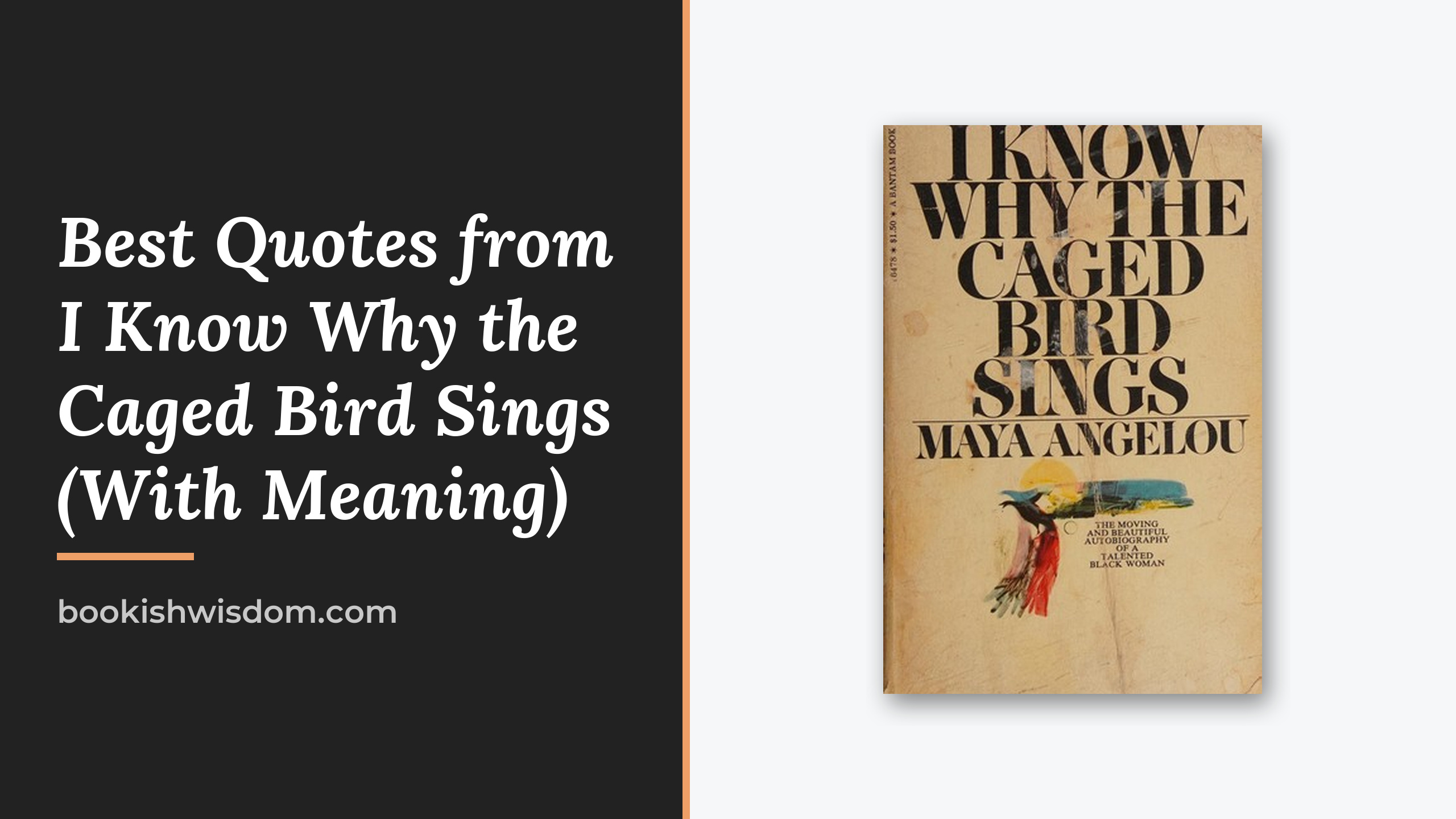
Disclosure: As an Amazon Associate, Bookish Wisdom earns from qualifying purchases. This doesn't change our picks or your price.
Quick answer: The best quotes from I Know Why the Caged Bird Sings by Maya Angelou include “There is no greater agony than bearing an untold story inside you.” and “If growing up is painful for the Southern Black girl, being aware of her displacement is the rust on the razor that threatens the throat.” Below are 6 of the most memorable lines, with who says them, where they come from and what they mean.
Quick facts
- Book: I Know Why the Caged Bird Sings by Maya Angelou
- First published: 1969
- Quotes covered: 6
- Best for: essays, captions, book club talks and rereads
Table of Contents
What I Know Why the Caged Bird Sings Is About
The first of Maya Angelou's seven autobiographies follows her childhood as Marguerite Johnson. At three she and her brother Bailey are sent to live with their grandmother, Momma, who runs a general store in the segregated town of Stamps, Arkansas. A visit to their mother in St. Louis ends in trauma when Maya is assaulted by her mother's boyfriend, and she stops speaking for years. With help from Mrs Bertha Flowers, who introduces her to books, Maya finds her voice again, and the memoir ends in San Francisco when she becomes a mother at seventeen.
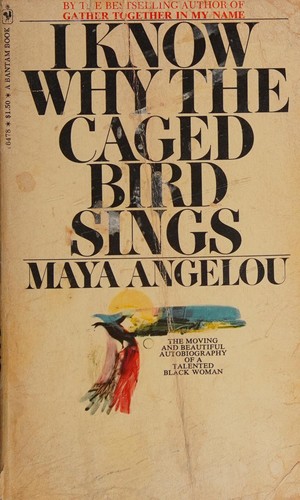
Check price of I Know Why the Caged Bird Sings on Amazon
The Best Quotes from I Know Why the Caged Bird Sings, Explained
1. “There is no greater agony than bearing an untold story inside you.”
A line from the memoir often linked to Maya's years of silence. These words explain why the book exists. Angelou spent years unable to speak about what happened to her, and the memoir is the story finally told. Writers and survivors quote the line to describe the need to share their own experience.
2. “If growing up is painful for the Southern Black girl, being aware of her displacement is the rust on the razor that threatens the throat.”
From the prologue. This sharp image describes how racism adds a constant, extra danger to the normal pain of growing up. The razor is already threatening, and the rust makes it worse. It is one of the most powerful sentences in American memoir.
3. “Hoping for the best, prepared for the worst, and unsurprised by anything in between.”
Maya, describing her outlook. Angelou sums up the hard-won wisdom she learned as a child in the South. The line is realistic without being hopeless, which is why readers often adopt it as a personal motto.
4. “Words mean more than what is set down on paper. It takes the human voice to infuse them with the shades of deeper meaning.”
Mrs Bertha Flowers, encouraging Maya to read aloud. Mrs Flowers knows that Maya loves books but refuses to speak. By asking her to read aloud, she shows that a voice gives words life. This is the first step in Maya's recovery.
5. “Children's talent to endure stems from their ignorance of alternatives.”
Maya, reflecting on her childhood. Angelou explains that children survive hard lives partly because they do not know life could be different. It is a sad and clear-eyed observation about resilience.
6. “The fact that the adult American Negro female emerges a formidable character is often met with amazement, distaste and even belligerence.”
Near the end of the memoir. Writing in the language of her time, Angelou says that Black women who survive so much hardship become strong, and that society often resents that strength. The line closes a chapter with quiet pride.
Why These Lines Stay With Readers
Angelou was a poet, and her prose has the rhythm of poetry. The memoir was one of the first by a Black woman to reach a wide audience, and these lines are still quoted in classrooms and speeches about voice, identity and survival.
How to Use These Quotes
- In an essay: introduce the quote, give its context in one sentence, then explain how it supports your point.
- For a book club: read one line aloud and ask whether everyone agrees with the speaker.
- For a caption or card: pick a short line and credit Maya Angelou and I Know Why the Caged Bird Sings.
- For a reread: look for the moment each line appears and notice what changes around it.
Discussion Questions
- Which quote above best sums up I Know Why the Caged Bird Sings for you, and why?
- Do any of these lines mean something different once you know how the book ends?
- Which quote would you disagree with, and what would you say back?
If You Love the Writing in I Know Why the Caged Bird Sings
- Brown Girl Dreaming by Jacqueline Woodson
- Becoming by Michelle Obama
Related: I Know Why the Caged Bird Sings by Maya Angelou: Summary and Key Takeaways · Themes in I Know Why the Caged Bird Sings Explained
Frequently Asked Questions
What is the most famous quote from I Know Why the Caged Bird Sings?
One of the best-known lines is “There is no greater agony than bearing an untold story inside you.” (a line from the memoir often linked to Maya's years of silence).
Who wrote I Know Why the Caged Bird Sings?
I Know Why the Caged Bird Sings was written by Maya Angelou and first published in 1969.
Can I use quotes from I Know Why the Caged Bird Sings in an essay?
Yes. Short quotations with clear credit to Maya Angelou are standard in essays and reviews. Always explain the quote in your own words.
What should I read after I Know Why the Caged Bird Sings?
Try Brown Girl Dreaming by Jacqueline Woodson or Becoming by Michelle Obama.