
Disclosure: As an Amazon Associate, Bookish Wisdom earns from qualifying purchases. This doesn't change our picks or your price.
Quick answer: The best quotes from Wuthering Heights by Emily Brontë include “I am Heathcliff!” and “He's more myself than I am.” Below are 6 of the most memorable lines, with who says them, where they come from and what they mean.
Quick facts
- Book: Wuthering Heights by Emily Brontë
- First published: 1847
- Quotes covered: 6
- Best for: essays, captions, book club talks and rereads
Table of Contents
What Wuthering Heights Is About
Mr Lockwood rents Thrushcross Grange in the Yorkshire moors and visits his strange, rude landlord, Heathcliff, at the farmhouse called Wuthering Heights. Curious, he asks the housekeeper, Nelly Dean, for the story. She tells of Heathcliff, an orphan brought to the Heights as a boy, and his fierce bond with Catherine Earnshaw. When Catherine marries the gentle Edgar Linton instead, Heathcliff leaves, returns rich and spends years taking revenge on both families.
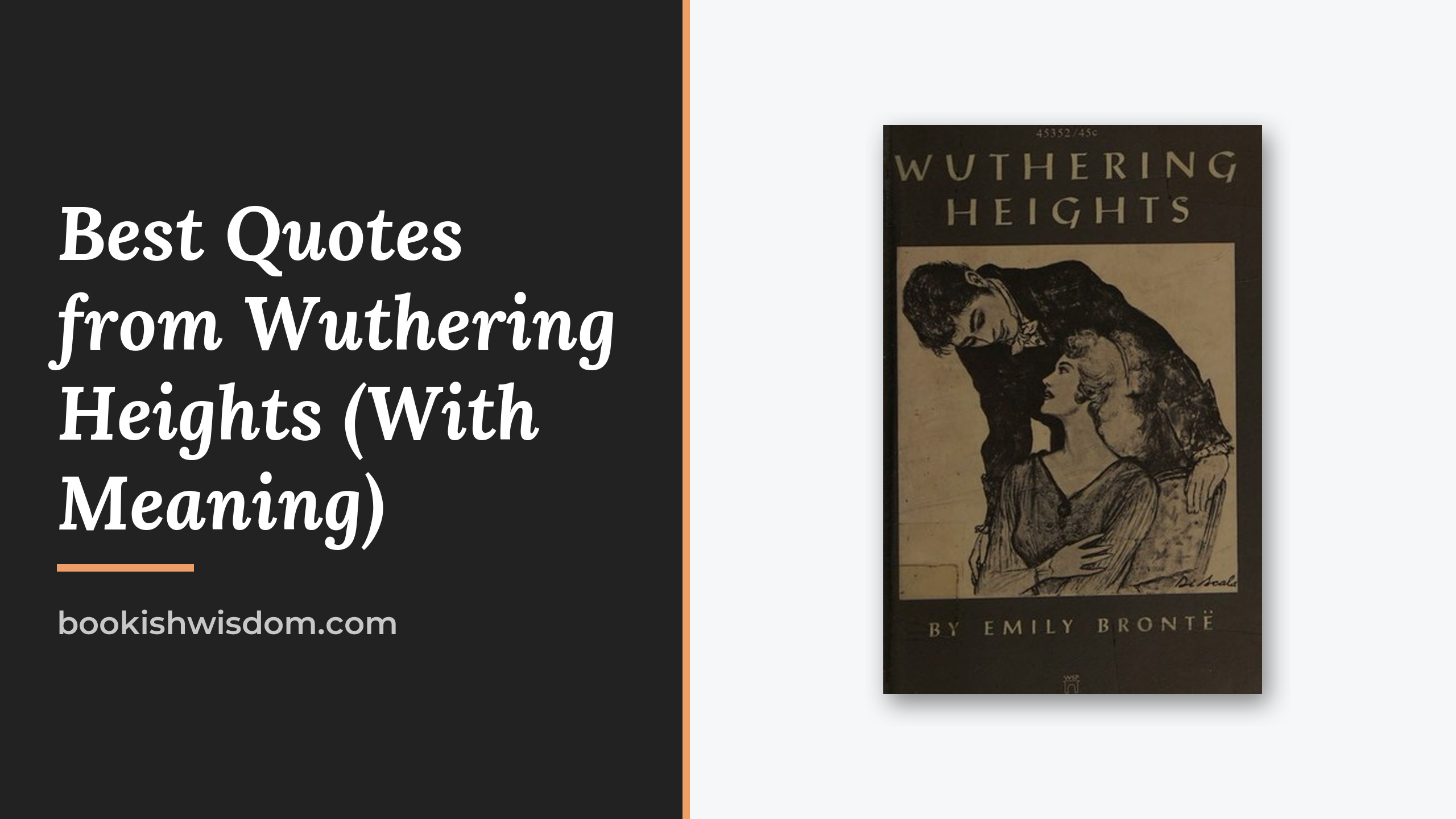
Check price of Wuthering Heights on Amazon
The Best Quotes from Wuthering Heights, Explained
1. “I am Heathcliff!”
Catherine, telling Nelly why she can never truly be separated from him. This short line says that Catherine's love for Heathcliff is not a choice but part of who she is. It is one of the most intense statements of love in English fiction, and also a sign of how unhealthy their bond is.
2. “He's more myself than I am.”
Catherine, about Heathcliff. Catherine explains that she will marry Edgar for comfort and status, but that Heathcliff is like her own self. The tragedy of the book comes from this split between what she feels and what she chooses.
3. “My love for Linton is like the foliage in the woods: time will change it, I'm well aware, as winter changes the trees. My love for Heathcliff resembles the eternal rocks beneath: a source of little visible delight, but necessary.”
Catherine, comparing her two loves. This beautiful comparison shows the difference between a pleasant love and a deep one. Edgar is lovely but temporary, while Heathcliff is hard and unchanging. Brontë uses nature to describe feelings throughout the book.
4. “Be with me always—take any form—drive me mad! only do not leave me in this abyss, where I cannot find you!”
Heathcliff, after Catherine's death. This cry shows Heathcliff's grief at its wildest. He would rather be haunted than alone. It explains why he spends the rest of his life consumed by her memory.
5. “I have dreamt in my life, dreams that have stayed with me ever after, and changed my ideas: they've gone through and through me, like wine through water, and altered the colour of my mind.”
Catherine, to Nelly. Catherine describes how some experiences change us forever. The image of wine through water is one of the novel's most quoted. It fits the book's feeling of strong emotions that cannot be undone.
6. “Terror made me cruel.”
Lockwood, describing his nightmare at the Heights. Lockwood's ghostly dream early in the book shows how fear can make even a polite man do something brutal. It hints at the theme of cruelty passed from person to person.
Why These Lines Stay With Readers
Wuthering Heights shocked early readers with its violent passion and its dark hero. Its lines last because they describe love as a force of nature rather than a gentle feeling. Readers still argue about whether Catherine and Heathcliff are romantic or destructive.
How to Use These Quotes
- In an essay: introduce the quote, give its context in one sentence, then explain how it supports your point.
- For a book club: read one line aloud and ask whether everyone agrees with the speaker.
- For a caption or card: pick a short line and credit Emily Brontë and Wuthering Heights.
- For a reread: look for the moment each line appears and notice what changes around it.
Discussion Questions
- Which quote above best sums up Wuthering Heights for you, and why?
- Do any of these lines mean something different once you know how the book ends?
- Which quote would you disagree with, and what would you say back?
If You Love the Writing in Wuthering Heights
- The Woman in White by Wilkie Collins
- Rebecca by Daphne du Maurier
Related: Wuthering Heights by Emily Brontë: Summary and Key Takeaways · Themes in Wuthering Heights Explained
Frequently Asked Questions
What is the most famous quote from Wuthering Heights?
One of the best-known lines is “I am Heathcliff!” (catherine, telling Nelly why she can never truly be separated from him).
Who wrote Wuthering Heights?
Wuthering Heights was written by Emily Brontë and first published in 1847.
Can I use quotes from Wuthering Heights in an essay?
Yes. Short quotations with clear credit to Emily Brontë are standard in essays and reviews. Always explain the quote in your own words.
What should I read after Wuthering Heights?
Try The Woman in White by Wilkie Collins or Rebecca by Daphne du Maurier.