
Disclosure: As an Amazon Associate, Bookish Wisdom earns from qualifying purchases. This doesn't change our picks or your price.
TL;DR: Ji-li Jiang was a bright, cheerful twelve-year-old in China in 1966 when the Cultural Revolution began. Her family had a bad “class label,” and she watched her parents and neighbors be punished. She was pushed to denounce her family while still believing in the Party.
Table of Contents
Red Scarf Girl at a Glance
| Author | Ji-li Jiang |
| First published | 1997 |
| Type | Memoir |
| Best for | readers ages 11 and up who want a personal view of the Cultural Revolution |
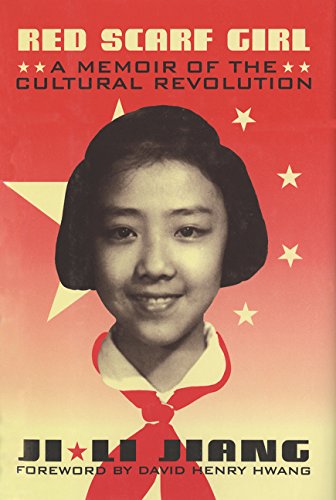
Red Scarf Girl is a memoir by Ji-li Jiang, first published in 1997. The memoir is written for young readers and is often used in classrooms. It describes real events in Shanghai. Below you will find a part-by-part summary, five key takeaways, a few ideas worth remembering and a note on who will enjoy it most. The summary paraphrases the author's ideas rather than quoting them at length, so it works as a refresher or a preview, not a replacement for the book.
Content note: Contains political persecution and family separation.
The Story, Part by Part
A happy childhood
Ji-li lives in Shanghai with her family. She is a good student, loves school and wants to join the Communist Youth organization.
The revolution begins
In 1966, Mao Zedong launches the Cultural Revolution. Her school and neighborhood change as students are asked to denounce “class enemies.”
Family label
Ji-li learns that her family is considered “landlord class” because of her grandfather. This label brings suspicion and risk.
Persecution
Her father, who is a stage actor, is arrested and held. Their home is searched, and her family's possessions are seized.
Choosing between loyalty
Ji-li is torn between loyalty to the Party and loyalty to her family. She is pressured to condemn her father.
Aftermath
The book ends with the family's struggle to endure, and with Ji-li's growing awareness of the cost of political hysteria.
5 Key Takeaways
- Fear can push people to betray those they love.
- Propaganda is powerful, especially for young people.
- Families can endure by sticking together.
- Hope and courage are possible even under pressure.
- History is made of individual stories.
Ideas Worth Remembering
These are paraphrased, not direct quotes:
- The child's view makes the events feel immediate.
- It shows how ordinary people were swept up in a political storm.
- The book is a good bridge to learn about modern Chinese history.
Who Should Read Red Scarf Girl?
Read it with young readers ages 11 and up, or as an introduction to the Cultural Revolution. It can lead to rich discussions.
Questions to Think About After Reading
These prompts work for solo reading, a book club or a classroom discussion of Red Scarf Girl:
- Which moment in the author's life stayed with you longest?
- How does the author's voice shape the way you judge the people in the story?
- What would you want to ask the author if you could?
Quick Facts to Remember
- Book: Red Scarf Girl by Ji-li Jiang (1997)
- Type: Memoir
- Best for: readers ages 11 and up who want a personal view of the Cultural Revolution
- Main idea in one line: Fear can push people to betray those they love.
Reading Time and Format
A memoir is often best in one or two long sittings so the voice stays consistent. An audiobook read by the author, where one exists, can add a lot. Whichever format you choose, a library copy is a low-cost way to try the book before you buy, and used or digital editions are often cheaper than new print copies.
How to Use This Summary
Use this page as a quick reference before a book club meeting, an exam, or a decision about whether Red Scarf Girl is worth your time. The takeaways are written to stand on their own. If a point interests you, go back to the book for the author's full argument, examples and style, which no short summary can carry.
A simple way to get the most from it: first read the TL;DR and the takeaways to decide if the book fits your interests, then read the part-by-part section for the structure, and finally write down one idea you want to remember or one question you want answered by the full text.
A Note on Accuracy and Spoilers
This summary is based on the published text of Red Scarf Girl, not on any film, series or stage adaptation, which often change the story. Details are kept at the level of the main events so that nothing is invented. Editions differ slightly in length and wording, so page numbers and small details may vary from your copy.
Should You Read the Book?
If you decide to read it, give the first chapters time. A memoir depends on voice, and the details of a life land harder in the author's own telling than in any summary. If you are still unsure, read a free sample or the first chapter, because the opening pages usually show whether the voice and subject suit you. Reviews from readers with tastes like yours can help too, but your own reaction to a few pages is the best test.
Check price of Red Scarf Girl on Amazon
What to Read Next
- Mao's Last Dancer by Li Cunxin: a memoir of a dancer from China
- Wild Swans by Jung Chang: a family memoir across three generations of Chinese women
- Night by Elie Wiesel: a memoir of the Holocaust
Frequently Asked Questions
Is Red Scarf Girl a true story?
Yes. It is the author's memoir.
What age is it for?
Roughly 11 and up.
What is the Cultural Revolution?
A political campaign in China from 1966 to 1976 led by Mao Zedong.
Is Red Scarf Girl worth reading?
It depends on what you want. The book is best for readers ages 11 and up who want a personal view of the Cultural Revolution. If that describes you, it is likely a good fit. If not, the titles under What to Read Next may suit you better.
Can this summary replace reading Red Scarf Girl?
No. A summary covers the main events and ideas, but it cannot carry the author's voice, detail or pacing. Use it to decide whether to read the book, to refresh your memory or to prepare for a discussion.