

Disclosure: As an Amazon Associate, Bookish Wisdom earns from qualifying purchases. This doesn't change our picks or your price.
TL;DR: During the Great Depression, a small, knobby-kneed racehorse named Seabiscuit became America's most famous athlete. Owned by businessman Charles Howard, trained by quiet horseman Tom Smith and ridden by jockey Red Pollard, the underdog beat the champion War Admiral in 1938 and overcame injuries to win the Santa Anita Handicap in 1940.
Table of Contents
Seabiscuit at a Glance
| Author | Laura Hillenbrand |
| First published | 2001 |
| Type | Nonfiction |
| Best for | readers who want an inspiring true underdog story |
Seabiscuit: An American Legend is a nonfiction book by Laura Hillenbrand, published in 2001. It was a bestseller and became a 2003 film nominated for Best Picture. Below you will find a part-by-part summary, five key takeaways, ideas worth remembering and a note on who will enjoy it.
Content note: Includes serious injuries to riders and horses.
Key Concepts
- Seabiscuit: An undersized, unpromising racehorse who became a champion.
- Charles Howard: A wealthy car dealer who buys Seabiscuit.
- Tom Smith: A quiet, gifted horse trainer.
- Red Pollard: A tough, half-blind jockey.
- George Woolf: A star jockey who rides Seabiscuit in his greatest race.
The Main Ideas, Part by Part
Three men
Charles Howard made a fortune selling Buick cars in California. Tom Smith, a former mustang breaker, had a rare gift for understanding horses. Red Pollard, a jockey and boxer, was blind in one eye, which he kept secret. Each had struggled before they came together.
A poor horse
Seabiscuit was small, lazy and bad-tempered, losing many races. In 1936, Smith saw something in him, and Howard bought him. Smith calmed the horse, and Pollard bonded with him.
Rising star
Seabiscuit began winning, drawing huge crowds. Americans, worn down by the Depression, saw him as a symbol of hope. But he narrowly lost big races, and his eastern rival War Admiral, a Triple Crown winner, was seen as superior.
The match race
In 1938, Pollard broke his leg badly in an accident, so George Woolf rode Seabiscuit in a match race against War Admiral at Pimlico. Seabiscuit won by four lengths, and millions listened on the radio.
The comeback
Seabiscuit then suffered a ruptured ligament. Horse and jockey recovered together at Howard's ranch. In 1940, Pollard rode Seabiscuit to victory in the Santa Anita Handicap, the race that had eluded them. Seabiscuit retired a legend.
5 Key Takeaways
- Underdogs can triumph.
- Second chances can change lives.
- Teamwork brings out the best in people.
- Hope matters in hard times.
- Patience and understanding unlock potential.
Ideas Worth Remembering
These are paraphrased, not direct quotes:
- A broken-down horse, or person, can still have greatness left in them.
- Greatness can hide in unlikely places.
- Recovery is a victory too.
Who Should Read Seabiscuit?
Read Seabiscuit if you want a heartwarming true story. It suits teens and adults, even those with no interest in horse racing.
Questions to Think About After Reading
These prompts work for solo reading, a book club or a classroom discussion of Seabiscuit:
- Why did Seabiscuit inspire so many people?
- How did each man help the others?
- What does the book say about second chances?
How to Use This Summary
Use this page as a quick reference before a book club meeting, an exam, or a decision about whether Seabiscuit is worth your time. The takeaways are written to stand on their own. If a point interests you, go back to the book for the author's full argument, examples and evidence, which no short summary can replace.
A Note on Accuracy and Spoilers
This summary is based on the published text of Seabiscuit, not on any film, series or stage adaptation, which often change the story. Details are kept at the level of the main arguments so that nothing is invented. Editions differ slightly in length and wording, so page numbers and small details may vary between copies.
Should You Read the Book?
Yes. Hillenbrand turns a sports story into a portrait of a whole era, and the race scenes are thrilling. Readers who dislike detail about training and racing may find some chapters slow, but the human stories of Howard, Smith and Pollard carry the book.
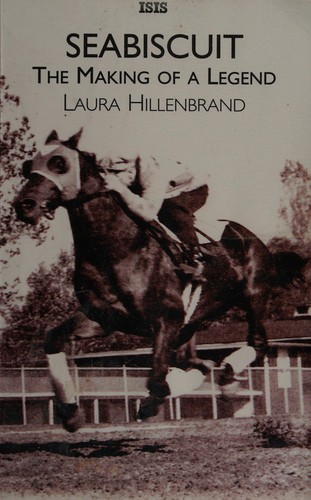
Check price of Seabiscuit on Amazon
What to Read Next
- Unbroken by Laura Hillenbrand: Hillenbrand's WWII survival story
- The Boys in the Boat by Daniel James Brown: an underdog rowing team
- Black Beauty by Anna Sewell: a classic horse story
Related: 15 Books Like Seabiscuit You’ll Love
Frequently Asked Questions
What is Seabiscuit about?
The true story of an underdog racehorse who inspired America.
Who rode Seabiscuit?
Red Pollard and, in the famous match race, George Woolf.
Who was War Admiral?
A Triple Crown champion whom Seabiscuit beat in 1938.
Did Seabiscuit win the Santa Anita Handicap?
Yes, in 1940.
Who owned Seabiscuit?
Charles Howard.
Is there a film?
Yes, the 2003 film starring Tobey Maguire.
How long is it?
About 400 pages.
Why was Seabiscuit so popular?
He was an underdog hero during the Great Depression.
How did Tom Smith change Seabiscuit?
He gave the nervous horse calm companions, including a pony and a dog, let him sleep and eat as he liked and trained him patiently rather than by force.
Did Laura Hillenbrand meet the people involved?
She interviewed surviving witnesses and used thousands of newspaper articles, writing much of the book while ill with chronic fatigue syndrome.
Who are the main ideas in Seabiscuit?
The key concepts are Seabiscuit, Charles Howard, Tom Smith, Red Pollard and George Woolf. Seabiscuit: An undersized, unpromising racehorse who became a champion. Charles Howard: A wealthy car dealer who buys Seabiscuit. Tom Smith: A quiet, gifted horse trainer.
Is Seabiscuit worth reading?
It depends on what you want. The book is best for readers who want an inspiring true underdog story. If that describes you, it is likely a good fit. If not, the titles under What to Read Next may suit you better.