

Disclosure: As an Amazon Associate, Bookish Wisdom earns from qualifying purchases. This doesn't change our picks or your price.
TL;DR: Psychologist Kris Kelvin arrives at a research station hovering above Solaris, a planet covered by a vast ocean that may be a single living mind. The station is in chaos: one scientist is dead, and the others are terrified. Soon Kelvin is visited by an impossible guest, his wife Rheya, who died years ago. The ocean seems to create people from the scientists' memories.
Table of Contents
Solaris at a Glance
| Author | Stanisław Lem |
| First published | 1961 |
| Type | Science fiction |
| Best for | readers who want a haunting, philosophical novel about the limits of understanding |
Solaris is a science fiction novel by Polish writer Stanisław Lem, published in 1961. It has been filmed several times, most famously by Andrei Tarkovsky in 1972. Below you will find a part-by-part summary, five key takeaways, ideas worth remembering and a note on who will enjoy it.
Content note: Includes suicide, grief and psychological distress.
Main Characters
- Kris Kelvin: A psychologist sent to the Solaris station.
- Rheya: Kelvin's dead wife, who appears as a “visitor.”
- Snaut: A cynical scientist on the station.
- Sartorius: A cold, rigid physicist.
- The ocean: The living, mysterious mind covering the planet.
What Happens, Part by Part (Contains Spoilers)
Arrival
Kelvin lands at the station and finds it disordered. His old teacher, Gibarian, has just died by suicide. Snaut is nervous and drinking, and Sartorius stays locked in his lab. Kelvin glimpses a strange woman walking in the corridors. Snaut warns him that he will soon understand, but will not explain.
The visitor
Kelvin wakes to find Rheya, his wife, sitting in his room. Rheya had taken her own life years earlier after a quarrel, and Kelvin still blames himself. This Rheya does not know she is a copy, cannot bear to be apart from him and seems made of strange matter. Panicked, Kelvin sends her away in a shuttle, but another Rheya appears the next day.
Solaristics
Kelvin reads about the long history of Solaristics, the science of studying the planet. For about a century, scientists have described the ocean's giant shapes and patterns, given them names and argued about them, but no one has understood it. Solaristics is a mirror of human limitations: we may never understand a truly alien mind.
Rheya's choice
Kelvin grows to love the new Rheya, even knowing she is not human. She slowly learns what she is and becomes desperate. She tries to kill herself by drinking liquid oxygen but heals. Snaut and Sartorius build a device to destroy the visitors. Rheya, wanting to free Kelvin, secretly asks them to use it on her, and she vanishes.
The end
Kelvin is left alone with his grief. He decides to stay on Solaris rather than return to Earth. He finally lands on the ocean's surface and touches it, feeling a kind of connection. He knows he may never understand the ocean, but he chooses to wait and hope, believing that the time of wonders may not yet be over.
5 Key Takeaways
- Some things may be beyond human understanding.
- Memory and guilt can haunt us.
- Science has limits when facing the truly alien.
- Love can grow even for an impossible person.
- We often see ourselves when we look for others.
Ideas Worth Remembering
These are paraphrased, not direct quotes:
- Contact with the unknown may reveal more about us than about it.
- Grief does not follow logic.
- Hope can exist without answers.
Who Should Read Solaris?
Read Solaris if you enjoy philosophical science fiction, slow and atmospheric stories and questions about the mind. It suits adults.
About Stanisław Lem
Stanisław Lem (1921–2006) was a Polish writer and one of the most widely read science fiction authors in the world. His books have been translated into more than 40 languages. His works include The Cyberiad, His Master's Voice and Fiasco, which, like Solaris, explore the difficulty of contact with alien minds. He also wrote essays on technology and the future.
Questions to Think About After Reading
These prompts work for solo reading, a book club or a classroom discussion of Solaris:
- What is the ocean, and why does it create the visitors?
- Is the new Rheya a real person?
- Why does Kelvin decide to stay?
How to Use This Summary
Use this page as a quick reference before a book club meeting, an exam, or a decision about whether Solaris is worth your time. The takeaways are written to stand on their own. If a point interests you, go back to the book for the author's full story, characters and style, which no short summary can replace.
A Note on Accuracy and Spoilers
This summary is based on the published text of Solaris, not on any film, series or stage adaptation, which often change the story. Details are kept at the level of the main events so that nothing is invented. Editions differ slightly in length and wording, so page numbers and small details may vary between copies.
Should You Read the Book?
Yes. It is thoughtful and haunting, though slower than most science fiction.
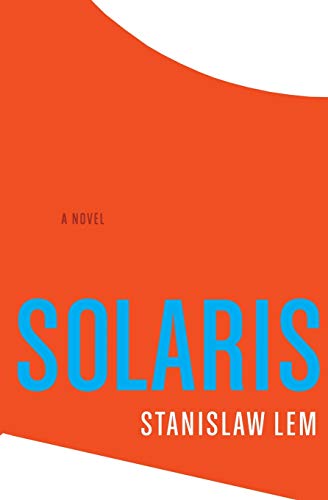
Check price of Solaris on Amazon
What to Read Next
- Roadside Picnic by Arkady and Boris Strugatsky: humans face incomprehensible alien traces
- Annihilation by Jeff VanderMeer: explorers enter a strange zone that changes them
- Childhood's End by Arthur C. Clarke: humanity meets a vast alien intelligence
Frequently Asked Questions
What is Solaris about?
A scientist on a planet with a living ocean is visited by a copy of his dead wife.
Who wrote it?
Stanisław Lem, in 1961.
What is the ocean?
A huge, possibly intelligent being covering the planet.
Who are the visitors?
Beings created by the ocean from the scientists' memories.
Who is Rheya?
Kelvin's dead wife, who reappears as a visitor. In some translations she is called Harey.
Does Kelvin understand the ocean?
No. The book suggests it may be beyond human understanding.
Are there films?
Yes, Tarkovsky's 1972 film and Steven Soderbergh's 2002 film.
Is there a new translation?
Yes. A direct translation from Polish by Bill Johnston appeared in 2011.
What age is it for?
Adults.
How long is it?
About 200 pages.
Is it action-packed?
No. It is slow and philosophical.
Was it written in Polish?
Yes, and older English versions were translated from French.
Is Solaris a good first Lem book?
Yes. It is his most famous novel, though readers who want humor could start with The Cyberiad.
Is Solaris worth reading?
It depends on what you want. The book is best for readers who want a haunting, philosophical novel about the limits of understanding. If that describes you, it is likely a good fit. If not, the titles under What to Read Next may suit you better.