
Disclosure: As an Amazon Associate, Bookish Wisdom earns from qualifying purchases. This doesn’t change our picks or your price.
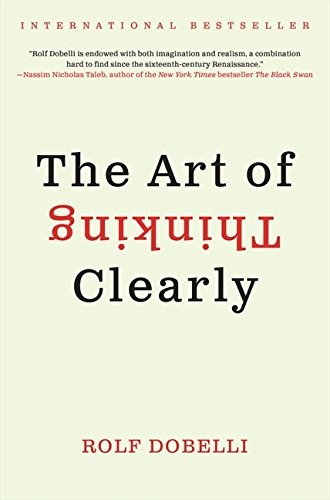
TL;DR: The Art of Thinking Clearly is a collection of 99 short chapters, each explaining a common thinking error, or cognitive bias, that leads to poor decisions. Swiss writer Rolf Dobelli argues that we can’t eliminate these errors, but recognizing them helps us avoid the costliest mistakes in money, work and life.
Rolf Dobelli, a Swiss author and entrepreneur, first published this book in German in 2011; the English edition followed in 2013. It became an international bestseller because it makes behavioral psychology easy to digest: each chapter is just two or three pages, with a clear example and a practical lesson. If you’ve found books like Thinking, Fast and Slow heavy going, this is a more accessible introduction. Here’s a summary of the most important biases and lessons.
Table of Contents
The Art of Thinking Clearly at a Glance
| Detail | Info |
|---|---|
| Author | Rolf Dobelli |
| Published | 2011 in German; English edition 2013 |
| Genre | Psychology / decision-making |
| Structure | 99 short chapters, each on one bias or thinking error |
| Best for | Beginners in psychology, investors, managers and curious readers |
What Is The Art of Thinking Clearly About?
Our brains evolved to make quick decisions in a much simpler world. Today those mental shortcuts often mislead us. Dobelli catalogs the systematic errors we all make, so you can spot them in your own thinking. He suggests that avoiding foolish mistakes is often more valuable than chasing brilliant ideas.
Key Biases Explained
Survivorship Bias
We see the winners but not the many who failed. Famous successful entrepreneurs and authors make success look more common than it is, because the failures are invisible.
Sunk Cost Fallacy
We keep investing in something because of what we’ve already spent, like finishing a bad movie or continuing a failing project, even when quitting would be better.
Confirmation Bias
We seek out and interpret information in ways that confirm what we already believe, and ignore evidence that contradicts it.
Social Proof
We assume something is right because many others are doing it, which can lead to bubbles, fads and poor choices.
Availability Bias
We judge how likely something is by how easily examples come to mind, so vivid news stories make rare events seem common.
Hindsight Bias
After something happens, it seems obvious and predictable, which makes us overconfident in our ability to predict the future.
Anchoring
The first number we see strongly influences our later judgments, such as a high initial price making a discount seem like a great deal.
The Swimmer’s Body Illusion
We confuse cause and effect: professional swimmers don’t have great physiques because they swim; they’re often good swimmers partly because of their build. Similarly, elite schools may select great students rather than create them.
Overconfidence
Most people overestimate their knowledge and abilities, from predicting project timelines to judging their own driving skills.
5 Key Takeaways From The Art of Thinking Clearly
- Everyone has biases. Intelligence doesn’t make you immune.
- Avoiding errors is powerful. Not making dumb mistakes can matter more than being brilliant.
- Let go of sunk costs. Decide based on the future, not what you’ve already spent.
- Seek disconfirming evidence. Actively look for reasons you might be wrong.
- Slow down big decisions. Biases thrive when we decide quickly and emotionally.
Ideas Worth Remembering
- Recognizing a thinking error is the first step to avoiding it. (paraphrased)
- The failures you don’t see often outnumber the successes you do. (paraphrased)
- What you’ve already invested shouldn’t decide what you do next. (paraphrased)
What Do Critics Say?
Readers praise the book’s clarity and bite-sized format, but some critics note that many of its ideas come from other well-known thinkers, such as Daniel Kahneman and Nassim Nicholas Taleb, and that the short chapters can feel repetitive. It works best as an easy introduction rather than an in-depth study.
Who Should Read The Art of Thinking Clearly?
It’s perfect for beginners curious about psychology, investors, managers, students and anyone who wants to make better decisions. Its short chapters make it ideal for reading a few pages at a time.
What to Read Next
- Thinking, Fast and Slow by Daniel Kahneman for the deeper science of biases.
- Thinking in Bets by Annie Duke on making decisions under uncertainty.
- Influence by Robert Cialdini on the psychology of persuasion.
Related: Influence summary and best books on logic and critical thinking.
Frequently Asked Questions
What is The Art of Thinking Clearly about?
It’s a guide to 99 common cognitive biases and thinking errors, each explained in a short chapter with examples, to help readers make better decisions.
What is survivorship bias?
Survivorship bias is focusing on successful people or things while overlooking the many failures, which makes success seem more likely than it really is.
Is The Art of Thinking Clearly good for beginners?
Yes. Its short, simple chapters make it one of the most accessible introductions to cognitive biases and behavioral psychology.