

Disclosure: As an Amazon Associate, Bookish Wisdom earns from qualifying purchases. This doesn’t change our picks or your price.
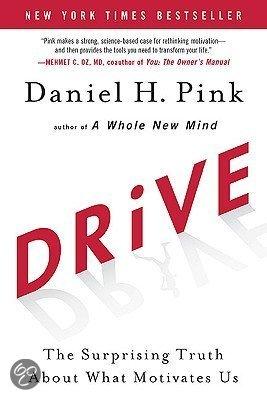
TL;DR: In Drive: The Surprising Truth About What Motivates Us, Daniel Pink argues that rewards and punishments work well for simple, routine tasks but often backfire for creative, complex work. True motivation comes from three intrinsic drives: autonomy (control over our work), mastery (getting better at something that matters) and purpose (serving something bigger than ourselves).
Daniel Pink, a former speechwriter and bestselling author, published Drive in 2009. Drawing on decades of behavioral science research, he challenges the traditional way businesses and schools motivate people: bonuses, grades and penalties. His animated talk on the same ideas became one of the most-watched videos about motivation. The book is especially popular with managers, teachers and parents. Here’s a complete summary of the key ideas.
Table of Contents
Drive at a Glance
| Detail | Info |
|---|---|
| Author | Daniel H. Pink |
| Published | 2009 |
| Genre | Psychology / business |
| Core idea | Autonomy, mastery and purpose drive motivation |
| Best for | Managers, teachers, parents and anyone who wants to understand motivation |
What Is Drive About?
Pink describes three “operating systems” of motivation. Motivation 1.0 is about survival, like finding food and safety. Motivation 2.0 is the carrot-and-stick system that most workplaces still use: reward good behavior, punish bad behavior. Motivation 3.0 recognizes that once basic needs are met, people are driven by an internal desire to direct their lives, learn and contribute.
Key Ideas, Part by Part
Part One: A New Operating System
Pink reviews research showing that rewards can reduce performance on tasks that require creativity. In a classic psychology experiment known as the candle problem, people offered cash rewards to solve a creative puzzle often performed worse than people offered no reward. Rewards narrow focus, which helps with simple tasks but hurts when you need to think broadly.
When Carrots and Sticks Work
Pink doesn’t argue that money doesn’t matter. People need to be paid fairly so money isn’t a distraction. For routine, rule-based tasks, rewards can work. For creative, complex work, intrinsic motivation is far more powerful.
Part Two: The Three Elements
- Autonomy: People want control over their task, time, technique and team. Pink highlights companies that gave employees free time to work on projects of their choice, and workplaces that focus on results instead of hours.
- Mastery: People want to get better at things that matter. Mastery requires a growth mindset, takes effort and is never fully reached, which is part of what makes it motivating.
- Purpose: People do their best work when they’re connected to a cause larger than themselves, not just profit.
Part Three: The Toolkit
Pink ends with practical exercises for individuals, organizations, parents and educators, such as asking yourself what your one-sentence life purpose is and reviewing at the end of each day whether you were better than yesterday.
5 Key Takeaways From Drive
- Pay fairly, then move on. Take money off the table so people can focus on the work.
- Rewards can backfire. “If-then” rewards often reduce creativity.
- Give people autonomy. Control over how work is done boosts engagement.
- Help people grow. Opportunities for mastery keep people motivated.
- Connect work to purpose. Meaning makes effort feel worthwhile.
Ideas Worth Remembering
- Rewards can turn interesting work into drudgery. (paraphrased)
- We’re naturally curious and self-directed when given the chance. (paraphrased)
- Ask yourself what your sentence is: the one line that would sum up your life’s purpose. (paraphrased)
Who Should Read Drive?
It’s essential reading for managers, team leaders, teachers and coaches, and useful for parents and anyone trying to motivate themselves. If you enjoy research-backed books with practical takeaways, it’s a quick, engaging read.
What to Read Next
- Mindset by Carol Dweck on the growth mindset behind mastery.
- Start With Why by Simon Sinek on purpose-driven leadership.
- When by Daniel Pink on the science of timing.
Related: Mindset summary and best books on employee engagement.
Frequently Asked Questions
What are the three elements of motivation in Drive?
Daniel Pink identifies autonomy (control over your work), mastery (getting better at something that matters) and purpose (working toward something larger than yourself).
Does Drive say money doesn’t matter?
No. Pink argues people should be paid fairly so money isn’t a distraction, but beyond that, extra rewards often don’t improve creative or complex work.
What is Motivation 3.0?
Motivation 3.0 is Pink’s term for an approach to motivation based on intrinsic drives like autonomy, mastery and purpose, rather than rewards and punishments.