
Disclosure: As an Amazon Associate, Bookish Wisdom earns from qualifying purchases. This doesn't change our picks or your price.
TL;DR: Told as the recorded memories of a woman over one hundred years old, this novel follows Jane Pittman from her childhood in slavery at the end of the Civil War, through Reconstruction, sharecropping and segregation, to the start of the civil rights movement in the 1960s. Her life story becomes the story of Black Americans' long struggle for freedom.
Table of Contents
The Autobiography of Miss Jane Pittman at a Glance
| Author | Ernest J. Gaines |
| First published | 1971 |
| Type | Novel |
| Best for | readers who want a powerful historical novel about Black American life |
The Autobiography of Miss Jane Pittman is a novel by Ernest J. Gaines, published in 1971. It is fiction, written as if it were a real oral history. Below you will find a part-by-part summary, five key takeaways, ideas worth remembering and a note on who will enjoy it.
Content note: Includes racial violence, massacres and murders.
Main Characters
- Jane Pittman: A woman who lives from slavery to the civil rights era.
- Ned Douglass: A boy Jane raises, who becomes an activist teacher.
- Joe Pittman: Jane's partner, a horse-breaker.
- Tee Bob Samson: The son of a plantation owner.
- Jimmy Aaron: A young civil rights leader.
What Happens, Part by Part (Contains Spoilers)
The war years
Jane, a young enslaved girl named Ticey, meets a Union soldier who calls her Jane, and she takes the name. After emancipation, she sets out for Ohio with other freed people. Most are massacred by white raiders, and Jane escapes with a little boy, Ned, whose mother was killed.
Reconstruction
Jane never reaches Ohio. She works on plantations in Louisiana and raises Ned. As Reconstruction ends, white terror returns. Ned grows up, becomes politically active and leaves to escape threats.
Joe Pittman
Jane lives with Joe Pittman, a skilled horse-breaker. They move to a ranch near the Texas border. Jane fears a black stallion will kill Joe, and it does. She mourns him deeply.
Ned's return
Ned returns as a teacher, building a school and urging Black people to stand up for their rights. He is assassinated by a hired killer. Years later, on the Samson plantation, Jane sees the tragedy of Tee Bob, a white man who kills himself after falling in love with a Creole schoolteacher, Mary Agnes LeFabre.
The civil rights era
In the 1960s, Jane, now very old, sees young Jimmy Aaron lead a movement for civil rights. Jimmy plans a protest at a “whites only” water fountain in Bayonne but is killed. Jane, though more than a hundred, walks past the plantation owner to join the protest.
5 Key Takeaways
- The fight for freedom spans generations.
- Ordinary people carry history in their memories.
- Courage can come at any age.
- Racism adapts but persists across eras.
- Leaders often pay with their lives.
Ideas Worth Remembering
These are paraphrased, not direct quotes:
- Freedom is not a single moment but a long journey.
- The old can inspire the young, and the young the old.
- Every life holds the story of a people.
Who Should Read The Autobiography of Miss Jane Pittman?
Read The Autobiography of Miss Jane Pittman if you are interested in American history and civil rights. It suits teens and adults.
Questions to Think About After Reading
These prompts work for solo reading, a book club or a classroom discussion of The Autobiography of Miss Jane Pittman:
- Why does Gaines tell the story as an oral history?
- What does Jane's final act mean?
- How does each era repeat or change injustice?
How to Use This Summary
Use this page as a quick reference before a book club meeting, an exam, or a decision about whether The Autobiography of Miss Jane Pittman is worth your time. The takeaways are written to stand on their own. If a point interests you, go back to the book for the author's full story, characters and style, which no short summary can replace.
A Note on Accuracy and Spoilers
This summary is based on the published text of The Autobiography of Miss Jane Pittman, not on any film, series or stage adaptation, which often change the story. Details are kept at the level of the main events so that nothing is invented. Editions differ slightly in length and wording, so page numbers and small details may vary between copies.
Should You Read the Book?
Yes. Jane's voice is warm and powerful, and the novel makes a century of history personal and vivid.
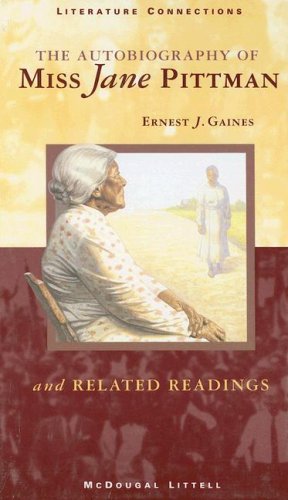
Check price of The Autobiography of Miss Jane Pittman on Amazon
What to Read Next
- A Lesson Before Dying by Ernest J. Gaines: another Gaines novel set in Louisiana
- Roots by Alex Haley: one family's story from Africa to America
- The Color Purple by Alice Walker: a Black woman's strength in the South
Frequently Asked Questions
What is The Autobiography of Miss Jane Pittman about?
A woman's life from slavery to the civil rights movement.
Who wrote it?
Ernest J. Gaines, in 1971.
Is Jane Pittman a real person?
No. She is fictional, though the book reads like a real oral history.
Who is Ned?
The boy Jane raises, who becomes an activist teacher.
What happens at the end?
Jane joins a civil rights protest at over one hundred years old.
Is there a film?
Yes, a 1974 TV film starring Cicely Tyson.
What age is it for?
Teens and adults.
How long is it?
About 250 pages.
Where is it set?
Mainly in Louisiana.
Why is the film famous?
Cicely Tyson's performance won Emmy Awards.
Is The Autobiography of Miss Jane Pittman worth reading?
It depends on what you want. The book is best for readers who want a powerful historical novel about Black American life. If that describes you, it is likely a good fit. If not, the titles under What to Read Next may suit you better.