
Disclosure: As an Amazon Associate, Bookish Wisdom earns from qualifying purchases. This doesn't change our picks or your price.
TL;DR: In 1942, during the Second World War, eleven-year-old Phillip Enright and his mother try to leave the island of Curaçao for safety. Their ship is torpedoed by a German submarine. Phillip is blinded and stranded on a tiny Caribbean island, or cay, with an elderly West Indian sailor named Timothy. Phillip must overcome his prejudice and learn to trust Timothy to survive.
Table of Contents
The Cay at a Glance
| Author | Theodore Taylor |
| First published | 1969 |
| Type | Children's novel |
| Best for | young readers who want a moving survival story about friendship and overcoming prejudice |
The Cay is a children's novel by Theodore Taylor, published in 1969. It has been widely read in schools, though some readers criticize its portrayal of Timothy. Below you will find a part-by-part summary, five key takeaways, ideas worth remembering and a note on who will enjoy it.
Content note: Includes war, blindness, a hurricane, death and racism.
Main Characters
- Phillip Enright: An eleven-year-old American boy.
- Timothy: An elderly West Indian sailor.
- Stew Cat: A cat stranded with them.
- Phillip's mother: A woman who fears the island and its people.
- The cay: A tiny island in the Caribbean.
What Happens, Part by Part (Contains Spoilers)
War
Phillip lives with his parents on Curaçao, an island off Venezuela, where his father works for an oil company. German submarines attack nearby ships. Phillip's mother decides to take him back to the United States. Their ship is torpedoed. Phillip is hit on the head and wakes up on a raft with Timothy and a cat. He soon becomes blind.
The raft
Phillip has learned prejudice from his mother, who distrusts Black people. He is rude to Timothy and refuses to help. Timothy is patient and kind. After days on the raft, they reach a small, uninhabited cay. Timothy builds a hut, finds food and makes a signal fire.
Learning
Timothy teaches Phillip to fish, climb palm trees and find his way around the island, even though he is blind. Phillip slowly realizes that Timothy is wise and caring. He stops seeing skin color as important. Their friendship grows. Phillip becomes more independent.
The hurricane
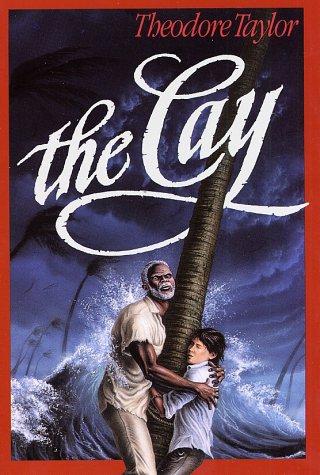
A terrible hurricane strikes the cay. Timothy protects Phillip by tying him to a palm tree and shielding him with his body. Phillip survives, but Timothy dies from exhaustion and injuries. Phillip buries his friend and grieves deeply.
Rescue
Phillip lives alone on the cay with Stew Cat, using everything Timothy taught him. Eventually, a ship sees his signal and rescues him. Back home, surgery restores his sight. Phillip plans to return to the cay one day to honor Timothy, the friend who changed his life.
5 Key Takeaways
- Prejudice is learned and can be unlearned.
- Friendship can cross any boundary.
- Courage can grow in hardship.
- Kindness can change hearts.
- Survival depends on trust and skill.
Ideas Worth Remembering
These are paraphrased, not direct quotes:
- People are more than their appearance.
- Loss can deepen our gratitude.
- True friends teach us to stand on our own.
Who Should Read The Cay?
Read The Cay if you are a young reader who enjoys survival stories and stories about friendship. It suits ages 9 to 13, ideally with discussion.
About Theodore Taylor
Theodore Taylor (1921–2006) was an American author of more than 50 books. He served in the U.S. Navy during the Second World War, which inspired The Cay. He later wrote a prequel and sequel, Timothy of the Cay. His other books include The Weirdo and Ice Drift.
Questions to Think About After Reading
These prompts work for solo reading, a book club or a classroom discussion of The Cay:
- How does Phillip's view of Timothy change?
- Why does Timothy protect Phillip during the hurricane?
- What are the criticisms of the book's portrayal of Timothy?
How to Use This Summary
Use this page as a quick reference before a book club meeting, an exam, or a decision about whether The Cay is worth your time. The takeaways are written to stand on their own. If a point interests you, go back to the book for the author's full story, characters and style, which no short summary can replace.
A Note on Accuracy and Spoilers
This summary is based on the published text of The Cay, not on any film, series or stage adaptation, which often change the story. Details are kept at the level of the main events so that nothing is invented. Editions differ slightly in length and wording, so page numbers and small details may vary between copies.
Should You Read the Book?
Yes, with thoughtful discussion. It is powerful, though some readers find Timothy's portrayal dated.
Check price of The Cay on Amazon
What to Read Next
- Island of the Blue Dolphins by Scott O'Dell: a girl survives alone on an island
- Hatchet by Gary Paulsen: a boy survives alone in the wilderness
- Holes by Louis Sachar: an unlikely friendship and adventure
Frequently Asked Questions
What is The Cay about?
A blinded boy survives on a small island with an elderly sailor.
Who wrote it?
Theodore Taylor, in 1969.
Where is it set?
The Caribbean, during the Second World War.
Who is Timothy?
An elderly West Indian sailor who helps Phillip survive.
Why does Phillip become blind?
He is hit on the head when the ship is torpedoed.
Does Timothy die?
Yes, after the hurricane.
Does Phillip regain his sight?
Yes, after surgery.
Is there a sequel?
Yes, Timothy of the Cay.
What age is it for?
Ages 9 to 13.
How long is it?
About 140 pages.
Is it controversial?
Some critics say Timothy is portrayed in a stereotyped way.
Is there a film?
Yes, a 1974 TV film.
Is it good for classrooms?
Yes, especially for discussing prejudice.
Is The Cay worth reading?
It depends on what you want. The book is best for young readers who want a moving survival story about friendship and overcoming prejudice. If that describes you, it is likely a good fit. If not, the titles under What to Read Next may suit you better.