
Disclosure: As an Amazon Associate, Bookish Wisdom earns from qualifying purchases. This doesn’t change our picks or your price.
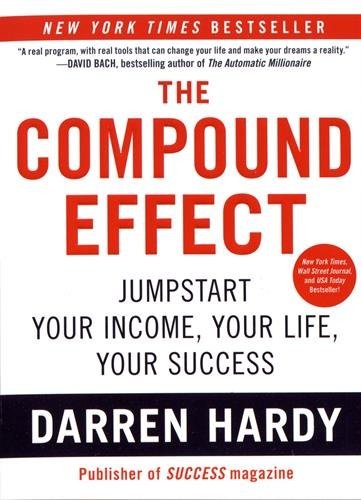
TL;DR: The Compound Effect: Jumpstart Your Income, Your Life, Your Success by Darren Hardy says that success comes from small, smart choices repeated consistently over time. Hardy shows how daily habits, tracking, positive influences and uncommon discipline compound into major results, and why shortcuts and quick fixes usually fail.
Most people want a breakthrough, but real change usually looks like a slow build. The Compound Effect, published in 2010, makes that argument in a short, motivating style. Darren Hardy, who was the publisher and editor of SUCCESS magazine, draws on years of interviews with high achievers and on his own experience. The book’s formula is simple: small choices plus consistency plus time equals radical difference. It’s an easy read that works as a motivational reset. Here’s a summary of its main ideas.
Table of Contents
The Compound Effect at a Glance
| Detail | Info |
|---|---|
| Author | Darren Hardy |
| Published | 2010 |
| Genre | Self-help, personal development |
| Core idea | Small habits, repeated over time, produce large results |
| Structure | Chapters on choices, habits, momentum, influences and acceleration |
| Best for | Readers who want a motivational guide to consistency in health, money and career |
What Is The Compound Effect About?
Hardy begins with a story to illustrate compounding. Would you rather receive three million dollars in cash right now, or a penny that doubles in value every day for thirty-one days? The penny grows to more than ten million dollars by the end of the month. The lesson is that small, consistent actions create results that are surprisingly large, although the early days look unimpressive.
He adds that compounding works in both directions. Small bad habits, like skipping exercise or overspending, add up to serious harm over time, even though each one seems harmless on the day.
Key Ideas, Part by Part
Choices and Habits
Hardy argues that your life is the sum of your choices, and that you can change it by making better ones. He says to take full responsibility for your results and to notice the small decisions you make every day. Many of those decisions are driven by habits, so he encourages readers to choose a few key habits to change.
He suggests starting with a thirty-day challenge. To break a bad habit, replace it with a better one, remove temptations and tell others about your plan. To build a good habit, make it as easy as possible, link it to a trigger and track your progress.
Momentum and Tracking
The book emphasizes the importance of tracking. Hardy recommends writing down everything for a month, such as food, spending or time, because awareness alone often leads to improvement. He also describes the idea of the big mo, the momentum you build once you pass the early slog. At first, progress feels slow, but when habits become automatic, the effort drops and the results accelerate.
He advises setting a clear goal, tracking your progress and building small wins to maintain momentum.
Influences and Environment
Hardy says that the people, information and environments around you shape your outcomes. He suggests auditing your inputs: the conversations you have, the media you consume and the friends you spend time with. Surround yourself with positive, ambitious people and limit exposure to negativity and gossip.
He recommends turning your commute or free time into learning time by listening to audio programs or reading, and he encourages readers to learn from mentors.
Uncommon Discipline and Acceleration
Another section deals with discipline. Hardy says that the most successful people do small things that others skip, and do them consistently, even when it is inconvenient. He calls this uncommon discipline and suggests going the extra mile in your work and relationships.
In the closing part, he describes acceleration, using the idea of a kind of boost that comes when you add small extra efforts on top of consistent habits. He ends with a call to action: pick one area, commit to it for a set period and track your results.
6 Key Takeaways From The Compound Effect
- Small choices compound. Tiny decisions add up to big outcomes.
- Track what you want to change. Awareness drives improvement.
- Be patient with the early days. Results are slow before they accelerate.
- Choose your influences. People and media shape your habits.
- Practice uncommon discipline. Do the small things others skip.
- Take responsibility. You control your choices, even if not your circumstances.
Ideas Worth Remembering
- Success is not about one big move; it is about steady, repeated action. (paraphrased)
- What you measure tends to improve. (paraphrased)
- Bad habits compound too. (paraphrased)
- The people around you shape your standards. (paraphrased)
How to Apply The Compound Effect in Real Life
- Track one thing for 30 days. Choose food, spending or time and log it daily.
- Pick one keystone habit. Make it small and specific.
- Audit your influences. List the people and media that shape you.
- Add a daily learning slot. Use commute or lunch for reading or audio.
- Make a pledge. Share your goal with a friend for accountability.
Criticisms and Limits
Critics point out that the book is basic and relies on motivational language more than evidence. It focuses on individual responsibility and pays less attention to circumstances such as income, health and access to resources that affect what choices are possible. Some stories of success are told without detail, and the idea that habits alone determine results can be oversimplified.
Still, the central lesson, that consistency beats intensity, is widely supported and easy to try. Use it as encouragement to start small.
The Compound Effect in One Minute
Small choices, repeated consistently over time, create radical results. Track what you want to improve, pick one habit and commit for thirty days. Expect slow early progress and build momentum. Choose positive influences, practice uncommon discipline and take responsibility for your decisions. The same math that builds good habits can also build bad ones.
The Penny Example in Numbers
The doubling penny shows how growth looks slow at first. After ten days the penny is worth about five dollars, and after twenty days it is about five thousand. Most of the growth comes in the last few days, reaching over ten million after thirty-one. The comparison to real life is that early effort can look pointless, so you need patience until the curve bends upward. The example is a metaphor, since real habits do not double each day.
Small Changes That Add Up
Hardy gives examples such as cutting a few hundred calories a day, walking an extra ten minutes or saving a small amount each week. Such changes seem too small to matter, but over a year or more they can shift weight, fitness and savings. The point is to choose changes you can maintain, not dramatic ones you will abandon, and to review progress monthly.
A 30-Day Compound Challenge
To apply the book, pick a single habit, such as a ten-minute walk, a page of writing or a small automatic transfer to savings. Mark each day on a calendar and avoid missing two days in a row. At the end of the month, review how you feel and decide whether to continue, adjust or add a second habit. Short challenges make the idea of compounding feel real.
Who Should Read The Compound Effect?
Read it if you need a short boost of motivation, want to build a habit or feel stuck waiting for a big break. It’s a quick read. For a deeper, more research-based look at habits, pair it with Atomic Habits or The Power of Habit.
What to Read Next
- Atomic Habits by James Clear a complete system for habit change
- The Slight Edge by Jeff Olson how small daily actions create success
- The Power of Habit by Charles Duhigg the science of how habits work
Related: Atomic Habits summary and key takeaways and Grit summary and key takeaways.
Frequently Asked Questions
What is the main idea of The Compound Effect?
That small, smart choices repeated consistently over time lead to large results.
What is the compound effect formula?
Small choices plus consistency plus time equals radical difference.
Does it work for health and money?
Yes, the examples include fitness, saving and career habits.
Is The Compound Effect similar to Atomic Habits?
They share the idea of small habits, but Atomic Habits offers a more detailed system.
How long should I try a new habit?
Hardy suggests a thirty-day challenge to start, then review.