
Disclosure: As an Amazon Associate, Bookish Wisdom earns from qualifying purchases. This doesn’t change our picks or your price.
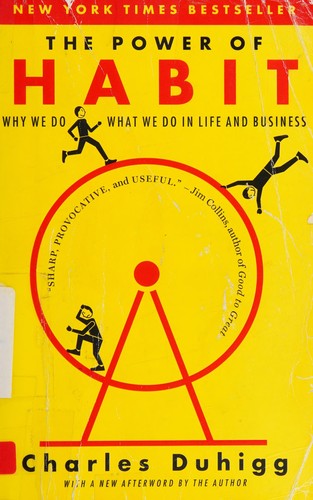
TL;DR: The Power of Habit: Why We Do What We Do in Life and Business by Charles Duhigg explains how habits form through a loop of cue, routine and reward, and how to change them by keeping the cue and reward and swapping the routine. Duhigg also shows how keystone habits, willpower and group habits can transform individuals, companies and communities.
Why do we reach for a snack at three in the afternoon, or check our phones without thinking? Charles Duhigg, an investigative reporter at The New York Times, set out to explain habits in The Power of Habit, published in 2012. He combines research from neurology and psychology with stories about companies, athletes and social movements. The book became a bestseller because it makes habit science accessible and shows that habits can be changed. Here’s a summary of its main ideas.
Table of Contents
The Power of Habit at a Glance
| Detail | Info |
|---|---|
| Author | Charles Duhigg |
| Published | 2012 |
| Genre | Psychology, business, self-help |
| Core idea | Habits follow a loop that can be understood and rewired |
| Structure | Three parts: habits of individuals, organizations and societies |
| Best for | Readers who want the science and stories behind habit change |
What Is The Power of Habit About?
Duhigg explains that habits are the brain’s way of saving effort. When a behavior repeats in a stable context, the brain stores it as an automatic routine so you can use mental energy for other things. This is efficient, but it also means we can follow bad routines without noticing.
At the core of every habit is a three-step loop. A cue triggers the brain to start the routine, the routine is the behavior itself and the reward helps the brain decide whether the loop is worth remembering. Over time, a craving for the reward becomes the driving force.
Key Ideas, Part by Part
The Habit Loop and the Craving Brain
Duhigg opens with Eugene Pauly, a man with severe memory damage who still formed new habits, such as taking a walk and returning home, which researchers used to show that habits are stored separately from conscious memory. He describes the work of MIT scientists on rats navigating mazes, which revealed the habit loop in the basal ganglia.
He then tells how advertiser Claude Hopkins used the loop to make Pepsodent a success in the early 1900s by tying toothbrushing to a cue, the film on your teeth, and a reward, a clean, tingling feeling. The lesson is that habits grow strongest when a craving develops.
The Golden Rule of Habit Change
Duhigg’s practical rule is that you cannot extinguish a bad habit, only change it. Keep the same cue and reward, but insert a new routine. He gives the example of his own afternoon cookie habit, which he realized was really about social contact, not hunger. Once he identified the cue (a time of day) and the reward (chatting with colleagues), he replaced the cookie with a chat and the habit changed.
He also describes the role of belief. Alcoholics Anonymous, he says, works partly by providing a community and a belief that change is possible. Belief becomes especially important during stress, when old routines can resurface.
Keystone Habits and Willpower
Some habits have outsized effects, which Duhigg calls keystone habits. They start a chain reaction that changes other behaviors. He tells how Paul O’Neill became chief executive of the aluminum company Alcoa and made worker safety his top priority. By focusing on one habit, tracking and preventing injuries, O’Neill sparked changes in communication and efficiency, and the company’s profits rose over the following years.
Willpower is another keystone. Duhigg cites studies, including research on Starbucks employee training, showing that willpower can be strengthened like a muscle by practicing self-control, and that planning for tough moments in advance helps people keep their composure.
Habits of Companies and Societies
In the second part, Duhigg looks at how organizations are shaped by routines. Target, for example, used data analysis to predict shopping habits, including life events such as pregnancy, and to time its offers. This raised questions about privacy that continue today.
In the third part, he turns to social habits. He describes how the Montgomery bus boycott grew from strong ties among friends and weak ties among acquaintances, led by figures such as Rosa Parks and Martin Luther King Jr., and how community pressure and new habits can drive social change. He also discusses free will and responsibility, arguing that once we understand habits, we cannot excuse bad ones.
6 Key Takeaways From The Power of Habit
- Habits are loops. Cue, routine and reward drive behavior.
- Change the routine, not the cue. Keep the cue and reward but swap the action.
- Find keystone habits. One change can ripple across your life.
- Willpower can grow. Practice and planning build self-control.
- Belief matters. Support and faith in change help you persist.
- Communities shape habits. Social ties can spread behavior.
Ideas Worth Remembering
- Cravings power habits. (paraphrased)
- You can’t delete a habit, but you can replace it. (paraphrased)
- Small wins build momentum. (paraphrased)
- We are responsible for the habits we know about. (paraphrased)
How to Apply The Power of Habit in Real Life
- Map your loop. Write the cue, routine and reward of a habit you want to change.
- Experiment with rewards. Try different substitute routines to see what satisfies the craving.
- Find a keystone. Pick one habit, like exercise, that could improve others.
- Make an if-then plan. Decide in advance what you’ll do when a cue appears.
- Join a group. Find a community that supports the new habit.
Criticisms and Limits
Critics say that Duhigg sometimes generalizes from single stories, and that claims about Alcoa and other firms oversimplify complex causes. The advice on willpower and habit change is helpful but not detailed, and severe addictions or mental health issues need professional support. Some also note that the book emphasizes personal responsibility more than social conditions.
Despite these points, the habit loop remains a useful model and an engaging introduction to a major field of research.
The Power of Habit in One Minute
Every habit has a cue, a routine and a reward, and a craving makes it stick. To change a habit, keep the cue and reward and swap the routine. Look for keystone habits that trigger positive change, practice willpower and make plans for hard moments. Groups and communities reinforce habits, and understanding habits makes us responsible for them.
How to Find Your Cue
Duhigg suggests tracking five factors when a habit happens: location, time, emotional state, who is around and the action just before. After a few days of notes, a pattern often emerges. For example, you may notice that you snack when you feel bored at your desk around four. Once the cue is clear, you can test alternatives, like a short walk or a glass of water, and see which one meets the underlying need.
Habits in Business and Daily Life
Companies use habit science to design products that people use repeatedly, while managers can use routines to improve safety and quality. At home, families can use routines such as a nightly tidy-up or a shared dinner to reduce friction. A good routine saves energy and decisions, while a poor one drains them. The challenge is to spot the routines you follow automatically and decide whether they serve you.
Reading the Book Critically
Some of the stories, such as the Target example, have been questioned for accuracy or simplified. The neuroscience is presented clearly, but real brains are more complicated, and the golden rule does not guarantee success for stubborn addictions, which may need professional help. Treat the book as a lens for understanding habits, then supplement it with more practical guides such as Atomic Habits.
Who Should Read The Power of Habit?
Read it if you are curious about how habits work, want to change a stubborn routine or work in management or marketing. It suits story lovers who want science explained clearly. For a more practical toolkit, follow it with Atomic Habits.
What to Read Next
- Atomic Habits by James Clear a practical system for building habits
- Tiny Habits by B. J. Fogg a behavior design approach to small changes
- Switch by Chip Heath and Dan Heath how to change things when change is hard
Related: Atomic Habits summary and key takeaways and The Compound Effect summary and key takeaways.
Frequently Asked Questions
What is the main idea of The Power of Habit?
That habits follow a cue-routine-reward loop that can be understood and changed.
What is the golden rule of habit change?
Keep the same cue and reward, but change the routine.
What is a keystone habit?
A habit that triggers a chain reaction and changes other behaviors.
Is The Power of Habit scientifically accurate?
It’s based on real research, though some stories are simplified.
How is it different from Atomic Habits?
Duhigg explains the science and stories, while Clear offers a step-by-step system.