
Disclosure: As an Amazon Associate, Bookish Wisdom earns from qualifying purchases. This doesn't change our picks or your price.
TL;DR: Justin Quayle, a quiet British diplomat in Nairobi who loves gardening, learns that his young activist wife, Tessa, has been murdered in northern Kenya. Investigating her death, he discovers that she had uncovered a pharmaceutical company testing a dangerous tuberculosis drug on poor Kenyans, with the help of corrupt officials. Justin follows her path, knowing it may cost him his life.
Table of Contents
The Constant Gardener at a Glance
| Author | John le Carré |
| First published | 2001 |
| Type | Novel |
| Best for | readers who want a gripping thriller about corporate corruption |
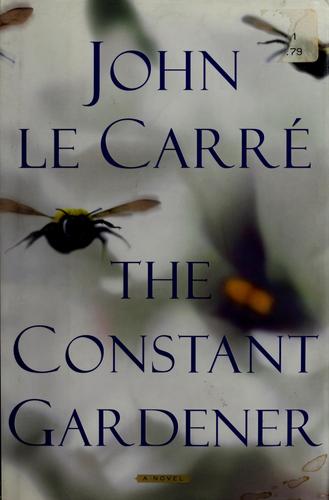
The Constant Gardener is a novel by John le Carré, published in 2001. It attacks the pharmaceutical industry and political corruption. Below you will find a part-by-part summary, five key takeaways, ideas worth remembering and a note on who will enjoy it.
Content note: Includes murder, rape and medical exploitation.
Main Characters
- Justin Quayle: A British diplomat and gardener.
- Tessa Quayle: Justin's passionate activist wife.
- Arnold Bluhm: A doctor and Tessa's friend.
- Sandy Woodrow: Justin's boss at the British High Commission.
- KVH: A pharmaceutical company behind the drug.
What Happens, Part by Part (Contains Spoilers)
The murder
Tessa, a young lawyer and activist, is found murdered near Lake Turkana. Her friend Dr. Arnold Bluhm has disappeared. Rumors say they were lovers, and that Bluhm killed her.
Justin's grief
Justin, a mild man who loves his garden, is devastated. He begins searching Tessa's papers and discovers she was investigating a pharmaceutical company.
The drug
Tessa found that the company KVH was testing a tuberculosis drug, Dypraxa, on poor Africans, hiding its deadly side effects. Officials, including Justin's colleague Sandy Woodrow, helped cover up her reports.
The search
Justin travels across Europe and back to Africa, following Tessa's trail. He is attacked and threatened. He learns that Tessa was not unfaithful; she and Bluhm were working together.
The end
Justin goes to Lake Turkana, where Tessa died. Knowing that killers are coming, he waits there, at peace. He is killed. The truth eventually emerges, and the guilty face some consequences.
5 Key Takeaways
- Corporations can exploit the vulnerable for profit.
- Love can inspire courage.
- Governments sometimes protect the powerful.
- Grief can reveal hidden strength.
- Speaking truth can be dangerous.
Ideas Worth Remembering
These are paraphrased, not direct quotes:
- Quiet people can be fiercely brave.
- The poor are often treated as disposable.
- Knowing the truth can be worth any price.
Who Should Read The Constant Gardener?
Read The Constant Gardener if you enjoy thrillers about social justice and corruption. It suits adults.
About John le Carré
John le Carré (1931–2020) was the pen name of David Cornwell, a former British spy turned novelist. In his later career, he turned to targets beyond the Cold War, such as arms dealers, banks and drug companies. The Constant Gardener was adapted into a 2005 film starring Ralph Fiennes and Rachel Weisz, who won an Oscar for her role.
Questions to Think About After Reading
These prompts work for solo reading, a book club or a classroom discussion of The Constant Gardener:
- Why does Justin follow Tessa's path?
- How does the novel criticize pharmaceutical companies?
- Is Justin's ending a defeat or a victory?
How to Use This Summary
Use this page as a quick reference before a book club meeting, an exam, or a decision about whether The Constant Gardener is worth your time. The takeaways are written to stand on their own. If a point interests you, go back to the book for the author's full story, characters and style, which no short summary can replace.
A Note on Accuracy and Spoilers
This summary is based on the published text of The Constant Gardener, not on any film, series or stage adaptation, which often change the story. Details are kept at the level of the main events so that nothing is invented. Editions differ slightly in length and wording, so page numbers and small details may vary between copies.
Should You Read the Book?
Yes. It is gripping, angry and moving, with a strong message about corporate power.
Check price of The Constant Gardener on Amazon
What to Read Next
- The Little Drummer Girl by John le Carré: moral complexity in espionage
- The Spy Who Came in from the Cold by John le Carré: a Cold War classic
- Bad Blood by John Carreyrou: real-life corporate fraud in medicine
Related: The Little Drummer Girl by John le Carré: Summary and Key Takeaways · The Spy Who Came in from the Cold by John le Carré: Summary and Key Takeaways
Frequently Asked Questions
What is The Constant Gardener about?
A diplomat investigates his wife's murder and uncovers a corrupt drug trial in Kenya.
Who wrote it?
John le Carré, in 2001.
Who killed Tessa?
People protecting the pharmaceutical company.
What is Dypraxa?
A fictional tuberculosis drug tested unethically.
Is there a film?
Yes, the 2005 film with Ralph Fiennes and Rachel Weisz.
What age is it for?
Adults.
How long is it?
About 500 pages.
Why is Justin called the constant gardener?
He loves gardening and is steady and loyal.
Where is it set?
In Kenya and Europe.
Is it based on real events?
It was inspired by real controversies about drug trials in Africa.
Who is Arnold Bluhm?
A doctor who worked with Tessa and was wrongly suspected.
What does Tessa leave behind?
Papers and evidence that Justin uses to uncover the truth.
Who are the main characters in The Constant Gardener?
The main characters are Justin Quayle, Tessa Quayle, Arnold Bluhm, Sandy Woodrow and KVH. Justin Quayle: A British diplomat and gardener. Tessa Quayle: Justin's passionate activist wife. Arnold Bluhm: A doctor and Tessa's friend.
Is The Constant Gardener worth reading?
It depends on what you want. The book is best for readers who want a gripping thriller about corporate corruption. If that describes you, it is likely a good fit. If not, the titles under What to Read Next may suit you better.