
Disclosure: As an Amazon Associate, Bookish Wisdom earns from qualifying purchases. This doesn't change our picks or your price.
TL;DR: Alec Leamas, a weary British agent, has seen his network in East Germany destroyed by the ruthless spymaster Hans-Dieter Mundt. His boss, Control, offers him one last mission: pretend to defect and plant false evidence to destroy Mundt. As the operation unfolds, Leamas discovers the real plan is far more cynical than he imagined.
Table of Contents
The Spy Who Came in from the Cold at a Glance
| Author | John le Carré |
| First published | 1963 |
| Type | Spy novel |
| Best for | readers who want a dark, realistic Cold War spy classic |
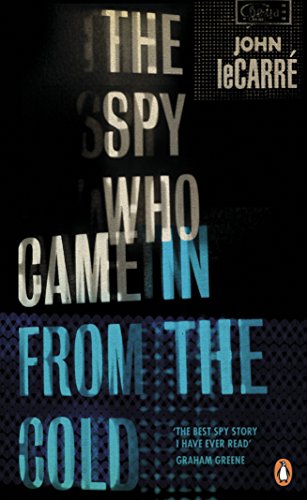
The Spy Who Came in from the Cold is a novel by John le Carré, published in 1963. It made le Carré famous and changed spy fiction with its bleak, realistic tone. Below you will find a part-by-part summary, five key takeaways, ideas worth remembering and a note on who will enjoy it.
Content note: Includes violence and death.
Main Characters
- Alec Leamas: A tired British spy.
- Control: The head of British intelligence, “the Circus.”
- Hans-Dieter Mundt: A ruthless East German intelligence officer.
- Liz Gold: A young idealistic librarian who loves Leamas.
- Fiedler: Mundt's deputy, who suspects Mundt.
What Happens, Part by Part (Contains Spoilers)
Berlin
Leamas watches as his last agent is shot at the Berlin Wall crossing. His network has been destroyed by Mundt. Back in London, Control offers him a final mission.
The fall
Leamas pretends to fall apart. He drinks, is fired and takes a job in a library, where he meets Liz Gold, a young Communist. They fall in love. Then he assaults a grocer and goes to prison, to look like a disgraced man ready to defect.
Defection
Leamas is approached by East German agents and taken to East Germany. He gives information suggesting that Mundt is a British double agent. Fiedler, Mundt's Jewish deputy, believes it and arrests Mundt.
The tribunal
At a secret trial, Mundt's defense brings in Liz Gold, who has been invited to East Germany. Her testimony reveals that the British secretly paid her bills, which shows that Leamas's defection was a setup. Mundt is cleared.
The truth
Leamas realizes that Mundt really is a British agent, and the whole plan was to destroy Fiedler, who was getting close to the truth. Mundt helps Leamas and Liz escape. At the Berlin Wall, Liz is shot. Leamas, disgusted, climbs back down and is shot dead beside her.
5 Key Takeaways
- Espionage can be morally bankrupt.
- Individuals are often sacrificed for strategy.
- Both sides in the Cold War used ruthless methods.
- Love and loyalty conflict with duty.
- Truth can be twisted for political ends.
Ideas Worth Remembering
These are paraphrased, not direct quotes:
- The ends do not always justify the means.
- Spies are not glamorous heroes.
- Human feeling can be the most powerful act of rebellion.
Who Should Read The Spy Who Came in from the Cold?
Read The Spy Who Came in from the Cold if you enjoy realistic, morally complex spy stories. It suits adults.
About John le Carré
John le Carré was the pen name of David Cornwell (1931–2020), an English novelist who worked for MI5 and MI6 in the 1950s and 1960s. His novels, including Tinker Tailor Soldier Spy and The Little Drummer Girl, brought realism and moral complexity to spy fiction. He created the quiet spymaster George Smiley, who appears briefly in this novel.
Questions to Think About After Reading
These prompts work for solo reading, a book club or a classroom discussion of The Spy Who Came in from the Cold:
- Was the operation worth the cost?
- Why does Leamas choose to die?
- How are East and West similar in the novel?
How to Use This Summary
Use this page as a quick reference before a book club meeting, an exam, or a decision about whether The Spy Who Came in from the Cold is worth your time. The takeaways are written to stand on their own. If a point interests you, go back to the book for the author's full story, characters and style, which no short summary can replace.
A Note on Accuracy and Spoilers
This summary is based on the published text of The Spy Who Came in from the Cold, not on any film, series or stage adaptation, which often change the story. Details are kept at the level of the main events so that nothing is invented. Editions differ slightly in length and wording, so page numbers and small details may vary between copies.
Should You Read the Book?
Yes. It is short, tense and bleak, one of the greatest spy novels ever written.
Check price of The Spy Who Came in from the Cold on Amazon
What to Read Next
- Tinker Tailor Soldier Spy by John le Carré: the hunt for a mole
- The Day of the Jackal by Frederick Forsyth: a meticulous thriller
- Our Man in Havana by Graham Greene: a comic spy novel
Related: 15 Books Like The Spy Who Came in from the Cold You’ll Love
Frequently Asked Questions
What is The Spy Who Came in from the Cold about?
A British spy fakes his defection to destroy an East German officer, but the plan is not what he thinks.
Who wrote it?
John le Carré, in 1963.
Who is Alec Leamas?
A weary British agent.
Is Mundt a double agent?
Yes, he secretly works for the British.
How does it end?
Liz and Leamas are shot at the Berlin Wall.
Is there a film?
Yes, the 1965 film with Richard Burton.
What age is it for?
Adults and older teens.
How long is it?
About 230 pages.
Does George Smiley appear?
Yes, in a minor role.
What does “come in from the cold” mean?
To retire from field espionage.
Is The Spy Who Came in from the Cold worth reading?
It depends on what you want. The book is best for readers who want a dark, realistic Cold War spy classic. If that describes you, it is likely a good fit. If not, the titles under What to Read Next may suit you better.