
Disclosure: As an Amazon Associate, Bookish Wisdom earns from qualifying purchases. This doesn’t change our picks or your price.
TL;DR: In The Culture Code, Daniel Coyle studies some of the world’s most successful groups, from Pixar and the Navy SEALs to the San Antonio Spurs, and finds that great culture isn’t about personality or perks. It comes from three skills: build safety, share vulnerability and establish purpose. Culture is a set of everyday behaviors anyone can learn.
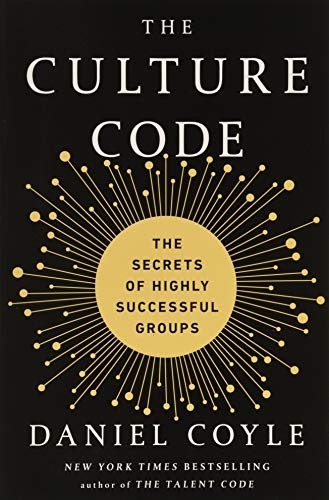
Published in 2018, The Culture Code: The Secrets of Highly Successful Groups is by Daniel Coyle, author of The Talent Code. Coyle spent several years visiting high-performing teams, including Pixar, IDEO, Zappos, special forces units, a top restaurant group and a gang of jewel thieves, to understand what makes groups more than the sum of their parts.
Table of Contents
The Culture Code at a Glance
| Detail | Info |
|---|---|
| Author | Daniel Coyle |
| Published | 2018 |
| Genre | Business / leadership / psychology |
| Structure | Three parts, one per skill, each with stories followed by practical ideas for action |
| Best for | Managers, coaches, teachers, founders and anyone building a team |
What Is The Culture Code About?
Coyle opens with a famous design exercise, the spaghetti and marshmallow challenge, where groups build the tallest tower they can from spaghetti, tape, string and a marshmallow. Kindergartners often outperform business school students. The students spend time jockeying for status; the kids simply experiment together. Coyle argues that how a group interacts matters more than how smart its members are.
Skill 1: Build Safety
Groups thrive when members feel safe and connected. Coyle describes belonging cues: signals like eye contact, attentive listening, turn-taking and small courtesies that tell people we are connected, we share a future, and you are valued here. He cites research by Will Felps showing that one negative bad apple can drag down a group’s performance, unless someone in the group responds with warmth that defuses the tension.
Ideas for action: overcommunicate your listening, spotlight your fallibility early, embrace the messenger of bad news, say thank you often and be painstaking in hiring.
Skill 2: Share Vulnerability
Trust doesn’t come first; vulnerability does. When a leader admits a weakness or asks for help, others feel safe to do the same, creating loops of cooperation. Coyle describes how Navy SEAL teams use honest after-action reviews to discuss mistakes, and how Pixar’s Braintrust gives candid feedback on films in progress. He also tells the story of a commercial airline crew whose open communication helped them handle a disastrous mechanical failure.
Ideas for action: make sure the leader is vulnerable first and often, deliver negative news in person, separate feedback from performance reviews and listen like a trampoline, adding energy and insight rather than simply absorbing.
Skill 3: Establish Purpose
Strong groups create shared goals and values through vivid, repeated signals. Coyle describes how restaurateur Danny Meyer’s Union Square Hospitality Group uses simple, memorable phrases to guide behavior, and how successful groups tell stories that link everyday actions to a larger mission.
Ideas for action: name and rank your priorities, be ten times clearer than you think you need to be, figure out where your group aims for proficiency and where it aims for creativity, embrace catchphrases and measure what really matters.
5 Key Takeaways From The Culture Code
- Culture is behavior. It’s built through daily signals, not slogans.
- Belonging comes first. Safety unlocks cooperation and performance.
- Leaders go first with vulnerability. It creates the trust groups need.
- Candor needs safety. Honest feedback works when people feel connected.
- Purpose must be repeated. Clear, simple messages keep groups aligned.
Ideas Worth Remembering
- Group performance depends on behavior that communicates one powerful message: we are safe and connected. (paraphrased)
- Vulnerability doesn’t come after trust; it comes before it. (paraphrased)
- To build purpose, be ten times clearer than you think you need to be. (paraphrased)
Who Should Read The Culture Code?
It’s ideal for team leaders, managers, coaches, teachers and founders. Its mix of gripping stories and practical action lists makes it easy to apply immediately, and it’s a great book for teams to discuss together.
What to Read Next
- The Five Dysfunctions of a Team by Patrick Lencioni on overcoming team problems.
- Creativity, Inc. by Ed Catmull on Pixar’s creative culture.
- The Talent Code by Daniel Coyle on how skills are built.
Related: The Five Dysfunctions of a Team summary and best books on employee engagement.
Frequently Asked Questions
What are the three skills in The Culture Code?
The three skills are build safety, share vulnerability and establish purpose.
What are belonging cues?
Belonging cues are behaviors, like eye contact, attentive listening and small courtesies, that signal to group members that they are safe, connected and valued.
Why do kindergartners win the marshmallow challenge?
They experiment together without worrying about status, while adults often spend time competing for leadership, which slows their progress.