

Disclosure: As an Amazon Associate, Bookish Wisdom earns from qualifying purchases. This doesn’t change our picks or your price.
TL;DR: In The Hard Thing About Hard Things, venture capitalist Ben Horowitz shares brutally honest lessons from building and selling a tech company through near-death crises. There’s no formula for the hardest problems in business. What helps: telling the truth, taking care of people, making tough calls quickly and learning to manage your own psychology through the struggle.
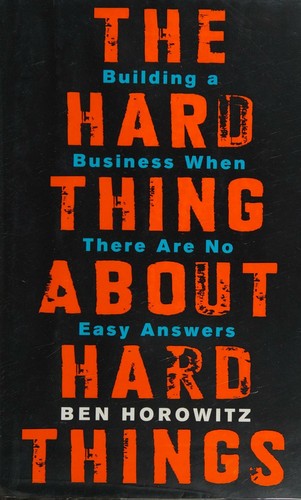
Published in 2014, The Hard Thing About Hard Things: Building a Business When There Are No Easy Answers grew out of Ben Horowitz’s popular blog. Horowitz co-founded Loudcloud, which survived the dot-com crash by transforming into Opsware, a software company that HP bought in 2007 for about $1.6 billion. He later co-founded the venture capital firm Andreessen Horowitz with Marc Andreessen. Each chapter opens with a rap lyric, reflecting his love of hip-hop.
Table of Contents
The Hard Thing About Hard Things at a Glance
| Detail | Info |
|---|---|
| Author | Ben Horowitz |
| Published | 2014 |
| Genre | Business / entrepreneurship / memoir |
| Structure | Horowitz’s story, followed by chapters of practical advice on management and leadership |
| Best for | Startup founders, CEOs, managers and aspiring entrepreneurs |
What Is The Hard Thing About Hard Things About?
Most management books, Horowitz says, explain how to do things right when things are going well. His book is about the hard thing: what to do when there’s no right answer, such as when you must lay off friends, when your biggest customer threatens to leave or when the company is weeks from running out of cash.
Key Ideas From The Hard Thing About Hard Things
The Story of Loudcloud and Opsware
Horowitz describes taking Loudcloud public in 2001 in a terrible market, surviving layoffs, nearly losing the company when a major customer faced bankruptcy, and then selling the services business to focus on software. These experiences shape all the advice that follows.
The Struggle
Horowitz describes the struggle as the moments when nothing is working and you wonder why you started the company. He argues that every great entrepreneur goes through it, and that being honest about it, rather than pretending, is what lets you keep going.
Tell It Like It Is
Leaders must share bad news openly. Hiding problems destroys trust, while transparency lets the whole company help solve them.
Lay People Off the Right Way
If layoffs are necessary, do them quickly, make sure the company is truly fixing its problems, and have managers deliver the news personally with respect. How you treat departing employees affects everyone who stays.
Take Care of the People, the Products and the Profits, in That Order
Good companies make good places to work, which leads to good products and eventually profits. Horowitz offers detailed advice on training, one-on-ones, hiring executives and managing politics.
Peacetime CEO vs. Wartime CEO
A peacetime CEO, when the company has a large advantage, focuses on expanding the market and encouraging creativity. A wartime CEO, facing an existential threat, must be focused, decisive and sometimes blunt. Great leaders recognize which situation they’re in and adapt.
No Silver Bullets, Only Lead Bullets
When your product is behind, there’s no magic partnership or trick that will save you. You need to make the product better, through hard, steady work.
Manage Your Own Psychology
Horowitz calls being CEO the loneliest job and says that managing your own fear and doubt is often the hardest part. Focus on what you can do rather than on everything that could go wrong.
5 Key Takeaways From The Hard Thing About Hard Things
- There’s no recipe for hard problems. Leadership is about making tough calls with incomplete information.
- Tell the truth. Transparency builds trust, especially in a crisis.
- Put people first. Taking care of people leads to great products and profits.
- Know whether you’re at war or at peace. Different situations need different leadership.
- Embrace the struggle. It’s part of building anything meaningful.
Ideas Worth Remembering
- There are no silver bullets, only lead bullets. (paraphrased)
- The hard thing isn’t setting a big goal; it’s laying people off when you miss it. (paraphrased)
- Take care of the people, the products and the profits, in that order. (paraphrased)
Who Should Read The Hard Thing About Hard Things?
It’s a must-read for founders, startup employees, CEOs and managers facing tough decisions. Readers outside tech will still find its honesty about leadership refreshing, though some sections are specific to venture-backed startups.
What to Read Next
- Zero to One by Peter Thiel on building innovative companies.
- High Output Management by Andrew S. Grove on management fundamentals.
- Shoe Dog by Phil Knight on the messy reality of building a company.
Related: top 10 best-selling business books and The Culture Code summary.
Frequently Asked Questions
What is the main idea of The Hard Thing About Hard Things?
The main idea is that building a company involves hard problems with no easy answers, and success depends on honesty, putting people first, making tough decisions and managing your own psychology.
What is a wartime CEO?
A wartime CEO leads a company facing an existential threat. They are focused, decisive and willing to break protocol to ensure survival, unlike a peacetime CEO who focuses on growth and creativity.
Who is Ben Horowitz?
Ben Horowitz co-founded Loudcloud, later Opsware, which HP acquired in 2007. He then co-founded the venture capital firm Andreessen Horowitz.