
Disclosure: As an Amazon Associate, Bookish Wisdom earns from qualifying purchases. This doesn’t change our picks or your price.
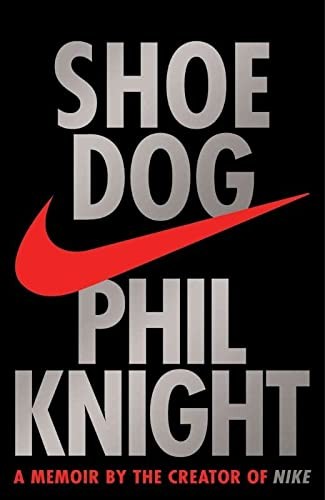
TL;DR: Shoe Dog is Phil Knight’s memoir of founding Nike. It follows his crazy idea to import Japanese running shoes in 1962, his partnership with coach Bill Bowerman, years of constant cash crises, a bitter split with his Japanese supplier and the creation of the Nike brand. It’s a story of risk, persistence and the misfits who built one of the world’s best-known companies.
Published in 2016, Shoe Dog: A Memoir by the Creator of Nike became a bestseller and was named a favorite book by Bill Gates and Warren Buffett. Unlike many business memoirs, it focuses almost entirely on the scrappy early years, ending around Nike’s public stock offering in 1980. Knight writes candidly about doubts, mistakes and the personal costs of building a company.
Table of Contents
Shoe Dog at a Glance
| Detail | Info |
|---|---|
| Author | Phil Knight |
| Published | 2016 |
| Genre | Memoir / business / entrepreneurship |
| Structure | Chapters for each year from 1962 to 1980, plus a reflective final section |
| Best for | Entrepreneurs, runners, sports fans and anyone who loves an underdog story |
The Story, Year by Year
The Crazy Idea (1962)
After graduating from Stanford’s business school, where he wrote a paper on whether Japanese running shoes could do to German brands what Japanese cameras had done to German cameras, 24-year-old Knight travels to Japan. He talks his way into a meeting with Onitsuka, maker of Tiger shoes, and claims to represent a company called Blue Ribbon Sports, which didn’t yet exist.
Blue Ribbon Sports
Knight starts selling Tiger shoes out of the trunk of his car at track meets. He partners with his former University of Oregon track coach, Bill Bowerman, who obsessively experiments with shoe designs, famously using his wife’s waffle iron to create a new sole. Early employees include Jeff Johnson, a passionate runner and salesman who writes Knight long letters, and other unusual characters Knight affectionately describes as misfits.
Growth and Constant Cash Problems
Sales double year after year, but Blue Ribbon is always short of cash because Knight reinvests everything into more inventory. Banks repeatedly refuse credit, and at one point the company’s account is frozen. Knight also works as an accountant and teaches at Portland State University to keep the business afloat. There, he pays a design student, Carolyn Davidson, $35 to create a logo: the swoosh.
The Birth of Nike
As the relationship with Onitsuka sours, Knight learns the supplier plans to replace Blue Ribbon. He launches his own brand, and in 1971 the name Nike, after the Greek goddess of victory, is chosen, a name Jeff Johnson said came to him in a dream. A legal battle with Onitsuka follows, which Blue Ribbon eventually wins.
Prefontaine and the Athletes
Knight writes movingly about Steve Prefontaine, the charismatic Oregon distance runner who wore Nike shoes and died in a car accident in 1975 at age 24. Nike’s connection with athletes becomes central to its identity.
Financing and the IPO
Japanese trading company Nissho Iwai provides crucial financing when American banks won’t. Nike also faces a large import duty dispute with the US government. In 1980, Nike goes public, finally solving its cash problems.
Reflections
The book closes with Knight reflecting on success, regrets, the sweatshop criticism Nike faced in later years and the death of his son Matthew in 2004. He encourages young people to find a calling and not settle.
5 Key Takeaways From Shoe Dog
- Start before you’re ready. Knight’s company began as an idea and a bold claim.
- Persistence beats perfection. Near-death crises were constant, and he kept going.
- Hire passionate misfits. Nike’s early team was unconventional but deeply committed.
- Cash flow matters. Rapid growth nearly killed the company more than once.
- Find work you love. Knight saw business as a form of play and calling.
Ideas Worth Remembering
- The cowards never started and the weak died along the way. (paraphrased)
- Don’t stop; keep going until you reach the finish line. (paraphrased)
- A calling makes the hard days worth it. (paraphrased)
Who Should Read Shoe Dog?
It’s perfect for aspiring entrepreneurs, runners, sports fans and anyone who enjoys a page-turning true story. It reads more like a novel than a business book, so even readers who don’t usually pick up business titles enjoy it.
What to Read Next
- The Ride of a Lifetime by Robert Iger on leading Disney.
- Grinding It Out by Ray Kroc on building McDonald’s.
- The Hard Thing About Hard Things by Ben Horowitz on the struggle of building a company.
Related: The Hard Thing About Hard Things summary and top 10 best-selling business books.
Frequently Asked Questions
What is Shoe Dog about?
Shoe Dog is Phil Knight’s memoir about founding Nike, from importing Japanese running shoes in 1962 to taking the company public in 1980.
Who designed the Nike swoosh?
Carolyn Davidson, a graphic design student at Portland State University, designed the swoosh in 1971. Knight paid her $35 and later gave her Nike stock.
What does shoe dog mean?
A shoe dog is someone deeply devoted to the shoe business, who thinks about shoes, makes them and sells them obsessively.