
Disclosure: As an Amazon Associate, Bookish Wisdom earns from qualifying purchases. This doesn't change our picks or your price.
TL;DR: In 1963, the French terrorist group OAS, furious that President Charles de Gaulle granted Algeria independence, hires a mysterious English assassin known only as the Jackal to kill him. As the Jackal meticulously prepares, French police detective Claude Lebel races to identify him, leading to a tense final confrontation in Paris.
Table of Contents
The Day of the Jackal at a Glance
| Author | Frederick Forsyth |
| First published | 1971 |
| Type | Thriller |
| Best for | readers who want a classic, meticulously detailed assassination thriller |
The Day of the Jackal is the debut novel of Frederick Forsyth, published in 1971. It is famous for its realism and procedural detail and is often called one of the best thrillers ever written. Below you will find a part-by-part summary, five key takeaways, ideas worth remembering and a note on who will enjoy it.
Content note: Includes murders, torture and sexual content.
Main Characters
- The Jackal: A cool, professional English assassin.
- Claude Lebel: A modest, determined French police detective.
- Charles de Gaulle: The President of France and the target.
- Colonel Rodin: The OAS leader who hires the Jackal.
- Colette de la Chalonnière: A woman the Jackal seduces and later kills.
What Happens, Part by Part (Contains Spoilers)
The plot
The OAS, a group of former French soldiers opposed to Algerian independence, has failed to kill de Gaulle several times. Its leader, Colonel Rodin, hires an English professional assassin, code-named the Jackal, for half a million dollars.
Preparations
The Jackal carefully plans. He obtains false passports by stealing identities, commissions a custom rifle that can be hidden in a crutch and plans his route. The OAS robs banks to pay him.
The hunt
French intelligence captures and tortures an OAS courier who reveals the word “Jackal.” The government gives detective Claude Lebel secret powers to find him. With help from Scotland Yard, Lebel identifies a suspect and tracks his false identities.
Cat and mouse
The Jackal changes identities as he travels through France, staying one step ahead. He seduces a baroness to hide at her château, and kills her when she discovers his secret. He reaches Paris disguised as a disabled veteran.
The day
On Liberation Day, August 25, the Jackal waits in an apartment overlooking a ceremony where de Gaulle will appear. He fires, but de Gaulle bends forward at that moment, and the shot misses. Lebel bursts in and kills the Jackal. The assassin's true identity remains unknown.
5 Key Takeaways
- Meticulous planning can make the impossible seem possible.
- Patient, ordinary police work can defeat brilliance.
- Political violence often ends in failure.
- Identity can be stolen and reinvented.
- Small details can change history.
Ideas Worth Remembering
These are paraphrased, not direct quotes:
- The quiet detective can be the real hero.
- Chance plays a role in even the best plans.
- Professionalism can be chilling when used for evil.
Who Should Read The Day of the Jackal?
Read The Day of the Jackal if you enjoy thrillers, spy fiction and historical suspense. It suits adults and older teens.
About Frederick Forsyth
Frederick Forsyth (1938–2025) was an English journalist and novelist who worked as a reporter for Reuters and the BBC, including in Paris and Biafra. He wrote The Day of the Jackal in just over a month. His other bestsellers include The Odessa File, The Dogs of War and The Fourth Protocol. He was known for his realistic research and detail.
Questions to Think About After Reading
These prompts work for solo reading, a book club or a classroom discussion of The Day of the Jackal:
- Why is Lebel so effective?
- How does the novel create suspense when we know de Gaulle survived?
- Who was the Jackal really?
How to Use This Summary
Use this page as a quick reference before a book club meeting, an exam, or a decision about whether The Day of the Jackal is worth your time. The takeaways are written to stand on their own. If a point interests you, go back to the book for the author's full story, characters and style, which no short summary can replace.
A Note on Accuracy and Spoilers
This summary is based on the published text of The Day of the Jackal, not on any film, series or stage adaptation, which often change the story. Details are kept at the level of the main events so that nothing is invented. Editions differ slightly in length and wording, so page numbers and small details may vary between copies.
Should You Read the Book?
Yes. It is gripping, realistic and tightly plotted, a classic that influenced generations of thrillers.
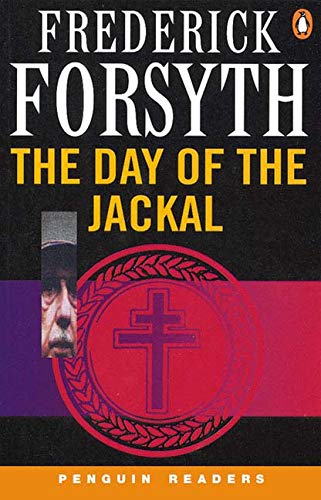
Check price of The Day of the Jackal on Amazon
What to Read Next
- The Odessa File by Frederick Forsyth: a reporter hunts a Nazi war criminal
- Eye of the Needle by Ken Follett: a deadly spy in WWII
- The Bourne Identity by Robert Ludlum: an assassin with a mysterious past
Related: 15 Books Like The Day of the Jackal You’ll Love
Frequently Asked Questions
What is The Day of the Jackal about?
A professional assassin plans to kill French President Charles de Gaulle, while a detective hunts him.
Who wrote it?
Frederick Forsyth, in 1971.
Who is the Jackal?
An English assassin whose real identity is never confirmed.
Does the Jackal kill de Gaulle?
No. He misses and is killed by Lebel.
What was the OAS?
A French paramilitary group opposed to Algerian independence.
Is there a film?
Yes, the 1973 film and a 2024 TV series.
What age is it for?
Adults and older teens.
How long is it?
About 360 pages.
Is it based on real events?
It is fiction, set against real attempts on de Gaulle's life.
Who is Claude Lebel?
The French detective who hunts the Jackal.
Is The Day of the Jackal worth reading?
It depends on what you want. The book is best for readers who want a classic, meticulously detailed assassination thriller. If that describes you, it is likely a good fit. If not, the titles under What to Read Next may suit you better.