

Disclosure: As an Amazon Associate, Bookish Wisdom earns from qualifying purchases. This doesn't change our picks or your price.
TL;DR: During the Great Depression and the Dust Bowl, the Joad family loses their Oklahoma farm and drives to California in search of work. Instead of the promised land, they find exploitation, hunger and hostility, but they hold on to their dignity and their care for others.
Table of Contents
The Grapes of Wrath at a Glance
| Author | John Steinbeck |
| First published | 1939 |
| Type | Novel |
| Best for | readers who want a powerful classic about hardship, injustice and human dignity |
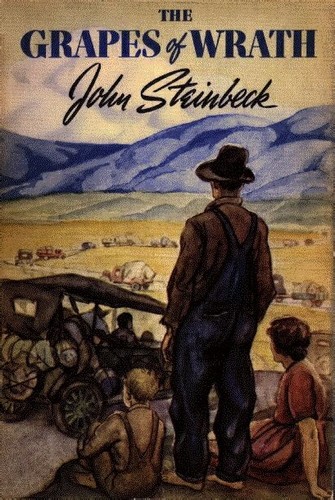
The Grapes of Wrath is a novel by John Steinbeck, first published in 1939, which won the Pulitzer Prize. It alternates between the Joad family's journey and short chapters that describe the wider migration of displaced farmers. Below you will find a part-by-part summary, five key takeaways, ideas worth remembering and a note on who will enjoy it.
What Happens, Part by Part (Contains Spoilers)
Tom comes home
Tom Joad returns home after four years in prison for killing a man in self-defense. With his old acquaintance Jim Casy, he finds his family's farm deserted. Banks have taken the land and tractors have knocked down houses. The Joads are packing up to go to California, where handbills promise plenty of work.
The journey west
The family travels in an overloaded truck along Route 66. Grandpa dies on the first night and Grandma dies before they reach California. Along the way, they meet other migrants and hear warnings that the jobs are scarce and the pay is low, but they keep going.
California
In California, the Joads face crowded camps, police harassment and starvation wages. Landowners pay as little as possible because thousands of desperate workers compete for each job. Casy becomes a labor organizer. Tom's brother Noah leaves, and Connie, the husband of Tom's pregnant sister Rose of Sharon, abandons her.
Weedpatch and the strike
The family finds rest at a government camp where migrants govern themselves with dignity. Later, working as strikebreakers on a peach farm, they meet Casy again. He is killed by men breaking the strike, and Tom kills one of the attackers, forcing him into hiding.
The ending
Tom leaves his family, promising Ma he will fight for justice wherever people suffer. Rain floods the family's boxcar home, and Rose of Sharon's baby is stillborn. In the famous final scene, she offers her breast milk to a starving man in a barn, an act of pure compassion.
5 Key Takeaways
- Economic systems can treat people as disposable when profit comes first.
- Families and communities survive by sharing what little they have.
- Organizing together gives ordinary people power.
- Dignity can survive even in extreme poverty.
- Compassion is the novel's answer to cruelty.
Ideas Worth Remembering
These are paraphrased, not direct quotes:
- Where people are hungry or treated unfairly, someone must speak up.
- Sharing is a form of strength, not weakness.
- People stay human by caring for strangers.
Who Should Read The Grapes of Wrath?
Read The Grapes of Wrath if you want an American classic about the Depression and justice. It is long and moving, best for older teens and adults.
Questions to Think About After Reading
These prompts work for solo reading, a book club or a classroom discussion of The Grapes of Wrath:
- How does the family change from the beginning to the end?
- What do the short interchapters add to the story?
- What does the final scene mean to you?
How to Use This Summary
Use this page as a quick reference before a book club meeting, an exam, or a decision about whether The Grapes of Wrath is worth your time. The takeaways are written to stand on their own. If a point interests you, go back to the book for the author's full story, characters and style, which no short summary can replace.
A Note on Accuracy and Spoilers
This summary is based on the published text of The Grapes of Wrath, not on any film, series or stage adaptation, which often change the story. Details are kept at the level of the main events so that nothing is invented. Editions differ slightly in length and wording, so page numbers and small details may vary between copies.
Should You Read the Book?
If the summary caught your interest, read the opening chapters before you decide. A summary tells you what happens, but the voice and pacing are what make a book work or not.
Check price of The Grapes of Wrath on Amazon
What to Read Next
- Of Mice and Men by John Steinbeck: Steinbeck's short Depression-era classic
- East of Eden by John Steinbeck: Steinbeck's family saga in California
- The Worst Hard Time by Timothy Egan: the true story of the Dust Bowl
Related: 15 Books Like The Grapes of Wrath You’ll Love
Frequently Asked Questions
What is The Grapes of Wrath about?
A family loses their Oklahoma farm and migrates to California during the Depression.
Did it win the Pulitzer?
Yes, in 1940.
Who is Ma Joad?
The strong mother who holds the family together.
What happens to Tom Joad?
He goes into hiding after killing a man and leaves to fight for justice.
Why was it controversial?
Some called it communist propaganda, and it was banned in places.
Is there a movie?
Yes. The 1940 film starred Henry Fonda.
Where does the title come from?
From a line in a famous American Civil War song, suggesting anger growing among the poor.
What is the Dust Bowl?
A period of severe dust storms in the 1930s that ruined farms on the American Great Plains.
How long is The Grapes of Wrath?
It is long, usually around 450 to 500 pages.
Is The Grapes of Wrath worth reading?
It depends on what you want. The book is best for readers who want a powerful classic about hardship, injustice and human dignity. If that describes you, it is likely a good fit. If not, the titles under What to Read Next may suit you better.