
Disclosure: As an Amazon Associate, Bookish Wisdom earns from qualifying purchases. This doesn't change our picks or your price.
TL;DR: Twelve-year-old Hugo Cabret is an orphan who secretly lives in the walls of a Paris train station in 1931, keeping its clocks running. He is trying to repair a broken mechanical man, an automaton, that his father found before he died. Hugo believes it holds a message from his father. His quest leads him to a grumpy toy seller and a forgotten secret about the early days of cinema.
Table of Contents
The Invention of Hugo Cabret at a Glance
| Author | Brian Selznick |
| First published | 2007 |
| Type | Children's novel |
| Best for | young readers who want a magical mystery told in words and stunning pictures |
The Invention of Hugo Cabret is a novel by Brian Selznick, published in 2007. It won the Caldecott Medal in 2008 and was adapted into the 2011 film Hugo by Martin Scorsese. Below you will find a part-by-part summary, five key takeaways, ideas worth remembering and a note on who will enjoy it.
Content note: Includes the death of a parent and mild peril.
Main Characters
- Hugo Cabret: An orphan who lives in a train station.
- Isabelle: A girl who becomes Hugo's friend.
- Papa Georges: A toy seller with a secret past.
- The automaton: A mechanical figure Hugo is trying to repair.
- The Station Inspector: A man who hunts orphans in the station.
What Happens, Part by Part (Contains Spoilers)
The station
Hugo's father, a clockmaker, died in a museum fire. Hugo's uncle took him to the station to help maintain the clocks, then disappeared. Hugo keeps the clocks running in secret and steals food to survive. He also steals small toy parts from a toy booth to repair the automaton.
The toy seller
The old toy seller catches Hugo stealing and takes his notebook, which contains his father's drawings of the automaton. Hugo is desperate to get it back. He follows the man home and meets Isabelle, the toy seller's goddaughter, who loves books and adventure.
The key
Isabelle wears a heart-shaped key on a necklace. Hugo realizes it fits the automaton. When they wind it, the automaton draws a picture from an old film: a rocket in the eye of the moon. It signs the drawing with the name Georges Méliès, Isabelle's godfather.
The secret
Hugo and Isabelle learn that Papa Georges was once a famous filmmaker, Georges Méliès, who made magical early films like A Trip to the Moon. After the First World War, people lost interest, and he destroyed his work in despair. He has hidden his past ever since.
A new beginning
With the help of a film scholar, Hugo and Isabelle show Georges that his films are still loved. Georges is honored at a special celebration. Hugo is caught by the Station Inspector, but Georges takes him in. Hugo finds a new family, and Georges finds joy again. Hugo builds his own automaton, which tells this story.
5 Key Takeaways
- Everyone has a purpose, like a part in a machine.
- Forgotten art can be rediscovered.
- Friendship and family can heal loss.
- Persistence can solve mysteries.
- Dreams can be restored.
Ideas Worth Remembering
These are paraphrased, not direct quotes:
- Old stories can inspire new ones.
- Kindness can change a lonely life.
- Machines and movies can both be magic.
Who Should Read The Invention of Hugo Cabret?
Read The Invention of Hugo Cabret if you are a young reader who loves mysteries, inventions and movies. It suits ages 9 and up.
About Brian Selznick
Brian Selznick (born 1966) is an American author and illustrator. He was inspired by the real story of Georges Méliès, a French filmmaker who built automata. The Invention of Hugo Cabret was the first novel to win the Caldecott Medal, which is usually given to picture books. He has also written Wonderstruck and Kaleidoscope.
Questions to Think About After Reading
These prompts work for solo reading, a book club or a classroom discussion of The Invention of Hugo Cabret:
- Why does Hugo care so much about the automaton?
- What happened to Georges Méliès's films?
- How do the pictures add to the story?
How to Use This Summary
Use this page as a quick reference before a book club meeting, an exam, or a decision about whether The Invention of Hugo Cabret is worth your time. The takeaways are written to stand on their own. If a point interests you, go back to the book for the author's full story, characters and style, which no short summary can replace.
A Note on Accuracy and Spoilers
This summary is based on the published text of The Invention of Hugo Cabret, not on any film, series or stage adaptation, which often change the story. Details are kept at the level of the main events so that nothing is invented. Editions differ slightly in length and wording, so page numbers and small details may vary between copies.
Should You Read the Book?
Yes. It is beautiful, unique and full of wonder.
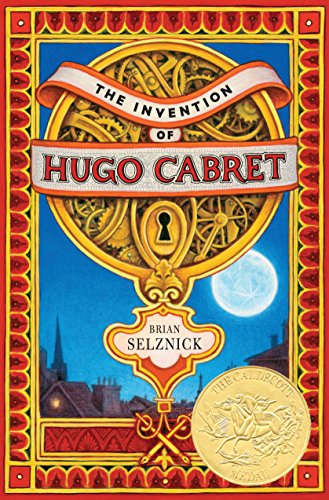
Check price of The Invention of Hugo Cabret on Amazon
What to Read Next
- Wonderstruck by Brian Selznick: another story in words and pictures
- The Mysterious Benedict Society by Trenton Lee Stewart: clever kids solve a mystery
- The Wonderful Wizard of Oz by L. Frank Baum: a classic magical adventure
Related: Wonderstruck by Brian Selznick: Summary and Key Takeaways
Frequently Asked Questions
What is The Invention of Hugo Cabret about?
An orphan in a Paris train station repairs an automaton and uncovers a secret.
Who wrote it?
Brian Selznick, in 2007.
Who is Georges Méliès?
A real early filmmaker, shown as the toy seller.
What is an automaton?
A mechanical figure that can move or draw.
What does the automaton draw?
A scene from A Trip to the Moon.
Did it win awards?
Yes, the Caldecott Medal.
Is there a film?
Yes, Hugo (2011), directed by Martin Scorsese.
What age is it for?
9 and up.
How long is it?
About 530 pages, with many pictures.
Is it based on a true story?
Partly, on the life of Georges Méliès.
Where is it set?
Paris, in 1931.
Is it a quick read?
Yes, because many pages are drawings.
Is A Trip to the Moon a real film?
Yes. Méliès made it in 1902, and it is still famous today.
Is The Invention of Hugo Cabret worth reading?
It depends on what you want. The book is best for young readers who want a magical mystery told in words and stunning pictures. If that describes you, it is likely a good fit. If not, the titles under What to Read Next may suit you better.