
Disclosure: As an Amazon Associate, Bookish Wisdom earns from qualifying purchases. This doesn’t change our picks or your price.
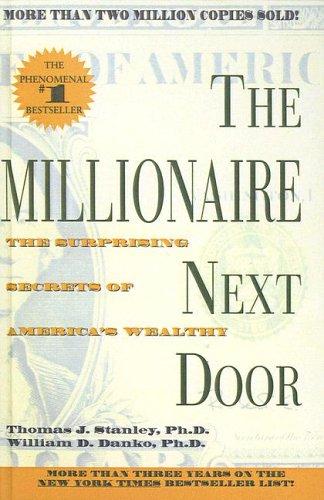
TL;DR: The Millionaire Next Door: The Surprising Secrets of America’s Wealthy by Thomas J. Stanley and William D. Danko reports that most American millionaires are ordinary-looking people who earned their money, spend less than they make and invest steadily. The authors show that wealth comes more from habits of saving and frugality than from high income or inheritance.
Who is rich? Many assume the answer is someone with a flashy car, a big house and designer clothes. Researchers Thomas Stanley and William Danko spent years surveying wealthy households and found something different. Published in 1996, The Millionaire Next Door became a classic of personal finance by showing that the typical millionaire lives in a modest home, drives a normal car and works in an unglamorous business. The book’s data is now several decades old, but its central message about habits still resonates. Here’s a summary of its main ideas.
Table of Contents
The Millionaire Next Door at a Glance
| Detail | Info |
|---|---|
| Authors | Thomas J. Stanley and William D. Danko |
| Published | 1996 |
| Genre | Personal finance |
| Core idea | Real wealth comes from frugality, saving and smart choices, not from showy spending |
| Structure | Chapters on frugality, time and money, financial support for adult children, entrepreneurship and occupation |
| Best for | Savers, young professionals, parents and anyone who wants a realistic picture of wealth |
What Is The Millionaire Next Door About?
Stanley and Danko surveyed thousands of households with high net worth, and interviewed many of them. They found that most millionaires were first-generation wealthy, meaning they did not inherit their fortune. Many ran ordinary businesses, such as scrap-metal dealers, welding contractors, auctioneers and pest control firms, and lived in modest neighborhoods.
The authors distinguish between income and wealth. Income is what you earn in a year, while wealth is what you have accumulated and kept. A high earner who spends everything has little wealth, whereas a moderate earner who saves steadily can become wealthy.
Key Ideas, Part by Part
Frugality and Living Below Your Means
The first and most important theme is living below your means. The typical millionaires in the study spent far less on cars, clothes and watches than people might expect, and many bought used vehicles. They budgeted, planned their spending and judged purchases by value, not by status.
The authors introduce a formula to estimate how much net worth a person should have: multiply your age by your realized pretax annual income from all sources except inheritances, then divide by ten. People with net worth well above this number are called prodigious accumulators of wealth, or PAWs, while those with far less are under accumulators of wealth, or UAWs. They found that high income did not guarantee wealth, and that many UAWs earned large salaries but spent them.
Time, Energy and Money
The second theme is how millionaires allocate resources. They tended to invest time in planning their finances and careers, spending more hours on investments than on shopping for status items. They also believed that financial independence was more important than a showy lifestyle.
The authors note that PAWs were more likely to have a clear financial plan, invest regularly and avoid wasting energy on keeping up with neighbors.
Adult Children and Economic Outpatient Care
The authors warn about what they call economic outpatient care, regular financial gifts from parents to adult children. They found that parents who gave more money often had children who accumulated less, and that gifts could create dependence and reduce motivation. Wealthy parents who raised self-sufficient children tended to teach them frugality and responsibility early, and to avoid bailing them out in adulthood.
This part of the book prompts readers to think about how and when to help family members, and to consider the message that financial support sends.
Choosing Your Occupation and Market
The authors point out that many millionaires were self-employed and chose fields with steady demand and less competition, including trades and small manufacturing firms. They often targeted niches that others overlooked. Occupation matters, they argue, because it can affect how much you can earn, how you manage risk and how much freedom you have.
They also found that millionaires tended to be proficient at spotting market opportunities, and to be willing to work hard at jobs others avoided. The seven common traits in the book bring this together: living well below their means, using time and money efficiently to build wealth, valuing financial independence over status, not receiving ongoing financial help as adults, having self-sufficient adult children, spotting market opportunities and choosing the right occupation.
6 Key Takeaways From The Millionaire Next Door
- Wealth is what you keep. Income matters less than saving and investing.
- Live below your means. Spend less than you earn, consistently.
- Skip the status race. Value independence over appearances.
- Plan your finances. Invest time in budgeting and investing.
- Be careful with family gifts. Too much support can weaken independence.
- Choose work thoughtfully. Steady, less glamorous fields can build wealth.
Ideas Worth Remembering
- Looking rich and being rich are different things. (paraphrased)
- A modest lifestyle makes it easier to save and invest. (paraphrased)
- Self-employment and niche markets helped many in the study. (paraphrased)
- Teaching children money habits matters more than giving them money. (paraphrased)
How to Apply The Millionaire Next Door in Real Life
- Calculate your target. Use the age times income divided by ten formula as a rough check.
- Track spending. Review where money goes for a month and trim what doesn’t matter.
- Automate saving. Move money to investments on payday.
- Decide your help rules. Set clear guidelines for supporting family members.
- Buy for value. Ask whether a purchase serves your goals before you buy.
Criticisms and Limits
Critics say that the book’s sample favors survivors and may overstate how many millionaires are frugal, since those who spent heavily may have lost money. Some argue it underplays factors such as inheritance, race, education and luck, and it does not account for rising housing and education costs. The data is old, so use the numbers as history.
The book’s habits-based message nevertheless holds up well as practical advice. Use it as a counterweight to consumer culture, while recognizing that circumstances vary.
The Millionaire Next Door in One Minute
Most millionaires are not flashy. They live below their means, plan their finances, invest steadily and value independence over status. High income without saving leads to little wealth. Be cautious about giving adult children regular financial support and teach them responsibility early. Choose work that fits your strengths and market opportunities, and judge purchases by value.
How Dated Is the Data?
The research was gathered mostly in the 1980s and 1990s, so details such as the dollar thresholds, popular car brands and available investments have changed. Inflation also means a million dollars buys less than it once did. The patterns of frugality, planning and avoiding lifestyle inflation are still supported by modern personal finance advice, but you should treat specific numbers as historical.
Applying the Book on an Average Salary
You don’t need to be self-employed to benefit. A moderate earner can save a fixed share of each paycheck, avoid high-interest debt and keep a car for years instead of upgrading often. The authors emphasize that small, steady habits add up over decades, and that comparing yourself with people who spend more than they have can derail a plan. A simple budget and an automatic transfer to savings can do a lot of work.
Common Misunderstandings
Some readers conclude that they must live a bare-bones life. The book does not say that spending is bad, only that wealth builders spend with intention and avoid expensive status symbols they cannot afford. Others take the term millionaire to mean people with large incomes, when the study focuses on net worth. Keep the focus on balance: enjoy life within a plan that protects your future.
A Simple Wealth-Building Checklist
Use the book’s lessons as a checklist. Do you know your net worth and the target from the age and income formula? Do you spend less than you earn, and by how much? Are savings automatic? Do you have a plan for retirement and emergencies? Have you set family rules about financial gifts? Do you spend time improving your career or business? Reviewing these questions once or twice a year keeps you focused on habits that build wealth over time.
Who Should Read The Millionaire Next Door?
Read it if you want a realistic picture of how wealth is built, if you struggle to save or if you’re a parent thinking about how to raise financially responsible children. It’s best for readers who like data and stories. If you prefer a more modern take, pair it with The Psychology of Money.
What to Read Next
- The Psychology of Money by Morgan Housel timeless lessons on wealth and behavior
- The Total Money Makeover by Dave Ramsey a step-by-step plan for getting out of debt
- The Richest Man in Babylon by George S. Clason classic parables of saving and investing
Related: The Psychology of Money summary and key takeaways and Rich Dad Poor Dad summary and key takeaways.
Frequently Asked Questions
What is the main idea of The Millionaire Next Door?
That most millionaires build wealth through frugality, steady saving and smart choices, not high income or flashy spending.
What is a PAW?
A prodigious accumulator of wealth, someone whose net worth is well above what their age and income predict.
What is a UAW?
An under accumulator of wealth, someone with much less net worth than expected for their age and income.
What is economic outpatient care?
Regular financial gifts to adult children, which the authors say can reduce their self-reliance.
Is the book still relevant?
Yes for its habits, though the data and dollar amounts are dated.