
Disclosure: As an Amazon Associate, Bookish Wisdom earns from qualifying purchases. This doesn't change our picks or your price.
TL;DR: After the Trojan War, Odysseus spends ten years trying to sail home to Ithaca, facing monsters, witches and angry gods. Meanwhile, his wife Penelope holds off a crowd of suitors, and his son Telemachus searches for news. Odysseus finally returns in disguise and reclaims his home.
Table of Contents
The Odyssey at a Glance
| Author | Homer |
| First published | c. 8th century BC |
| Type | Epic poem |
| Best for | readers who want the original epic adventure about a clever hero's journey home |
The Odyssey is an ancient Greek epic poem attributed to Homer, composed around the 8th century BC. It is a sequel to The Iliad and one of the foundations of Western literature. Below you will find a part-by-part summary, five key takeaways, ideas worth remembering and a note on who will enjoy it.
Content note: Includes violence, especially in the final battle.
Main Characters
- Odysseus: The clever king of Ithaca, struggling to get home.
- Penelope: Odysseus's faithful, cunning wife.
- Telemachus: Their son, who grows into a man.
- Athena: The goddess who helps Odysseus.
- The suitors: Men who occupy Odysseus's palace, hoping to marry Penelope.
What Happens, Part by Part (Contains Spoilers)
Telemachus
Twenty years after Odysseus left for Troy, his palace in Ithaca is overrun by suitors who want to marry Penelope and take his throne. Encouraged by the goddess Athena, Telemachus travels to Pylos and Sparta to seek news of his father.
Calypso and the Phaeacians
Odysseus has been held for years on the island of the nymph Calypso. The gods order her to let him go. After a shipwreck, he reaches the land of the Phaeacians, where he tells the story of his adventures.
The adventures
Odysseus describes blinding the Cyclops Polyphemus, which angers the sea god Poseidon, Polyphemus's father. He visits the witch Circe, who turns his men into pigs; travels to the underworld to consult the prophet Tiresias; resists the deadly songs of the Sirens; and sails past the monsters Scylla and Charybdis. His men eat the forbidden cattle of the sun god and die in a storm, leaving Odysseus alone.
Return to Ithaca
The Phaeacians carry Odysseus home. Athena disguises him as an old beggar. He reveals himself to Telemachus and his loyal swineherd Eumaeus, and they plan revenge. Even Penelope does not recognize him, but his old dog Argos and his nurse Eurycleia do.
The ending
Penelope sets a challenge: the suitors must string Odysseus's great bow and shoot through twelve axes. Only the disguised Odysseus can. He and Telemachus kill the suitors. Penelope tests him with the secret of their bed, carved from a living olive tree, and they are reunited. Athena brings peace to Ithaca.
5 Key Takeaways
- Cleverness and patience can overcome great odds.
- Home and family are worth any struggle.
- Hospitality and loyalty were sacred values in the ancient world.
- Pride, like Odysseus's boasting to the Cyclops, has consequences.
- Faithfulness, like Penelope's, is its own kind of heroism.
Ideas Worth Remembering
These are paraphrased, not direct quotes:
- The journey home can be the greatest adventure.
- Brains can beat brawn.
- Loyalty is tested by time.
Who Should Read The Odyssey?
Read The Odyssey if you want the original adventure story. Modern translations such as Emily Wilson's make it accessible to teens and adults.
Questions to Think About After Reading
These prompts work for solo reading, a book club or a classroom discussion of The Odyssey:
- Is Odysseus a good leader to his men?
- How is Penelope as clever as her husband?
- Which adventure is your favorite, and why?
How to Use This Summary
Use this page as a quick reference before a book club meeting, an exam, or a decision about whether The Odyssey is worth your time. The takeaways are written to stand on their own. If a point interests you, go back to the book for the author's full story, characters and style, which no short summary can replace.
A Note on Accuracy and Spoilers
This summary is based on the published text of The Odyssey, not on any film, series or stage adaptation, which often change the story. Details are kept at the level of the main events so that nothing is invented. Editions differ slightly in length and wording, so page numbers and small details may vary between copies.
Should You Read the Book?
If the summary caught your interest, read the opening chapters before you decide. A summary tells you what happens, but the voice and pacing are what make a book work or not.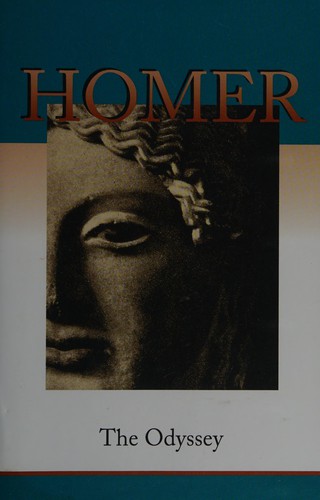
Check price of The Odyssey on Amazon
What to Read Next
- The Iliad by Homer: the story of the Trojan War
- Circe by Madeline Miller: the witch's side of the story
- The Penelopiad by Margaret Atwood: Penelope's version of events
Related: 15 Books Like The Odyssey You’ll Love
Frequently Asked Questions
What is The Odyssey about?
Odysseus spends ten years trying to return home after the Trojan War.
How long is Odysseus away?
Twenty years: ten at war and ten traveling.
Who is Penelope?
Odysseus's wife, who waits faithfully and outwits the suitors.
What happens with the Cyclops?
Odysseus blinds him and escapes by hiding under sheep.
Which translation is best?
Emily Wilson's and Robert Fagles's are popular modern choices.
Is The Odyssey a sequel?
Yes, to The Iliad.
Who was Homer?
An ancient Greek poet; little is known about his life.
What is the bed test?
Penelope tests Odysseus with a secret only he knows about their bed.
Who are the main characters in The Odyssey?
The main characters are Odysseus, Penelope, Telemachus, Athena and the suitors. Odysseus: The clever king of Ithaca, struggling to get home. Penelope: Odysseus's faithful, cunning wife. Telemachus: Their son, who grows into a man.
Is The Odyssey worth reading?
It depends on what you want. The book is best for readers who want the original epic adventure about a clever hero's journey home. If that describes you, it is likely a good fit. If not, the titles under What to Read Next may suit you better.