

Disclosure: As an Amazon Associate, Bookish Wisdom earns from qualifying purchases. This doesn't change our picks or your price.
TL;DR: A platoon of American soldiers marches through Vietnam, each man carrying physical loads, weapons, letters and good-luck charms, and emotional burdens of fear, guilt and love. Through linked stories, Tim O'Brien, a fictional version of the author, explores the war, the deaths of friends and how storytelling helps survivors remember and heal.
Table of Contents
The Things They Carried at a Glance
| Author | Tim O'Brien |
| First published | 1990 |
| Type | Short story collection |
| Best for | readers who want a powerful, honest book about war and memory |
The Things They Carried is a collection of linked stories by Tim O'Brien, published in 1990. It mixes fact and fiction to explore the Vietnam War. Below you will find a part-by-part summary, five key takeaways, ideas worth remembering and a note on who will enjoy it.
Content note: Includes war violence, death, strong language and suicide.
Main Characters
- Tim O'Brien: The narrator, a fictionalized version of the author.
- Jimmy Cross: The platoon's young lieutenant.
- Kiowa: A gentle, kind soldier.
- Norman Bowker: A soldier who struggles after the war.
- Ted Lavender: A soldier killed early in the book.
What Happens, Part by Part (Contains Spoilers)
The things they carried
Lieutenant Jimmy Cross carries letters from a girl named Martha, whom he loves. His men carry weapons, food and personal items, and fear, guilt and memories. When Ted Lavender is shot, Cross blames himself for daydreaming about Martha.
On the Rainy River
O'Brien describes being drafted in 1968. He nearly fled to Canada, spending six days at a lodge by the Rainy River. Unable to bear the shame, he went to war, calling himself a coward for not running.
Stories of war
Other stories describe a soldier's girlfriend who joins the Green Berets, a soldier who tells an impossible story, and O'Brien's memory of a young Vietnamese man he may have killed. He insists that “story-truth” can be truer than “happening-truth.”
Kiowa
Kiowa, O'Brien's friend, dies when the platoon camps in a flooded field used as a sewage dump, sinking into the mud during a mortar attack. Norman Bowker later blames himself for Kiowa's death and, unable to adjust to life at home, takes his own life.
Storytelling
In the final story, O'Brien remembers Linda, a childhood friend who died of cancer at nine. He explains that writing keeps the dead alive. Storytelling is his way of carrying their memory.
5 Key Takeaways
- War leaves invisible burdens on soldiers.
- Storytelling helps people process trauma.
- Truth can be emotional, not just factual.
- Courage and cowardice are complicated.
- The dead live on in memory and stories.
Ideas Worth Remembering
These are paraphrased, not direct quotes:
- A true war story is never about war alone.
- Shame can drive people to do things they fear.
- Stories can save us.
Who Should Read The Things They Carried?
Read The Things They Carried if you are interested in war, memory and storytelling. It suits older teens and adults.
About Tim O'Brien
Tim O'Brien is an American writer born in 1946 in Minnesota. He was drafted and served as an infantryman in Vietnam from 1969 to 1970, an experience that shapes most of his work. His novel Going After Cacciato won the National Book Award in 1979. The Things They Carried was a Pulitzer Prize finalist and is widely taught in schools and universities.
Questions to Think About After Reading
These prompts work for solo reading, a book club or a classroom discussion of The Things They Carried:
- What do the soldiers carry beyond objects?
- What is the difference between story-truth and happening-truth?
- Why does O'Brien keep telling stories?
How to Use This Summary
Use this page as a quick reference before a book club meeting, an exam, or a decision about whether The Things They Carried is worth your time. The takeaways are written to stand on their own. If a point interests you, go back to the book for the author's full story, characters and style, which no short summary can replace.
A Note on Accuracy and Spoilers
This summary is based on the published text of The Things They Carried, not on any film, series or stage adaptation, which often change the story. Details are kept at the level of the main events so that nothing is invented. Editions differ slightly in length and wording, so page numbers and small details may vary between copies.
Should You Read the Book?
Yes. It is one of the most important books about the Vietnam War, both moving and beautifully written.
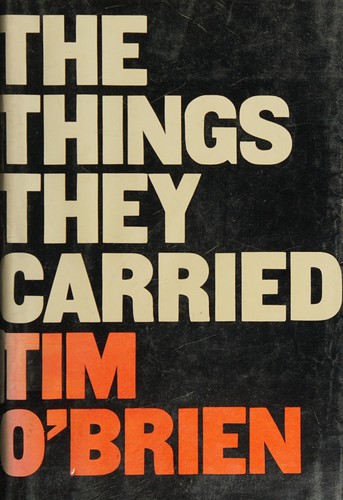
Check price of The Things They Carried on Amazon
What to Read Next
- Going After Cacciato by Tim O'Brien: a dreamlike Vietnam War novel
- All Quiet on the Western Front by Erich Maria Remarque: a soldier's experience of WWI
- Slaughterhouse-Five by Kurt Vonnegut: war and memory
Related: 15 Books Like The Things They Carried You’ll Love
Frequently Asked Questions
What is The Things They Carried about?
Linked stories about soldiers in the Vietnam War and the burdens they carried.
Who wrote it?
Tim O'Brien, in 1990.
Is it fiction or nonfiction?
It is fiction that blends in real experience.
Who is Jimmy Cross?
The platoon's lieutenant, who carries letters from Martha.
How does Kiowa die?
He sinks into a muddy field during a mortar attack.
What is story-truth?
Emotional truth that may be more real than literal facts.
What age is it for?
Older teens and adults.
How long is it?
About 250 pages.
Was it a Pulitzer finalist?
Yes, in 1991.
Did Tim O'Brien serve in Vietnam?
Yes, from 1969 to 1970.
Is The Things They Carried worth reading?
It depends on what you want. The book is best for readers who want a powerful, honest book about war and memory. If that describes you, it is likely a good fit. If not, the titles under What to Read Next may suit you better.