
Disclosure: As an Amazon Associate, Bookish Wisdom earns from qualifying purchases. This doesn't change our picks or your price.
TL;DR: A duckling who looks different from his brothers and sisters is mocked and chased away by every animal he meets. He survives a hard winter alone. In spring he sees his reflection in the water and discovers he has grown into a beautiful swan.
Table of Contents
The Ugly Duckling at a Glance
| Author | Hans Christian Andersen |
| First published | 1843 |
| Type | Literary fairy tale |
| Best for | parents, teachers and readers of any age who want the classic tale and its lessons |
The Ugly Duckling is a literary fairy tale by Hans Christian Andersen, first published in Copenhagen in 1843. Unlike many fairy tales, it is not based on an older folk story. Andersen invented it, and it has become one of the best-known stories about growing up and fitting in. Below you will find a part-by-part summary, five key takeaways, a few ideas worth remembering and a note on who will enjoy it most. The part-by-part section gives away the ending, so skip it if you want to read the tale first.
The Tale, Step by Step (Contains Spoilers)
The nest
On a summer farm, a mother duck sits on her eggs beside a moat. One egg, much bigger than the rest, takes longer to hatch.
The odd one out
The last chick is large, gray and clumsy. The other ducks and farmyard birds peck at him, chase him and call him ugly, and even his own brothers and sisters turn on him.
Running away
He flies over the hedge and escapes to a marsh, where wild ducks mock him and hunters shoot at a flock of geese. He hides in fear.
The cottage
He shelters in an old woman's cottage, where a cat and a hen look down on him because he cannot purr or lay eggs. He longs for the water and leaves.
The swans
In autumn he sees a flock of beautiful white birds flying south and feels a strange love for them, though he does not know what they are.
Winter
The winter is bitter. He freezes into the ice of a pond, is rescued by a farmer and taken home, but panics when the children try to play with him and runs away again. He survives the cold alone in the reeds.
Spring
When spring comes, his wings are strong. He flies to a garden lake, sees the swans and goes to them, expecting to be attacked. Instead he sees his reflection: he is a swan. The others welcome him, and children call him the most beautiful of all.
The Summary at a Glance
| Part | In one line |
|---|---|
| The nest | On a summer farm, a mother duck sits on her eggs beside a moat. |
| The odd one out | The last chick is large, gray and clumsy. |
| Running away | He flies over the hedge and escapes to a marsh, where wild ducks mock him and hunters shoot at a flock of geese. |
| The cottage | He shelters in an old woman's cottage, where a cat and a hen look down on him because he cannot purr or lay eggs. |
| The swans | In autumn he sees a flock of beautiful white birds flying south and feels a strange love for them, though he does not know what they are. |
| Winter | The winter is bitter. |
| Spring | When spring comes, his wings are strong. |
5 Key Takeaways
- Being different is not the same as being wrong.
- Cruelty often says more about the group than about the one being picked on.
- Growing up can be slow and painful, and change takes time.
- You do not need to fit in everywhere to belong somewhere.
- Kindness and humility outlast pride: the swan never becomes proud, even at the end.
Ideas Worth Remembering
These are paraphrased, not direct quotes:
- It does not matter if you are born in a duck yard, if you hatch from a swan's egg.
- The duckling never asks to be beautiful, only to be left in peace.
- The happiest moment comes with no pride at all: he is simply glad.
Who Should Read The Ugly Duckling?
Read it with young children who are learning about kindness, feelings and being different. Older readers will find a story about loneliness, patience and self-worth, and teachers often use it to talk about bullying.
Questions to Think About After Reading
These prompts work for solo reading, a book club or a classroom discussion of The Ugly Duckling:
- Why do the other animals treat the duckling so badly, and is any of them kind to him?
- Would the ending mean the same thing if he had turned out to be an ordinary duck?
- Have you ever felt like you did not fit in somewhere, and what helped?
Quick Facts to Remember
- Book: The Ugly Duckling by Hans Christian Andersen (1843)
- Type: Literary fairy tale
- Setting: A Danish farm, a marsh, a cottage and a frozen pond
- Main idea in one line: Being different is not a flaw, and everyone grows into themselves in time.
Reading Time and Format
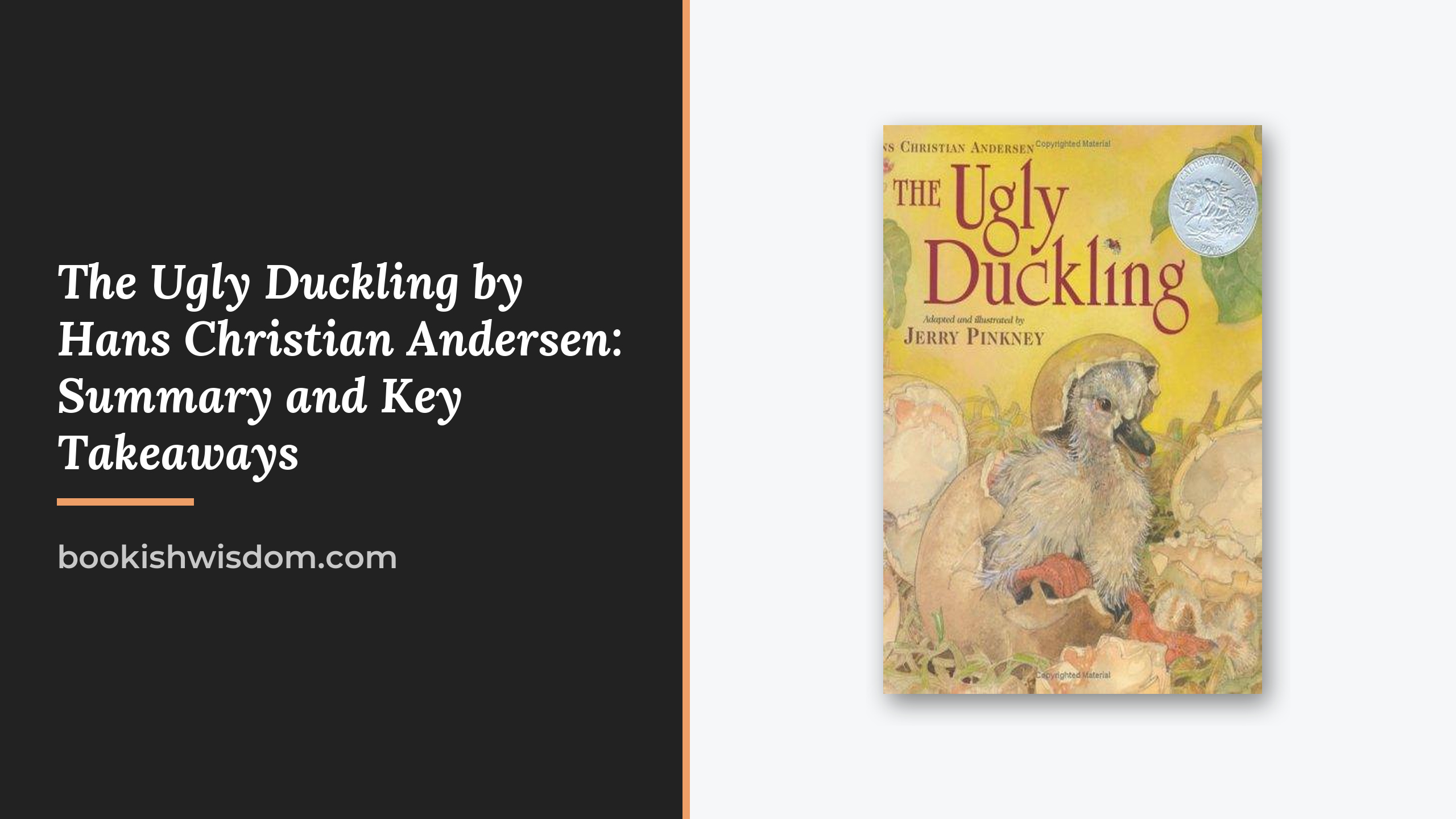
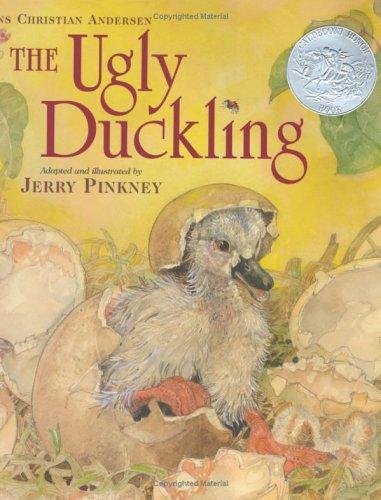
The original tale takes about 15 minutes to read. Picture-book versions are shorter and simpler. A well-loved edition is Jerry Pinkney's adaptation, which won a Caldecott Honor for its watercolor art. A library copy is a low-cost way to try several versions before you buy one.
How to Use This Summary
Use this page as a quick reference before a lesson, a book club or a bedtime reading, or to decide which version to share with a child. The takeaways stand on their own, so you can use them as discussion points. If a part interests you, go back to Andersen's text for the full story and its gentle humor, which no short summary can carry.
A Note on Accuracy and Spoilers
This summary follows Andersen's original tale, not any film, cartoon or stage version, which often change the details. Translations and picture-book retellings vary in wording and in how many of the duckling's adventures they include.
Should You Read the Book?
Yes, especially in the original or a faithful picture-book version. It is short, moving and still one of the clearest stories about being an outsider. If you are choosing for a young child, look at a few pages first to check that the art and wording suit their age.
Check price of The Ugly Duckling on Amazon
What to Read Next
- The Little Mermaid by Hans Christian Andersen: another Andersen tale about longing to belong
- The Emperor's New Clothes by Hans Christian Andersen: a short, funny tale about pride
- The Story of Ferdinand by Munro Leaf: a gentle picture book about being yourself
Related: Hans Christian Andersen Books In Order Printable List · Goldilocks and the Three Bears: Summary and Key Takeaways
Frequently Asked Questions
Who wrote The Ugly Duckling?
Hans Christian Andersen, the Danish writer, first published it in 1843.
What is the moral of The Ugly Duckling?
That being different is not a flaw, and that people who are rejected can grow into who they really are.
Is The Ugly Duckling about Hans Christian Andersen himself?
Many readers and critics see it that way. Andersen grew up poor and was often mocked before he became famous, and the story is often read as a reflection of his own life.
What age is The Ugly Duckling for?
Picture-book versions suit children from about 3 to 8. The full original text is longer and works well for older children and adults.
Can this summary replace reading The Ugly Duckling?
No. It covers the main events and ideas, but Andersen's voice, humor and detail are part of what makes the tale special. It takes only about 15 minutes to read the original.