
Disclosure: As an Amazon Associate, Bookish Wisdom earns from qualifying purchases. This doesn't change our picks or your price.
TL;DR: In 1740, the British warship Wager sailed with a squadron to capture a Spanish treasure galleon. Off the coast of Patagonia, it was wrecked. The stranded crew descended into hunger, violence and mutiny. Two groups of survivors reached home years later with conflicting stories, and a court-martial loomed.
Table of Contents
The Wager at a Glance
| Author | David Grann |
| First published | 2023 |
| Type | Nonfiction |
| Best for | readers who want a thrilling true story of shipwreck, survival and mutiny |
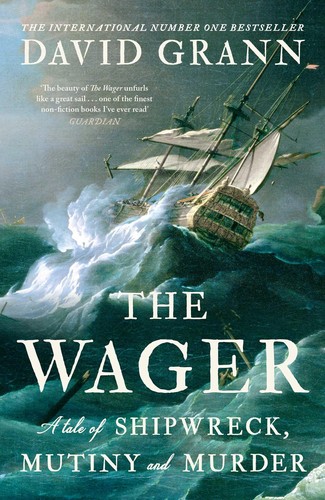
The Wager: A Tale of Shipwreck, Mutiny and Murder is a nonfiction book by David Grann, published in 2023. It became a bestseller and is being adapted into a film by Martin Scorsese. Below you will find a part-by-part summary, five key takeaways, ideas worth remembering and a note on who will enjoy it.
Content note: Includes violence, starvation, disease and death.
Key Concepts
- David Cheap: The captain of the Wager.
- John Bulkeley: The ship's gunner, who leads a mutiny.
- John Byron: A young midshipman, later grandfather of the poet Lord Byron.
- George Anson: The commodore leading the squadron.
- John Cummins: The ship's carpenter, who sides with Bulkeley.
The Main Ideas, Part by Part
The voyage
In 1740, during a war with Spain, Commodore George Anson led a squadron of British ships to capture a Spanish treasure galleon. Scurvy and typhus killed many sailors. The Wager, captained by David Cheap, was separated from the squadron near Cape Horn.
The wreck
In May 1741, the Wager was wrecked on an island off Patagonia, now called Wager Island. The survivors struggled with cold, hunger and disease. Discipline collapsed, and some men turned to violence.
Murder and mutiny
Captain Cheap shot a midshipman, Henry Cozens, in a dispute. Gunner John Bulkeley and carpenter John Cummins led most of the crew in a mutiny. They lengthened the longboat and sailed through the Strait of Magellan to Brazil, reaching it in early 1742. Cheap, Byron and a few others stayed behind.
Cheap's journey
Cheap's group tried to sail north. Most died. With the help of an Indigenous guide, Cheap, Byron and two others reached Chile, where they were captured by the Spanish. They returned to Britain in 1746.
The court-martial
Back home, the two groups told different stories. Bulkeley published an account calling Cheap a tyrant, and Cheap accused the mutineers. The Admiralty held a court-martial only for the loss of the ship, and the men were cleared. Grann suggests the empire avoided an embarrassing inquiry.
5 Key Takeaways
- Survival can test the limits of civilization.
- History is shaped by who tells the story.
- Leadership can fail in extreme conditions.
- Empires hide inconvenient truths.
- Truth is often more complex than heroes and villains.
Ideas Worth Remembering
These are paraphrased, not direct quotes:
- The winners do not always write history; the survivors do.
- Under pressure, the line between order and chaos is thin.
- Every story has another side.
Who Should Read The Wager?
Read The Wager if you want a gripping true adventure with moral questions. It suits teens and adults who enjoy history.
Questions to Think About After Reading
These prompts work for solo reading, a book club or a classroom discussion of The Wager:
- Who was right, Cheap or Bulkeley?
- Why did the Admiralty avoid a mutiny trial?
- How did survival change the men?
How to Use This Summary
Use this page as a quick reference before a book club meeting, an exam, or a decision about whether The Wager is worth your time. The takeaways are written to stand on their own. If a point interests you, go back to the book for the author's full argument, examples and evidence, which no short summary can replace.
A Note on Accuracy and Spoilers
This summary is based on the published text of The Wager, not on any film, series or stage adaptation, which often change the story. Details are kept at the level of the main arguments so that nothing is invented. Editions differ slightly in length and wording, so page numbers and small details may vary between copies.
Should You Read the Book?
Yes. Grann draws on logbooks, journals and court records to build a story that reads like a novel. The early chapters on the squadron's voyage are slower, but once the ship wrecks, the tension rarely lets up. Readers who enjoyed Killers of the Flower Moon will find the same careful research here.
Check price of The Wager on Amazon
What to Read Next
- Killers of the Flower Moon by David Grann: Grann's true crime classic
- In the Heart of the Sea by Nathaniel Philbrick: the wreck of the whaleship Essex
- Endurance by Alfred Lansing: Shackleton's survival story
Related: 15 Books Like The Wager You’ll Love · The Lost City of Z by David Grann: Summary and Key Takeaways
Frequently Asked Questions
What is The Wager about?
The wreck of a British warship and the mutiny that followed.
When was the Wager wrecked?
In May 1741, off Patagonia.
Who was the captain?
David Cheap.
Who led the mutiny?
Gunner John Bulkeley.
What happened at the court-martial?
The men were cleared, and no trial for mutiny was held.
Who was John Byron?
A midshipman and the grandfather of the poet Lord Byron.
Is there a film?
A film adaptation by Martin Scorsese has been announced.
How long is it?
About 330 pages.
Who wrote The Wager?
David Grann, author of Killers of the Flower Moon.
Who are the main ideas in The Wager?
The key concepts are David Cheap, John Bulkeley, John Byron, George Anson and John Cummins. David Cheap: The captain of the Wager. John Bulkeley: The ship's gunner, who leads a mutiny. John Byron: A young midshipman, later grandfather of the poet Lord Byron.
Is The Wager worth reading?
It depends on what you want. The book is best for readers who want a thrilling true story of shipwreck, survival and mutiny. If that describes you, it is likely a good fit. If not, the titles under What to Read Next may suit you better.