
Disclosure: As an Amazon Associate, Bookish Wisdom earns from qualifying purchases. This doesn't change our picks or your price.
TL;DR: Twelve-year-old Ben Ripley dreams of being a spy, but he is better at math than adventure. When he is recruited to the CIA's secret Academy of Espionage, he discovers he was brought there for a hidden reason. With the help of the brilliant, tough Erica Hale, Ben has to survive assassins, sort out lies and unmask an enemy inside the school.
Table of Contents
Spy School at a Glance
| Author | Stuart Gibbs |
| First published | 2012 |
| Type | Novel series |
| Best for | readers aged 9 to 13 who want a funny, action-packed spy adventure |
Spy School is a middle grade novel by Stuart Gibbs, published in 2012. It began a best-selling series that follows Ben through more than ten adventures. This summary covers the first book and the series as a whole, with five key takeaways, ideas worth remembering and a note on who will enjoy it.
Main Characters
- Ben Ripley: A math whiz with no spy skills.
- Erica Hale: A highly skilled student from a famous spy family.
- Alexander Hale: Erica's father, a famous but overrated agent.
- Cyrus Hale: Erica's grandfather, a legendary spy.
- SPYDER: A criminal organization that Ben keeps running into.
What Happens, Part by Part (Contains Spoilers)
Recruitment
Ben, a nerdy middle schooler, is visited by CIA agent Alexander Hale, who invites him to the Academy of Espionage, a secret spy school in Washington, D.C., disguised as a science school. Ben is thrilled.
A rough start
On his first night, an assassin attacks Ben in his dorm. He survives by luck. Ben finds that he is behind at almost everything. He struggles in self-defense and survival training, while Erica Hale excels and keeps her distance.
The real reason
Ben learns that he was recruited not for his skills but as bait. The school believes an enemy agent has infiltrated it, and Ben's cover story, that he is a top code breaker, is meant to draw the enemy out.
Teaming up
Ben uses his math and observation skills to find clues. Erica, impressed by his persistence, starts helping him. They uncover a plot involving SPYDER and discover that some of the school's heroes are not as capable as they seem.
The series
Ben unmasks the enemy agent and earns a place at the school. In later books, Ben, Erica and their friends face SPYDER again on missions to ski resorts, theme parks, cities abroad and beyond, with growing skill and plenty of humor.
5 Key Takeaways
- Brains can be as useful as brawn.
- Heroes are not always what they seem.
- Persistence earns respect.
- Friendship and teamwork help solve problems.
- Being underestimated can be an advantage.
Ideas Worth Remembering
These are paraphrased, not direct quotes:
- Pay attention to details others miss.
- Real courage is acting despite being afraid.
- Reputation is not the same as skill.
Who Should Read Spy School?
Read Spy School if you want a funny, fast mystery for young readers. It suits ages 9 to 13 and fans of spy movies.
Questions to Think About After Reading
These prompts work for solo reading, a book club or a classroom discussion of Spy School:
- Why does Ben keep going despite failing?
- What makes Erica a good partner?
- Why is Alexander Hale less impressive than his reputation?
How to Use This Summary
Use this page as a quick reference before a book club meeting, an exam, or a decision about whether Spy School is worth your time. The takeaways are written to stand on their own. If a point interests you, go back to the book for the author's full story, characters and style, which no short summary can replace.
A Note on Accuracy and Spoilers
This summary is based on the published text of Spy School, not on any film, series or stage adaptation, which often change the story. Details are kept at the level of the main events so that nothing is invented. Editions differ slightly in length and wording, so page numbers and small details may vary between copies.
Should You Read the Book?
Yes, for readers who like humor mixed with action and mystery. Ben's self-deprecating voice is funny, and the plot moves quickly with real twists. Older readers may find it light, but for its audience it is a gateway series that keeps kids reading book after book.
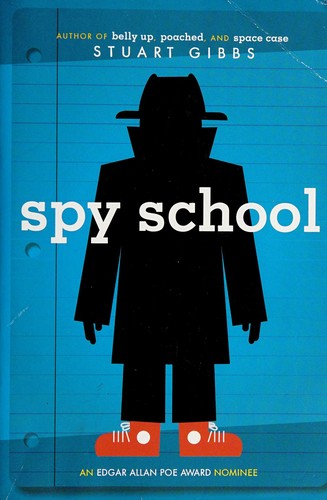
Check price of Spy School on Amazon
What to Read Next
- Spy Camp by Stuart Gibbs: the second Spy School book
- The Mysterious Benedict Society by Trenton Lee Stewart: clever kids on a secret mission
- Alex Rider: Stormbreaker by Anthony Horowitz: a teen spy series
Frequently Asked Questions
What is Spy School about?
A math whiz is recruited to a secret spy school and must uncover an enemy agent.
Who wrote Spy School?
Stuart Gibbs.
Who is Erica Hale?
A highly skilled student from a famous spy family.
Why was Ben recruited?
As bait to draw out an enemy agent.
What is SPYDER?
A criminal organization in the series.
How many books are there?
More than ten.
What age is it for?
About 9 to 13.
Is there a graphic novel?
Yes, a graphic novel adaptation is available.
Should you read it in order?
Yes. The story and characters build across books.
Where is the Academy of Espionage?
In Washington, D.C., disguised as a science school.
Who are the main characters in Spy School?
The main characters are Ben Ripley, Erica Hale, Alexander Hale, Cyrus Hale and SPYDER. Ben Ripley: A math whiz with no spy skills. Erica Hale: A highly skilled student from a famous spy family. Alexander Hale: Erica's father, a famous but overrated agent.
Is Spy School worth reading?
It depends on what you want. The book is best for readers aged 9 to 13 who want a funny, action-packed spy adventure. If that describes you, it is likely a good fit. If not, the titles under What to Read Next may suit you better.