

Disclosure: As an Amazon Associate, Bookish Wisdom earns from qualifying purchases. This doesn't change our picks or your price.
TL;DR: Margot Lee Shetterly tells the story of the Black women mathematicians who worked as “human computers” at NASA's Langley Research Center in Virginia. Despite segregation and sexism, Dorothy Vaughan, Mary Jackson, Katherine Johnson and others did vital calculations for aircraft and the space race, including John Glenn's orbit.
Table of Contents
Hidden Figures at a Glance
| Author | Margot Lee Shetterly |
| First published | 2016 |
| Type | Nonfiction |
| Best for | readers who want an inspiring, little-known true story of science and civil rights |
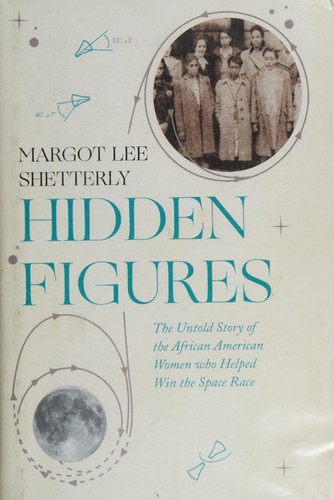
Hidden Figures: The American Dream and the Untold Story of the Black Women Mathematicians Who Helped Win the Space Race is a book by Margot Lee Shetterly, published in 2016. It became a hit film the same year. Below you will find a part-by-part summary, five key takeaways, ideas worth remembering and a note on who will enjoy it.
Content note: Includes racial segregation and discrimination.
Key Concepts
- Dorothy Vaughan: A math teacher who became Langley's first Black supervisor.
- Mary Jackson: NASA's first Black female engineer.
- Katherine Johnson: A mathematician who calculated spaceflight trajectories.
- Christine Darden: An engineer who later led research on supersonic flight.
- Langley: The Virginia research center where they worked.
The Main Ideas, Part by Part
Wartime opportunity
During World War II, the aviation research lab at Langley needed mathematicians. After President Franklin Roosevelt's 1941 executive order banned racial discrimination in the defense industry, Langley began hiring Black women. Dorothy Vaughan arrived in 1943.
West Computing
The Black women worked in a segregated unit called West Area Computing, with separate bathrooms and a “Colored Computers” sign in the cafeteria. Dorothy Vaughan became the unit's supervisor, fighting for her staff's recognition and later learning the programming language FORTRAN.
Mary Jackson
Mary Jackson wanted to become an engineer, but she needed classes held at a whites-only school. She won permission to attend and became NASA's first Black female engineer in 1958. She later worked to help women advance at NASA.
Katherine Johnson
Katherine Johnson joined Langley in 1953. Her skill with geometry earned her a place in the flight research division. She calculated the trajectory for Alan Shepard's 1961 flight. In 1962, astronaut John Glenn asked that she personally check the computer's figures before his orbital flight.
Legacy
The women's work continued through the Apollo missions and beyond. Christine Darden later became an expert on sonic booms. Shetterly, who grew up near Langley, shows how these women changed science and challenged segregation, and how their stories were long overlooked.
5 Key Takeaways
- Talent can overcome discrimination, but only with persistence.
- Hidden contributors shape history.
- Education opens doors.
- Civil rights and science advanced together.
- Recognition matters.
Ideas Worth Remembering
These are paraphrased, not direct quotes:
- Get the girl to check the numbers.
- Excellence can be a form of resistance.
- Every great achievement has unseen heroes.
Who Should Read Hidden Figures?
Read Hidden Figures if you want an inspiring true story of science, history and courage. It suits teens and adults. A young readers' edition is available.
Questions to Think About After Reading
These prompts work for solo reading, a book club or a classroom discussion of Hidden Figures:
- How did segregation affect the women's work?
- Why were their stories hidden for so long?
- How is the book different from the film?
How to Use This Summary
Use this page as a quick reference before a book club meeting, an exam, or a decision about whether Hidden Figures is worth your time. The takeaways are written to stand on their own. If a point interests you, go back to the book for the author's full argument, examples and evidence, which no short summary can replace.
A Note on Accuracy and Spoilers
This summary is based on the published text of Hidden Figures, not on any film, series or stage adaptation, which often change the story. Details are kept at the level of the main arguments so that nothing is invented. Editions differ slightly in length and wording, so page numbers and small details may vary between copies.
Should You Read the Book?
Yes, if you want the fuller history behind the film. The book covers more women and more years than the movie, with careful detail about Langley and the civil rights era. It reads more like history than drama, so some readers find it slower, but it is rich and rewarding.
Check price of Hidden Figures on Amazon
What to Read Next
- Rise of the Rocket Girls by Nathalia Holt: women at the Jet Propulsion Laboratory
- The Immortal Life of Henrietta Lacks by Rebecca Skloot: an overlooked woman in science
- Lessons in Chemistry by Bonnie Garmus: a novel about a woman scientist
Related: 15 Books Like Hidden Figures You’ll Love
Frequently Asked Questions
What is Hidden Figures about?
Black women mathematicians who helped NASA win the space race.
Who are the main women?
Dorothy Vaughan, Mary Jackson and Katherine Johnson.
What did Katherine Johnson do?
Calculated trajectories, including for John Glenn's orbit.
Who was the first Black female engineer at NASA?
Mary Jackson.
Is there a film?
Yes, the 2016 film starring Taraji P. Henson.
Is the book different from the film?
Yes. It covers more people and a longer period.
Is there a young readers' edition?
Yes.
How long is it?
About 350 pages.
Where is Langley?
In Hampton, Virginia.
Did Katherine Johnson receive honors?
Yes, the Presidential Medal of Freedom in 2015.
Who are the main ideas in Hidden Figures?
The key concepts are Dorothy Vaughan, Mary Jackson, Katherine Johnson, Christine Darden and Langley. Dorothy Vaughan: A math teacher who became Langley's first Black supervisor. Mary Jackson: NASA's first Black female engineer. Katherine Johnson: A mathematician who calculated spaceflight trajectories.
Is Hidden Figures worth reading?
It depends on what you want. The book is best for readers who want an inspiring, little-known true story of science and civil rights. If that describes you, it is likely a good fit. If not, the titles under What to Read Next may suit you better.